





Antique German Landscape Art
Antique german landscape art brings the pastoral valleys, mountain peaks, and townscapes of Central Europe directly to your walls.
Antique German Landscape Art
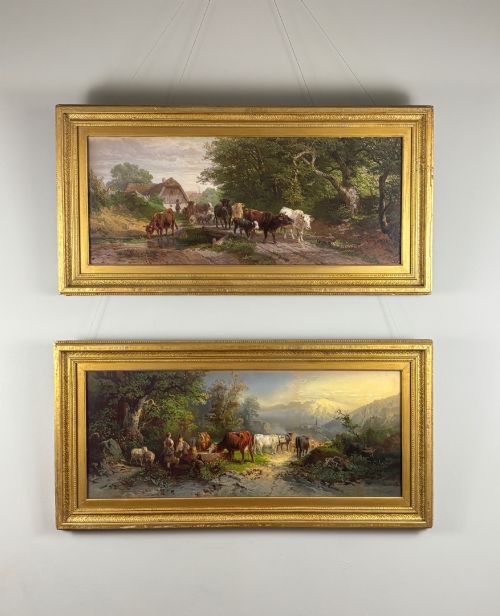
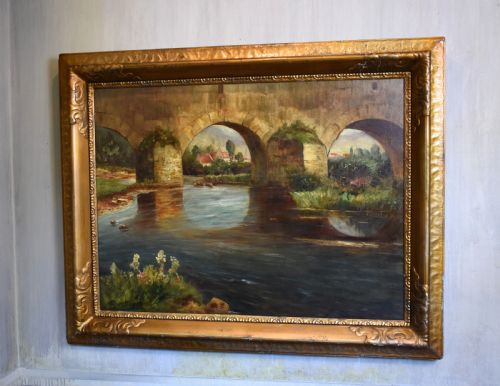
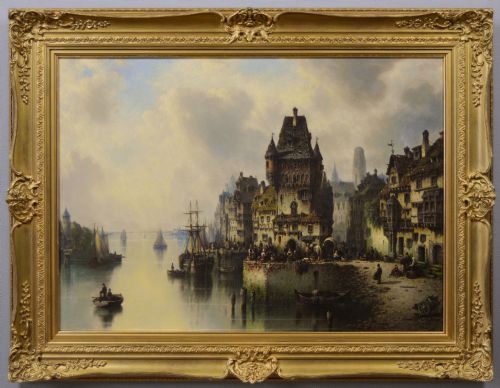
When you search for antique german landscape art, you encounter oil paintings, drawings, and framed artwork spanning the nineteenth and twentieth centuries. These works capture rural fields, mountain views, and bustling river ports through various regional movements.
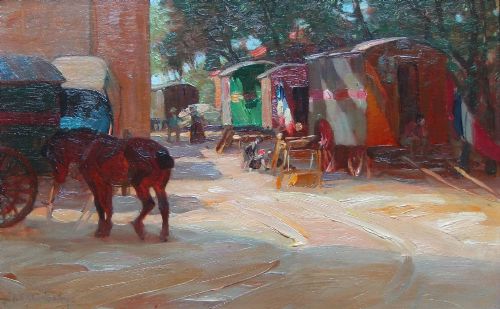
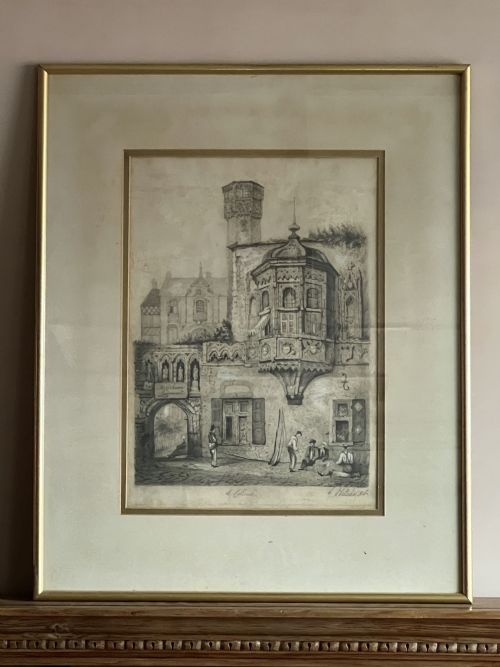
The pieces on this page lean heavily towards nineteenth century realism and romanticism, alongside later expressions like Impressionism and German Expressionism. You will also find occasional townscapes and architectural studies executed with careful draughtsmanship.
Subjects range from quiet cattle resting in pastures to dramatic Bavarian gothic castles and snowy quayside scenes. Canvas and wood panel serve as the primary supports for these painted views.
How They Were Made
Artists built these compositions using oil paint on canvas or wooden panels, applying pigment to achieve depth in foliage, water, and skies. Draughtsmen also utilised pencil and wash on paper for preparatory or standalone topographical views.
Many of these works retain their original giltwood and gesso frames, often embellished with gold leaf. These period surrounds complement the painterly depth and secure the structural integrity of the canvas or panel.
Materials documented in these listings include oil paint, canvas, wood, gold leaf, giltwood, and gesso.
What Varies in Quality
The standard of execution in paint handling and spatial perspective marks the distinction between ordinary workshop output and superior academic skill. Masterful control of light and atmosphere elevates a topographical record into a compelling visual experience.
The preservation of the original surface and the matching period frame influence the integrity of the piece. Untouched canvas surfaces with minimal overpaint and well-gilded original frames represent the higher tier of surviving examples.
Johann Friedrich Voltz·Paul Ehrenberg·Carl Adolf Mende·Heinrich Harder·Wilhelm Fuhner·Hein Hoppmann·Karl Herrle·Franz Reder-Broili·Ludwig Hermann·Wilhelm Alexander Meyerheim
The Antique German Landscape Art Glossary
- Gesso
- A plaster-like preparation used as a base for moulding and gilding on wooden frames. It provides a smooth surface for the application of gold leaf.
- Giltwood
- Timber carved and coated with gold leaf or metallic powder. It provides a reflective and decorative border for oil paintings.
- German Expressionism
- An artistic movement focusing on emotional experience rather than physical reality. It uses bold colours and simplified forms to convey inner feelings.
- Biedermeier
- A style of art and interior design emphasising utility and clean domestic comfort. It flourished in Central Europe during the mid-nineteenth century.
Antique German Landscape Art: Frequently Asked Questions
What periods do these landscapes cover?
The available selection primarily spans the nineteenth century, extending into early twentieth century movements such as Impressionism and German Expressionism. Works date from the early eighteen-hundreds through to nineteen-forty.
Specific dated pieces include examples from eighteen-eighty-seven alongside nineteen-twenty and nineteen-forty productions.
What mediums were used for these artworks?
Painters utilised oil paint applied to canvas or wood supports. Draughtsmen also employed pencil and wash on paper.
Frames incorporate materials like gesso and gold leaf to house the painted scenes.
How do I care for an oil painting?
Keep painted canvases away from direct sunlight and dramatic fluctuations in room temperature. Dust the surface and frame gently with a soft, dry brush.
Avoid using liquid cleaners on the paint or the giltwood surround to protect the original materials.
What subjects appear in these works?
Common subjects include rural landscapes, mountain ranges, and cattle resting in pastures. Architectural studies feature Bavarian castles and river townscapes.
Harbour scenes and winter quays also form part of the regional repertoire.