


Antique French Porcelain Plaque
An antique french porcelain plaque brings hand-painted colour and gilt bronze to nineteenth-century cabinet work.
Antique French Porcelain Plaque
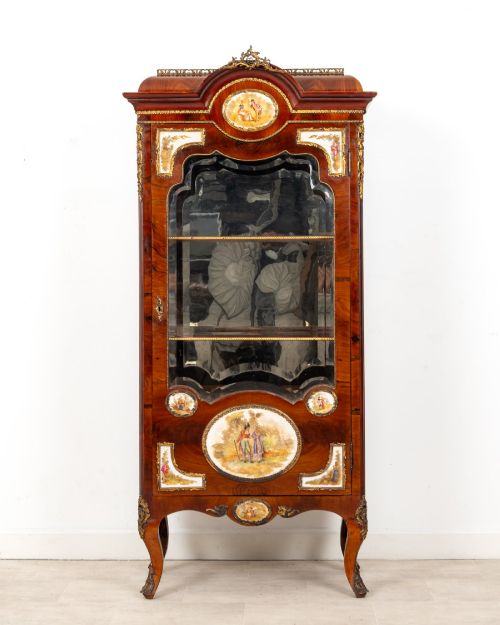
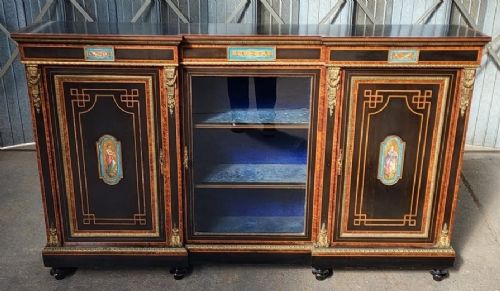
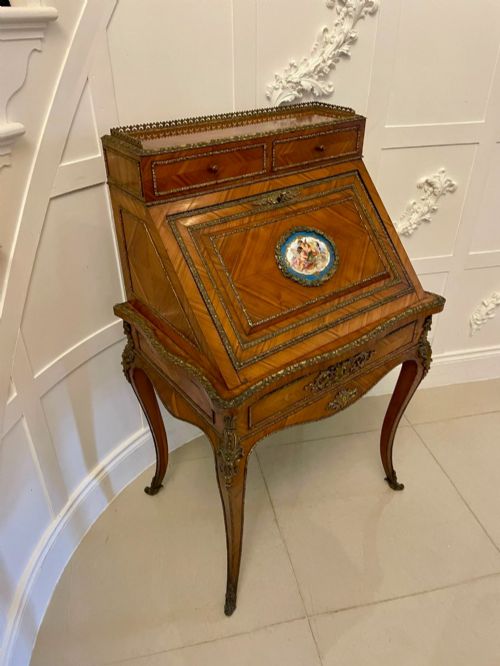
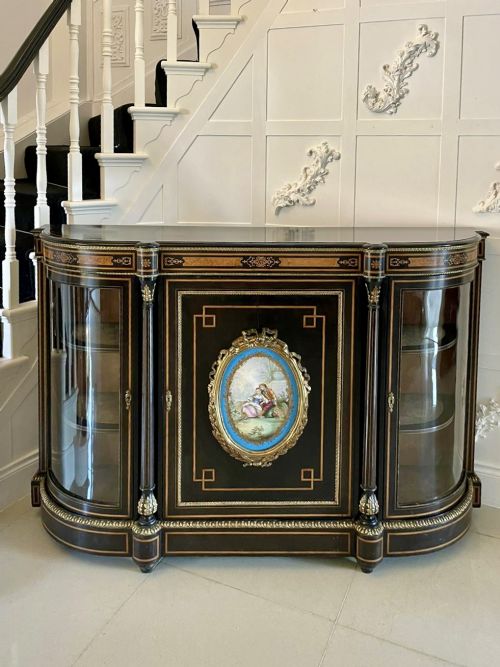
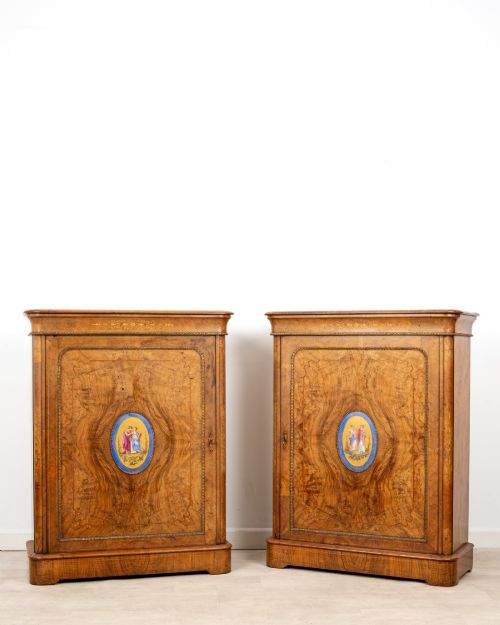
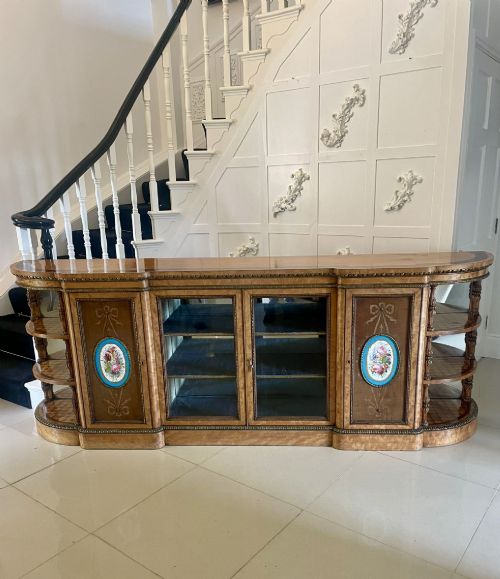
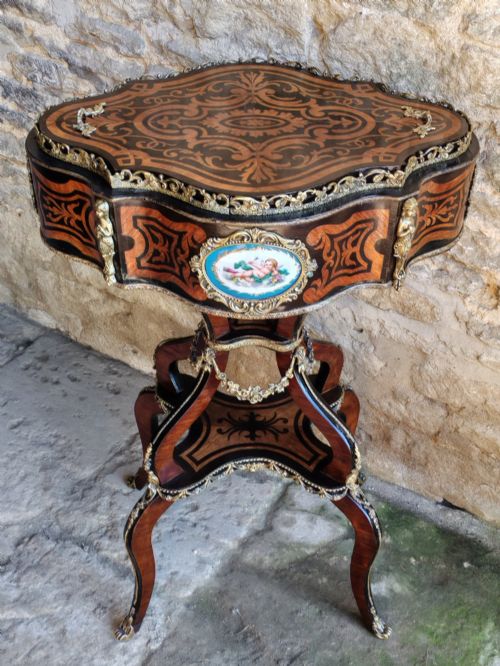
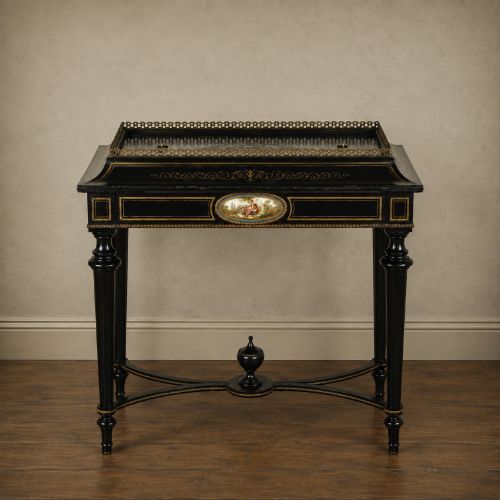
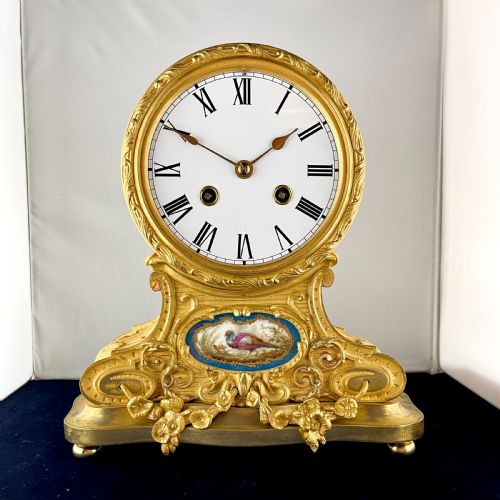
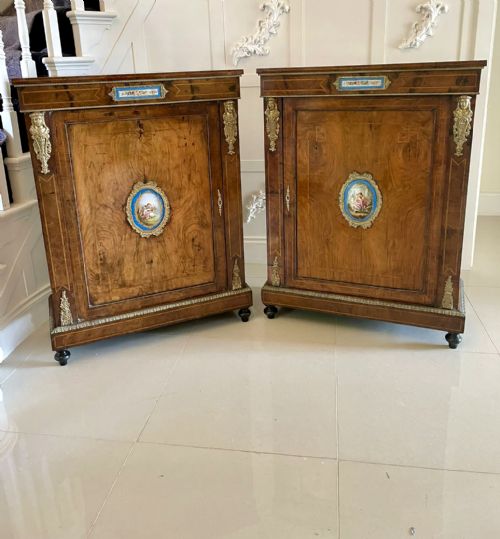
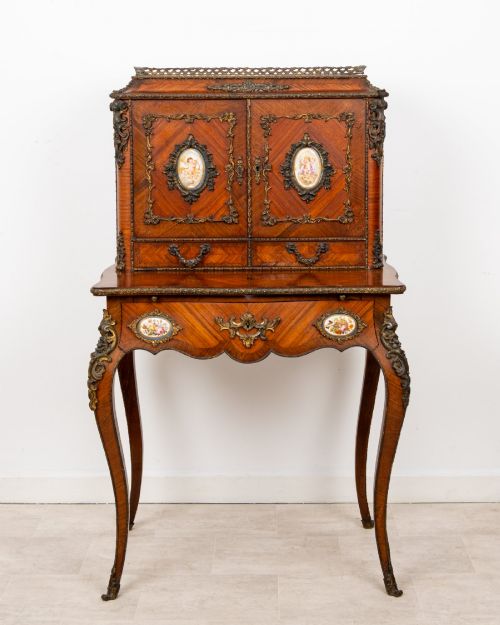
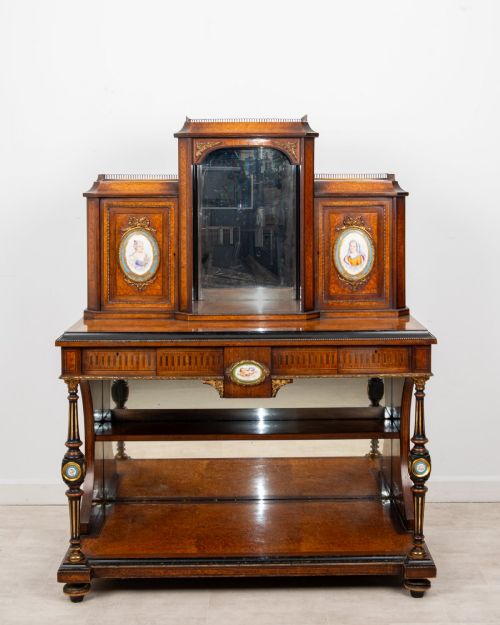
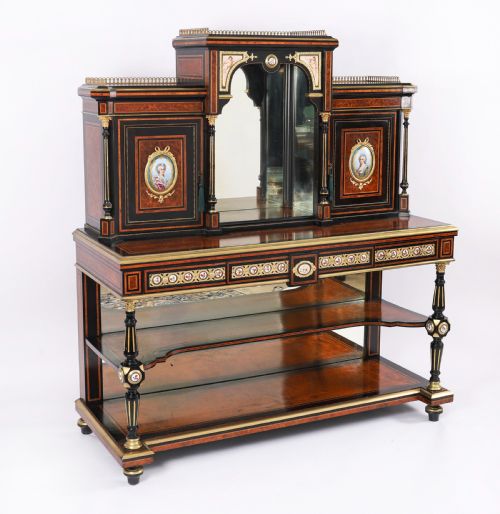
When you search for an antique french porcelain plaque, you encounter pieces embedded within nineteenth-century furniture such as side cabinets, credenzas, writing desks, and jardiniere stands. The evidence shows these decorative elements integrated into burr walnut, kingwood, amboyna, and ebonised carcases dating principally from the Victorian era through to the late nineteenth century.
You also meet standalone wall art and framed painted porcelain within this selection, though glazed display furniture and writing desks dominate the offerings. These items bridge decorative ceramics and cabinet-making, reflecting revival styles like Louis XV and Louis XVI alongside nineteenth-century English and French taste.
Materials and construction
The physical objects combine kiln-fired porcelain panels with timber carcases veneered in exotic woods like kingwood, satinwood, and walnut, embellished with cast ormolu mounts. The painted porcelain components typically feature hand-rendered figural or floral scenes fixed securely into the furniture facades.
Brass stringing, marquetry inlay, and gilt bronze mounts frame the porcelain plaques, demonstrating the integration of ceramic artistry with high-end nineteenth-century joinery techniques.
Listings feature nineteenth-century writing desks, credenzas, and display cabinets constructed from kingwood, walnut, and satinwood.
Distinctions in execution
The standard of an antique french porcelain plaque rests on the fineness of the hand-painted brushwork upon the ceramic surface and the precision of the surrounding ormolu mounts. Superior pieces exhibit detailed figurative painting and tightly fitted gilt bronze borders rather than mechanical transfers.
The underlying timber selection and the complexity of the marquetry or parquetry veneer work also distinguish finer examples from simpler production pieces of the nineteenth century.
The Antique French Porcelain Plaque Glossary
- Ormolu
- Gilded bronze used for mounts and decorative trim on nineteenth-century furniture. It is cast and chased to produce sharp relief detail around porcelain plaques.
- Bonheur du jour
- A small ladies writing desk featuring a raised cabinet section with drawers and shelves. These often incorporate painted porcelain plaques within the writing flap or superstructure.
- Vitrine
- A glass-fronted display cabinet designed for porcelain and curiosities. The evidence shows these frequently decorated with ceramic plaques.
- Pier cabinet
- A piece of furniture built to stand against the wall space between windows. These are commonly mounted with ormolu and porcelain in Victorian interiors.
- Marquetry
- The art of applying decorative veneer pieces to a structure to form geometric or floral designs. It provides the background for many ceramic plaques.
Antique French Porcelain Plaque: Frequently Asked Questions
What furniture holds porcelain plaques?
Cabinets, credenzas, writing desks, and jardiniere stands frequently incorporate these ceramic elements into their design.
Craftsmen set the plaques into doors, friezes, and writing surfaces to add colour and texture to exotic wood veneers.
How do I date these pieces?
Furniture with porcelain plaques generally dates from the nineteenth century, aligning with Victorian and Napoleon III revival periods.
Stylistic cues in the ormolu mounts and the timber choices help narrow the production era between eighteen-fifty and nineteen-hundred.
Where were the plaques made?
Many plaques originate from French ceramic factories, notably Sevres or Sevres-style workshops operating in the nineteenth century.
Cabinet-makers in France and Britain subsequently mounted these imported or local porcelain panels onto high-end furniture.
How should I care for mounted porcelain?
Maintain stable room humidity to protect the underlying timber carcase and the adhesive holding the porcelain plaque.
Dust the glazed or painted ceramic surfaces gently with a dry microfibre cloth and avoid harsh chemical cleaners on the ormolu.