

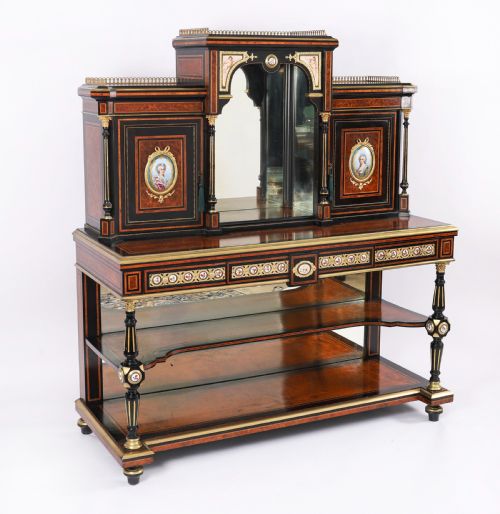


French Porcelain Cabinet Plaque
A french porcelain cabinet plaque brings the refined painted hand of the ceramicist straight into the architecture of nineteenth-century furniture.
French Porcelain Cabinet Plaque
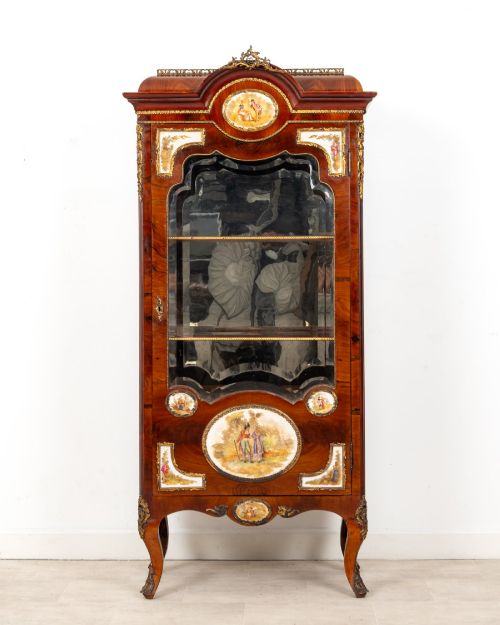
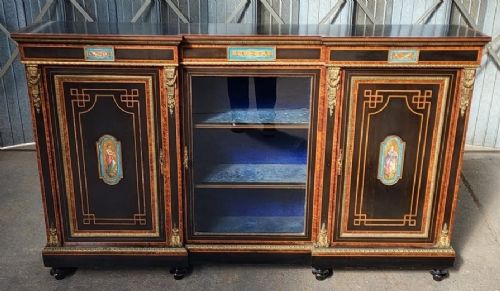
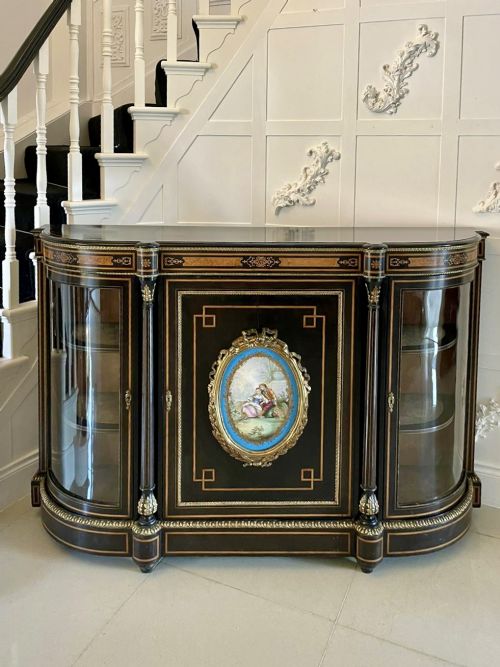
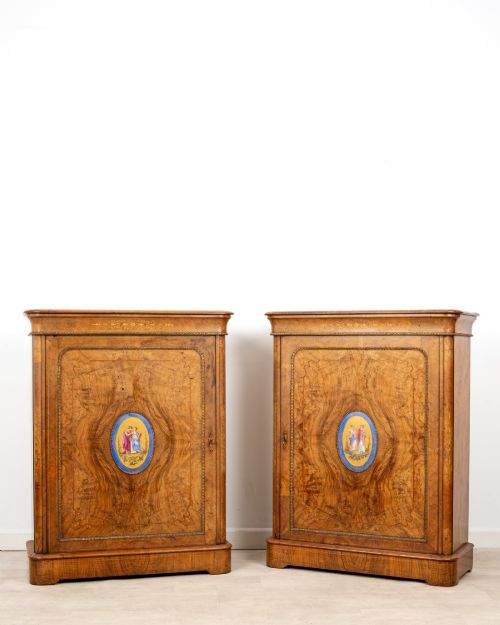
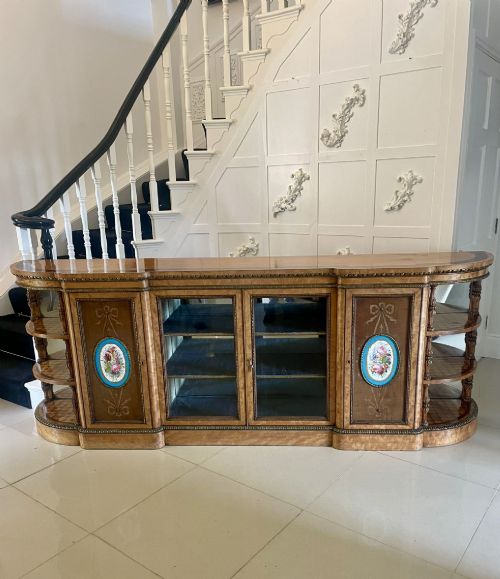
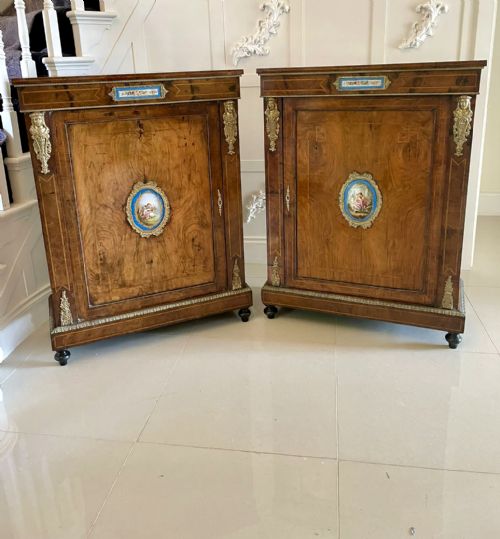
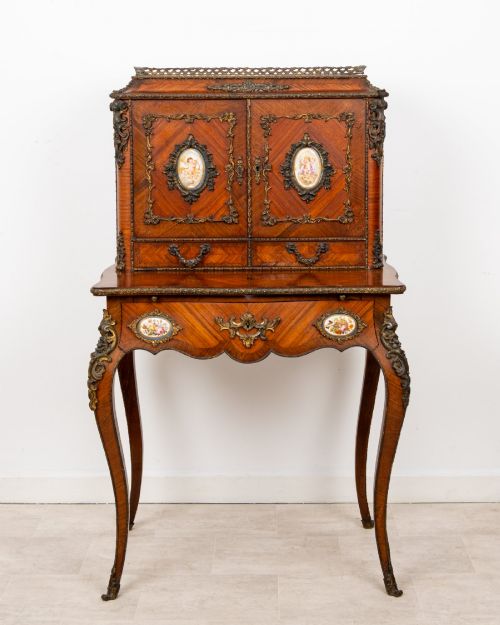
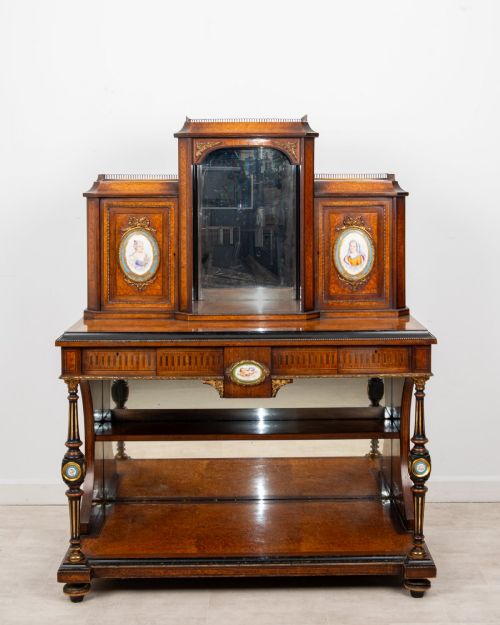
A french porcelain cabinet plaque integrates hand-painted ceramic inserts directly into the timber frame of nineteenth-century display furniture, side cabinets, and writing desks. These painted panels transform standard storage into decorative centerpieces designed for formal reception rooms.
The pieces seen here range from compact pier cabinets and bonheur du jour desks to monumental credenzas and sideboards. Walnut, kingwood, burr walnut, and ebonised wood provide the primary carcass structures to support the porcelain inserts.
Nineteenth-century revival styles dominate the selection, with Louis XV and Louis XVI aesthetics appearing alongside Victorian interpretations. The porcelain panels frequently depict figurative scenes or portraits within gilt borders, framed by cast ormolu mounts.
Materials and Construction
Cabinet makers utilised exotic timber veneers including kingwood, amboyna, and satinwood over sturdy pine or walnut carcasses. Marquetry inlay and ebonisation work alongside these veneers to create dark, polished surfaces that contrast with the white-glazed porcelain.
Gilded bronze, known as ormolu, frames both the porcelain plaques and the structural corners of the furniture. Cast metal mounts secure the ceramic panels into the wooden housing while adding decorative scrollwork and classical motifs.
Nineteenth-century desk drawers occasionally conceal velvet-lined compartments built specifically for storing secret letters and stray inkwells.
Distinctions in Quality
Quality rests primarily on the finesse of the hand-painting upon the porcelain plaque and the precision of the timber cabinetry. Finely articulated brushwork on the ceramic panels and tight, balanced marquetry indicate superior workshop standards.
The weight and chasing of the ormolu mounts separate standard production from exceptional examples. Crisp casting and hand-finished detail in the brass mounts distinguish the finest nineteenth-century pieces from simpler commercial output.
The French Porcelain Cabinet Plaque Glossary
- Ormolu
- Gilded bronze mounts applied to furniture for decorative and structural framing. This technique involves mercury gilding cast brass components to achieve a bright, durable gold finish.
- Bonheur du jour
- A small ladies writing desk featuring a cabinet or pigeonholes on the upper writing surface. These portable desks often incorporate porcelain plaques into the fall-front or superstructure.
- Pier cabinet
- A narrow cabinet designed to stand against the wall space between windows. They frequently feature glazed doors and inset porcelain panels.
- Credenza
- A large sideboard or display cabinet with doors, originating in the nineteenth century for dining rooms and drawing rooms. They often display multiple porcelain plaques across the central and flanking doors.
- Marquetry
- The art of applying thin veneers of different coloured woods to a structural panel to create pictorial patterns. Cabinet makers cut these wooden pieces meticulously to fit flush within the surface.
French Porcelain Cabinet Plaque: Frequently Asked Questions
What is a french porcelain cabinet plaque?
A french porcelain cabinet plaque is a decorative ceramic insert hand-painted with figurative or landscape subjects, set directly into the wooden exterior of nineteenth-century furniture.
These plaques served to elevate domestic furnishings by combining the fine art of porcelain painting with high-end cabinet making.
How were these cabinets used originally?
Wealthy households utilised these glazed and mounted cabinets in drawing rooms and reception spaces to display prized possessions and signal refined taste.
Writing desks featuring these ceramic panels functioned as personal writing stations for correspondence and letter storage in private chambers.
How do I care for my cabinet?
Maintain the wood and ormolu mounts using a soft, dry cloth without harsh chemical polishes that might degrade the lacquer or gilt surfaces.
Keep the furniture away from direct sunlight and fluctuating humidity to protect both the timber veneers and the painted porcelain inserts.
How can I date these pieces?
Dating relies on examining the timber carcasses, construction methods, and stylistic revival cues pointing to the nineteenth century, particularly the Victorian and Napoleon III eras.
The specific combination of ebonised wood, kingwood veneers, and ormolu framing points firmly to mid-to-late nineteenth-century European production.