




Antique French Clock Figure
An antique french clock figure brings sculptural presence to a room, combining timekeeping with classical or allegorical subjects cast in metal.
Antique French Clock Figure
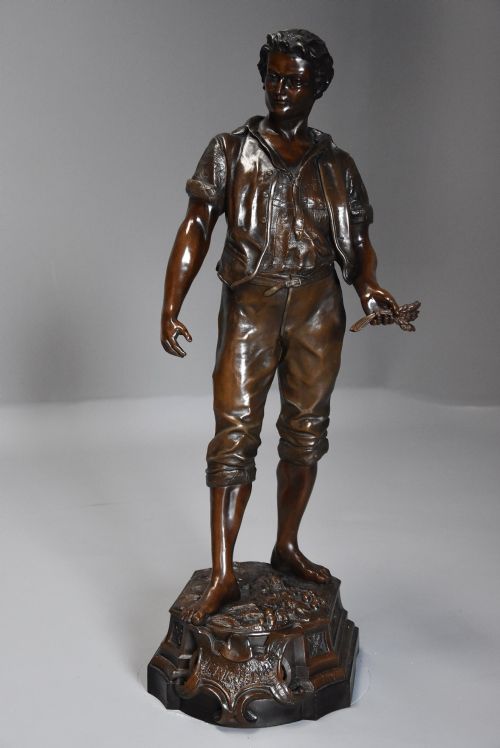
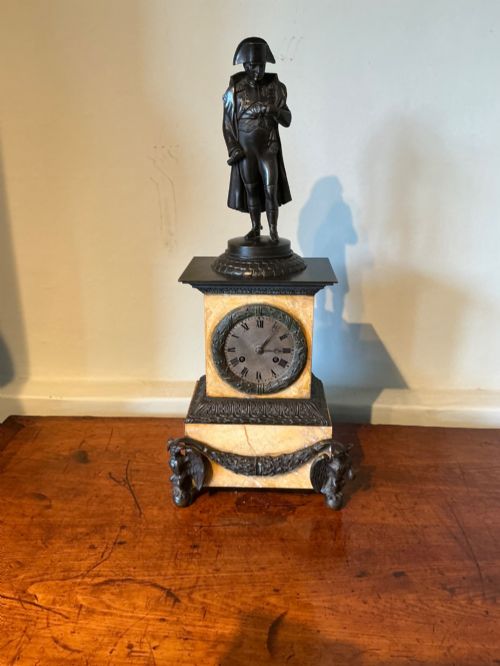
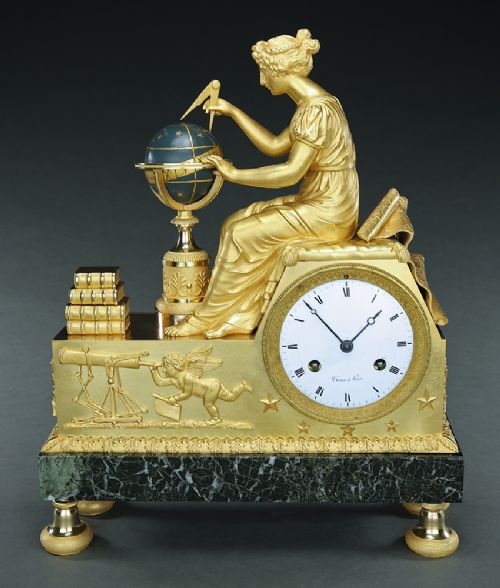
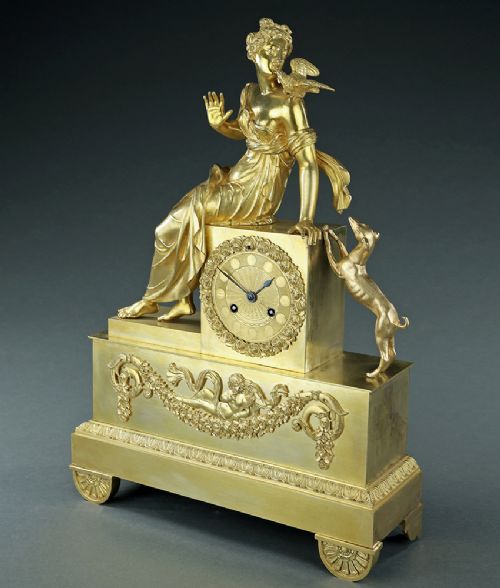
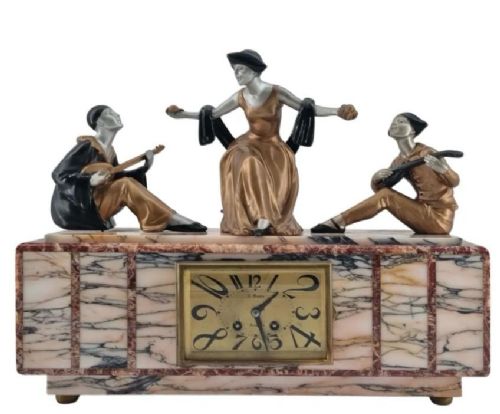
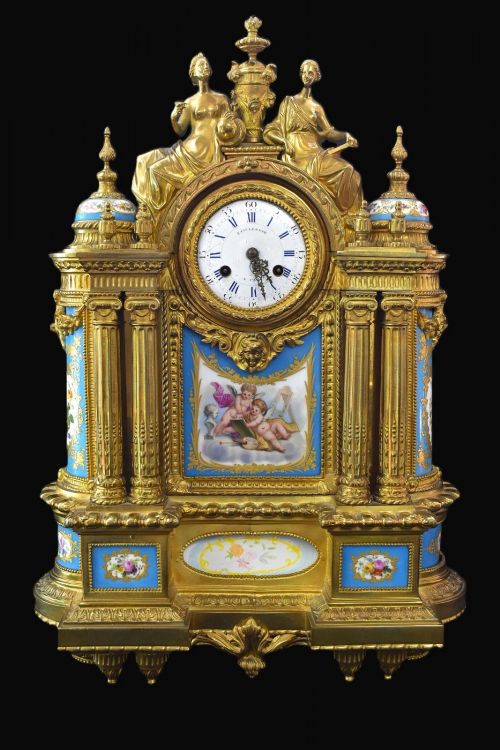
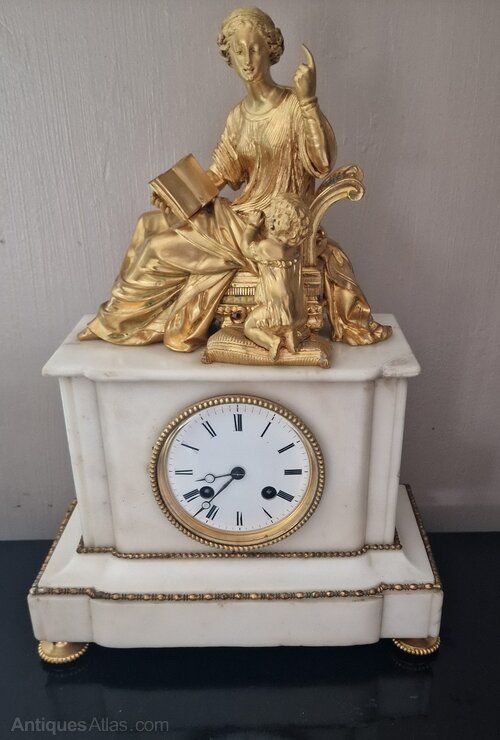
When you search for an antique french clock figure, you encounter horological works incorporating cast representations of historical rulers, mythological deities, and rural workers. These pieces range from mantel clocks featuring single figures like Napoleon or Diana the Hunter to elaborate garniture sets with matching side ornaments.
The objects span multiple periods, with nineteenth-century Victorian and Second Empire examples appearing alongside earlier Regency and Empire iterations. Forms include traditional mantel clocks, wall cartels, and large clock sets paired with candelabra or side urns.
Materials and Construction
Maker workshops utilised durable metals such as bronze, ormolu, brass, and spelter to cast the primary structures and sculptural figures. These metallic elements frequently receive fire gilding or bronze patination to enhance visual depth.
Many designs incorporate contrasting materials, pairing white marble, rouge marble, or Sevres porcelain panels with metal housings. Enamel dials provide the face for movements housed within these mixed-media architectural cases.
Listings feature movements housed in marble, ormolu, and bronze cases, spanning the nineteenth century from Regency to Art Deco styles.
Markers of Quality
Signed movements by known makers or Paris bronzeurs indicate higher workshop standards than unsigned equivalents. The integration between the clock case and the mounted figure demonstrates the original artisan's structural cohesion.
Etienne Lenoir·Berger Paris·Remond·Charpentier Paris·Lemerle Charpentier·Phillipe H Mourey·Deniere Et Fils·Deniere Paris·Reiche
The Antique French Clock Figure Glossary
- Ormolu
- Gilt bronze produced by applying a mercury and gold amalgam to a bronze base and heating it. This technique creates a durable golden surface characteristic of luxury French horology.
- Spelter
- A zinc alloy utilised as a cheaper alternative to bronze for sculptural figures. It takes patination well but possesses a lighter weight and softer structural strength.
- Garniture
- A set comprising a central clock accompanied by matching side pieces such as vases, candelabra, or urns. These ensembles provide balanced mantelpiece decoration.
- Cartel clock
- A wall-mounted clock featuring an ornate frame made of metal or wood. The design typically integrates sculptural flourishes surrounding the dial.
- Sevres porcelain
- Fine ceramic panels produced by the French royal manufactory. These are frequently mounted into the marble or gilt metal cases of nineteenth-century clocks.
Antique French Clock Figure: Frequently Asked Questions
What is a clock garniture set?
A clock garniture set consists of a main mantel clock accompanied by two matching side objects, such as urns or candelabra. These decorative groupings were designed to sit together on a mantelpiece or sideboard.
The matching pieces share the same materials, such as ormolu, marble, or bronze, and echo the sculptural style of the central clock figure.
How do I identify the period?
Periods are identified through a combination of stylistic clues, such as Empire Neoclassical symmetry, Rococo asymmetry, or Art Deco geometric lines. Material choices and casting techniques also point to specific manufacturing decades.
Maker signatures and registration marks stamped on the movement or case help narrow down the exact decade of production.
Where were these clocks displayed?
These clocks were primarily displayed in prominent public rooms of nineteenth-century homes, such as drawing rooms and formal parlours. Their sculptural figures served as conversation pieces as well as timekeepers.
Larger garniture sets required wide mantelpieces or dedicated console tables to support their substantial marble and bronze weight.
What is the difference between bronze and spelter?
Bronze is a heavy copper and tin alloy that accepts fine chasing and holds crisp sculptural detail over centuries. It represents the higher standard of French metalwork.
Spelter is a zinc-based metal used for more accessible figures. It is lighter than bronze and softer to the touch.