
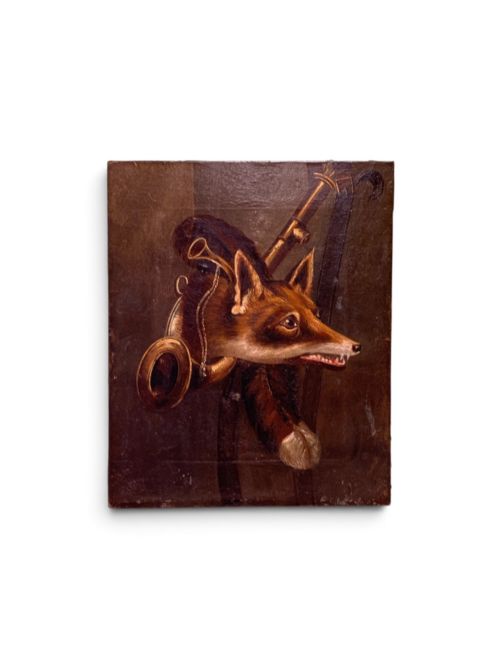
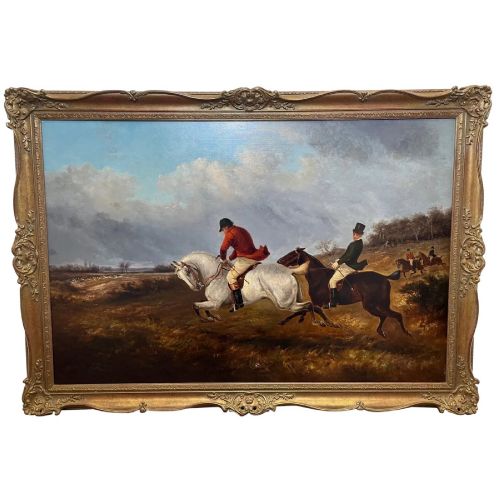
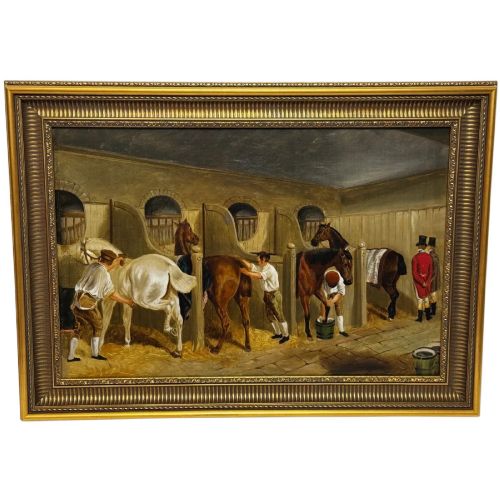
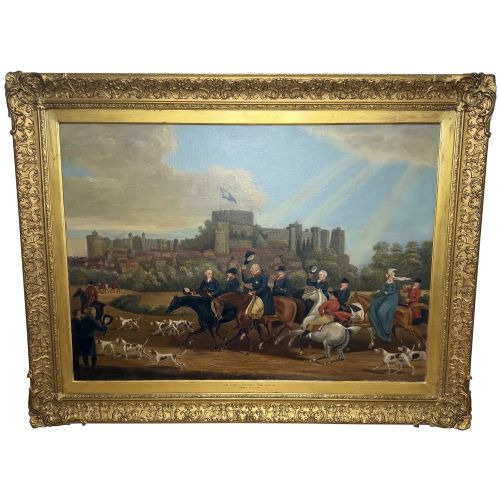


Antique Fox Hunt Artwork
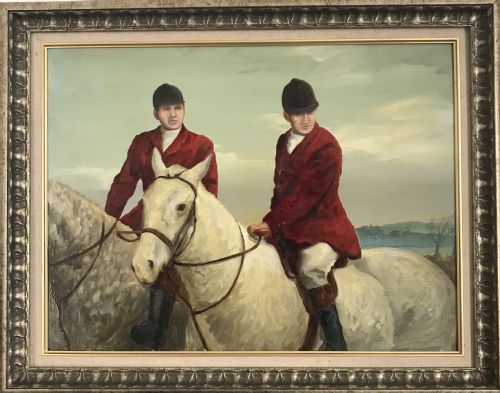
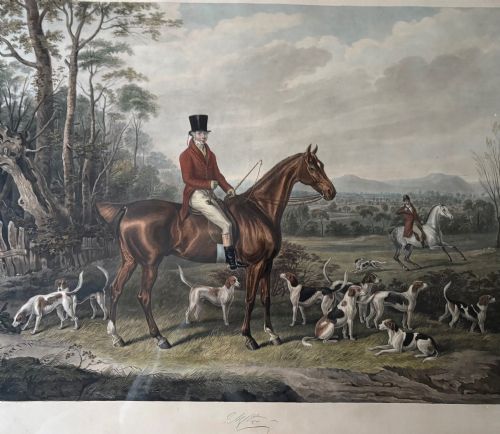
These pieces of antique fox hunt artwork capture the kinetic energy of the chase through oils, watercolours and prints.
Antique Fox Hunt Artwork
When you search for antique fox hunt artwork, you encounter visual records of equestrian sport spanning the nineteenth and early twentieth centuries. These works document the social rituals of the field, featuring hounds, huntsmen and galloping horses across rural landscapes.
You are most likely to meet mid-to-late nineteenth-century oil paintings and early twentieth-century prints on this page. The subjects range from quiet scenes at the meet to full gallop across country, rendered in various scales from intimate watercolours to large canvases.
How they were made
Artists deployed oil paint upon canvas, board and wood panels to build rich textures of horses' coats and winter landscapes. Watercolours on paper offered a lighter medium for rapid field sketches and finished compositions.
Printmakers utilised engraving and hand-colouring techniques to multiply popular hunting scenes for domestic interiors. Gilt wood framing complemented the traditional subjects, often housing original works or period prints.
Listings feature works spanning the Georgian, Victorian and Edwardian periods, utilising oil paint, watercolour, paper and canvas.
What varies in quality
The anatomical accuracy of horses and hounds distinguishes superior examples from routine studio output. Master artists captured the tension in a galloping stride and the alert posture of a pack on the scent with precise brushwork.
Condition of the medium and originality of the framing influence the integrity of the piece. Works retaining their initial character without heavy restoration preserve the painterly intent of the period.
Thomas Smythe·John Arthur Lomax·Basil Nightingale·Philip Henry Rideout·George Armfield·Charles Faulkner·Fannie moody·John Sanderson-Wells·Charles Clifford Turner·Guillaume Urban Régamey·George Goodwin Kilburne·William J Hodgson·J F Herring·Frank Algernon Stewart
The Antique Fox Hunt Artwork Glossary
- Aquatint
- A printmaking technique that produces tonal areas resembling watercolour washes. It was frequently used for reproducing hunting scenes.
- Chromolithograph
- A multicolour planographic printing process used to create vibrant reproductions of sporting art. The method builds up layers of ink to achieve rich colour saturation.
- Full Cry
- A hunting term describing the moment when the entire pack of hounds speaks together on the scent. In art, it depicts the climax of the chase.
- The Meet
- The initial gathering of riders, hounds and followers before the hunt commences. Paintings of this subject focus on social interaction and anticipation.
- Sporting Art
- A genre dedicated to the depiction of field sports, equestrian subjects and animals. It holds a distinct place in British visual culture.
Antique Fox Hunt Artwork: Frequently Asked Questions
What periods do these artworks cover?
The pieces span from the Georgian era through the Victorian period into the early twentieth century. Most works cluster around the nineteenth century and the Edwardian decades.
This timeframe captures the height of traditional British sporting art production before shifting tastes altered the genre.
Are these pieces original paintings or prints?
The selection includes both unique works and printed editions. You will find original oil paintings on canvas and wood alongside hand-coloured engravings and chromolithographs.
Each listing specifies the exact medium, distinguishing between hand-painted watercolours and published print runs.
How were hunting prints displayed originally?
Landowners and enthusiasts typically framed sets of hunting prints to hang in halls, libraries and dining rooms. These series often depicted sequential moments of a single run across well-known shires.
Matching frames and sets reflected the narrative structure of the sport within domestic interiors.
Who were the notable artists working in this genre?
Numerous specialist animal and sporting painters documented the field during these decades. Artists such as John Frederick Herring and George Armfield focused heavily on hounds and horses.
Others, including Charles Johnson Payne working under the moniker Snaffles, captured the humour and atmosphere of the hunt through prints and watercolours.