



Horse Hunt Wall Picture
A horse hunt wall picture brings the movement and atmosphere of the traditional chase directly into a room.
Horse Hunt Wall Picture
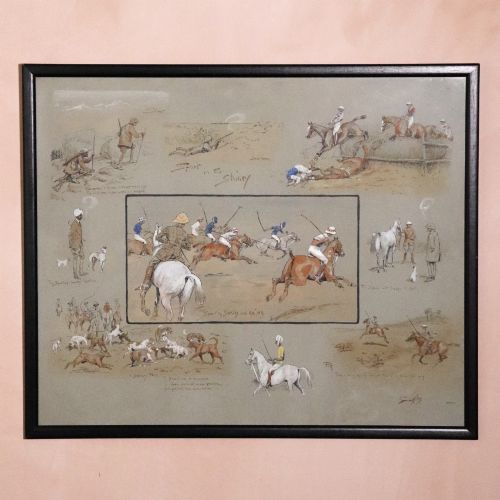
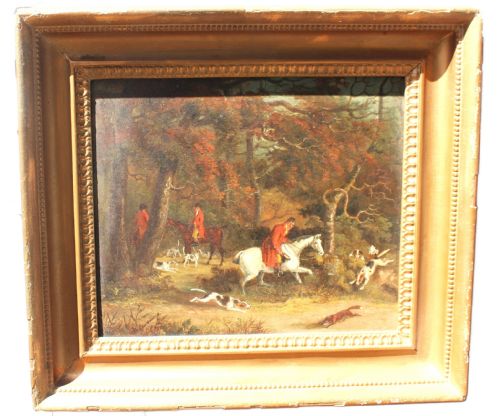
A horse hunt wall picture captures the dynamic energy of equestrian pursuits, hounds, and riders across various historical periods. When searching for a horse hunt wall picture, buyers encounter framed original prints, oil paintings, watercolours, and engravings spanning from the nineteenth century through the mid-twentieth century.
The selections on this page feature notable traditional subjects, including meet scenes, full cry moments, and individual portraits of hunters and hounds. Works range from hand-coloured engravings and monochrome watercolours to large oil paintings on canvas framed in wood and giltwood.
Originating predominantly within British sporting art traditions, these pieces reflect specific hunts such as the Quorn, Belvoir, and Berkeley. Buyers frequently find framed sets and individual plates that document the landscape and attire of historical riding culture.
How these artworks were made
Artists relied on oil on canvas, watercolour, pencil, and chalk to render horses and riders with anatomical precision. Engravings and prints utilised paper substrates, often receiving hand-colouring to enhance the depth of the scenes.
Frames incorporate wood, gilt, and giltwood constructions that complement the traditional aesthetic of equestrian subjects. Reverse silhouette painting on glass also appears as a specialised technique within the selection.
Several depictions capture horses navigating snowy drifts and muddy lanes, proving that historic riders faced decidedly soggy weather.
What varies in quality
The distinction between standard works and exceptional pieces lies in the artist's command of horse anatomy, movement, and atmospheric perspective. Master execution captures the tension in a hound's stride or the specific conformation of a hunter with fluid brushwork.
Condition of the paper, canvas, and original framing substantially influences the integrity of each piece. Intact surfaces free from excessive restoration retain the authentic character expected by serious collectors of sporting art.
Basil Nightingale·Michael Lyne·Charles Faulkner·John Sanderson-Wells·Charles Clifford Turner·Charles Johnson Payne Snaffles·Guillaume Urban Régamey·George Goodwin Kilburne·William J Hodgson·H Alken·Geoffrey Mortimer·Frank Algernon Stewart·Frank Dadd·Wilfred Bailey·James Pollard
The Horse Hunt Wall Picture Glossary
- Chromolithograph
- A multicoloured print produced through a specific lithographic process using multiple stone plates. This technique allowed for faithful reproductions of original watercolours and paintings.
- Giltwood
- Timber carved and coated with a thin layer of gold leaf or metallic powder. It provides traditional frames with a reflective, ornamental finish.
- Full cry
- The moment in a hunt when the pack of hounds gives tongue simultaneously upon finding the scent. It represents the most active phase depicted in sporting art.
- Reverse silhouette
- An image painted directly onto the back of a glass panel. This method protects the pigment from surface wear and creates a distinct glossy depth.
Horse Hunt Wall Picture: Frequently Asked Questions
How should I hang a framed hunt painting?
Position the artwork at eye level in a space with controlled lighting to protect the medium from direct sunlight. Consider pairing smaller watercolours or engravings in a symmetrical arrangement to balance a room.
Ensure the wall fixings match the weight of the timber and giltwood frames. Traditional sporting art pairs well with panelled walls and neutral heritage paint colours.
Are these prints original or reproductions?
The listings include period original prints, hand-coloured engravings, and unique paintings on canvas or paper. Check the title and period details to distinguish between printed editions and one-off painted works.
Artists such as Snaffles produced distinctive original prints and watercolours that bear signature characteristics of early twentieth-century sporting art.
What framing is typical for these pieces?
Many works retain their period wooden frames, often finished with gilt or giltwood moulding. These traditional surrounds complement the subject matter and reflect the era of creation.
When frames show age, retain them if structurally sound to preserve the historic integrity of the artwork. Professional conservation can stabilise fragile wooden corners without removing patina.
How do I identify the specific hunt in a picture?
Artists often inscribed the titles, locations, or names of packs directly onto the mount or canvas. References to places like Leicestershire, or specific names such as the Quorn and Berkeley hunts, provide clear indicators.
Examining the uniforms of the huntsmen and the terrain depicted also helps pinpoint the regional focus of the artwork.