





Framed Sporting Aquatint
A framed sporting aquatint brings the historic energy of the racecourse, field and pitch directly onto your wall.
Framed Sporting Aquatint
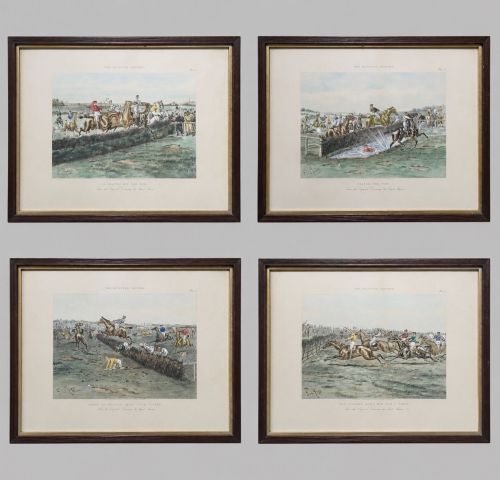
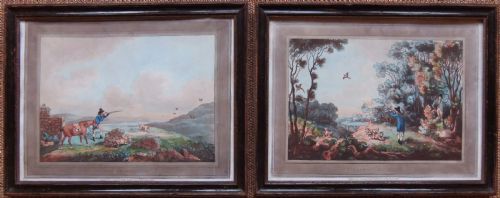
A framed sporting aquatint captures the dynamic movement of past equestrian pursuits, racing and field sports in traditional wall art. You will frequently encounter sets of four prints depicting subjects like horse racing, shooting, hunting and boxing.
The pieces on this page span the Georgian, Regency and Victorian eras, originating from the nineteenth century. These artworks reflect the sporting tastes and pastimes of nineteenth century collectors through detailed prints and engravings.
Forms include individual framed artworks and complete multi-part sets housed behind glass within wood or gilt wood frames. Each piece preserves historical sporting scenes using ink, paper and occasional watercolour highlights.
How they were made
These works utilise paper surfaces printed with ink to create the tonal depths characteristic of the aquatint technique. Many examples incorporate hand-applied watercolour to enhance the coloured engravings and prints.
Makers housed these works inside protective wooden and gilt wood frames beneath panes of glass. The combination of paper, ink and period framing protects the delicate printed surfaces from atmospheric damage.
Framed Sporting Aquatint Retail Price Guide 2026
Typical asking prices for framed sporting aquatint among the pieces listed under this phrase on Sellingantiques today, from the lower quarter to the upper quarter. They describe what is for sale here now, not the wider market.
Listings feature paper, ink, wood and gilt wood materials across Georgian, Regency and Victorian periods.
What varies in quality
Quality separates complete sets from single stray plates, with matched groupings commanding greater visual cohesion. The precision of the original printmaker and the vibrancy of any added watercolour washes distinguish finer examples.
The integrity of the early framing materials, including original gilt wood and glass, influences the overall character of the piece. Well-preserved paper surfaces retain sharper contrasts between ink lines compared to faded or tired impressions.
George Finch Mason·Alken·Charles Hunt·Francis Calcroft Turner·Sam Howitt
The Framed Sporting Aquatint Glossary
- Aquatint
- A printmaking technique that produces areas of tone resembling watercolour washes. It allows artists to achieve subtle gradations of light and shade on paper.
- Engraving
- A method of cutting a design into a metal plate to hold ink for printing. It creates sharp, precise lines that define the figures and backgrounds.
- Gilt wood
- Wood coated with a thin layer of gold leaf or gold paint. This finish provides a bright, decorative border to period frames.
- Watercolour
- Paint made with water-soluble pigments used here to add colour to printed images. Hand-colouring brings specific hues to equestrian and hunting scenes.
Framed Sporting Aquatint: Frequently Asked Questions
What subjects appear in these prints?
The subjects focus on nineteenth century pastimes including horse racing, shooting scenes, fox hunting and quirky events like jumping in sacks or rackets at the Kings Bench.
These themes reflect the recreational interests of the Georgian and Victorian eras.
Are these works sold in sets?
Many listings feature complete sets of four plates capturing sequential moments of a race, hunt or shooting expedition.
Single framed prints also appear alongside these multi-part groupings.
How should I hang these framed pieces?
Hang them at eye level in studies, libraries or hallways where their detailed narrative scenes can be examined closely.
Keep them away from direct sunlight to protect the paper and watercolour pigments.
How do I identify the period?
Periods are identified through framing styles, paper characteristics and specific nineteenth century publication dates or artist attributions.
Georgian, Regency and Victorian examples each display distinct aesthetic markers from their respective decades.