


Georgian Equestrian Wall Art
Georgian equestrian wall art brings the energy of the stable, the hunt, and the open road directly into the room through period painting and printmaking.
Georgian Equestrian Wall Art
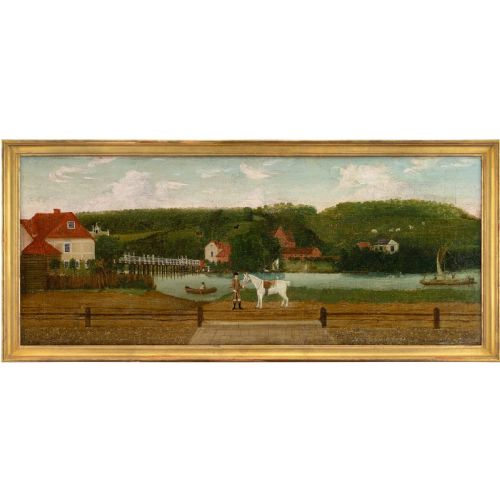
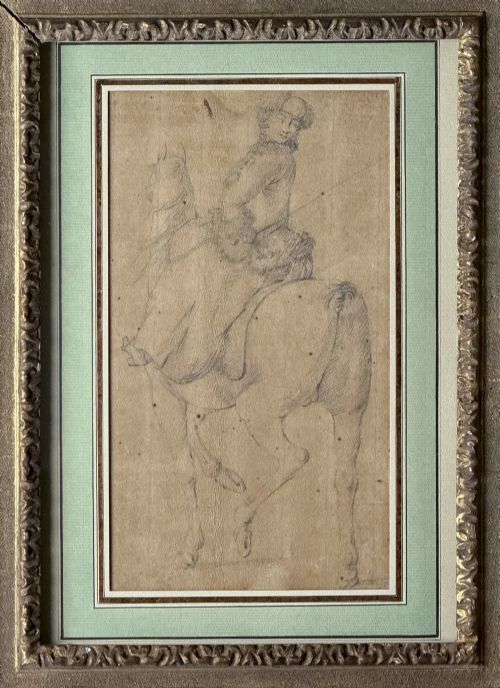
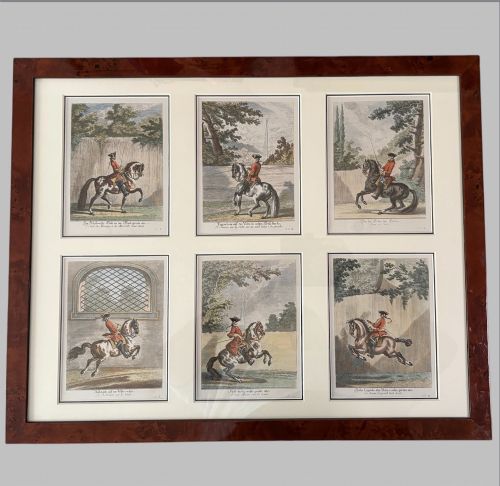
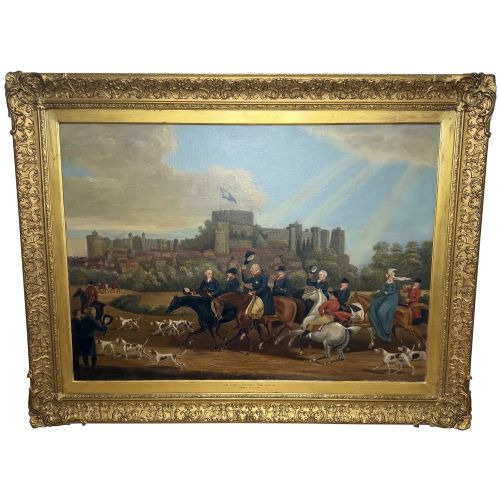
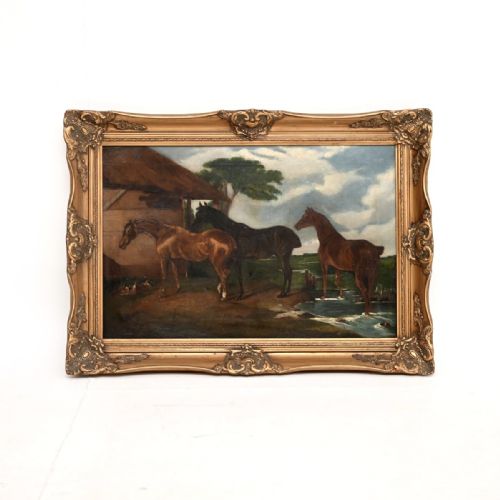
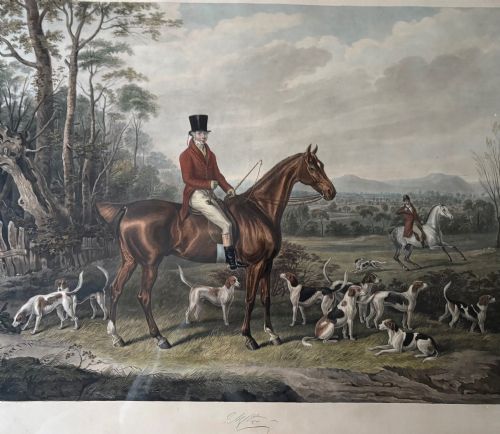
When you search for georgian equestrian wall art, you encounter a selection spanning oil paintings on canvas and pine panel, alongside hand-coloured copper engravings and framed drawings. These works capture horses, grooms, coaching scenes, and hunting parties across the eighteenth and nineteenth centuries.
The most common formats on this page are oil paintings in wood and gilt wood frames, together with historical prints on paper under glass. Subjects range from individual portraits of hunters and racehorses to lively coaching scenes and country landscapes.
Origins stretch from English country houses to Northern European workshops, reflecting a sustained cultural fascination with horses and sporting life. Each piece documents a specific era of equine depiction, from detailed eighteenth-century studies to nineteenth-century narrative scenes.
What varies in quality
The anatomical accuracy of the horse and the naturalism of the landscape separate superior paintings from simpler decorative works. Master painters rendered muscle, bone, and movement with precise observation, whereas lesser hands relied on rigid formulae.
The crispness of the impression in printed works and the vibrancy of the hand-colouring determine distinction among engravings. Well-preserved paper and strong, unfaded pigments retain their visual clarity far better than examples exposed to damp or light.
The periods represented span from the eighteenth century through the Georgian and Regency eras into the nineteenth and early twentieth centuries.
Ridinger·John Sanderson Wells·William Williams·Abraham Cooper·Clifton Tomson·Samuel Henry Alken·Johan Noah Bemmel·John Vine·W Ward·John Charles Maggs·Samuel John Egbert Jones·William Shayer Snr·James Pollard·Harry Ashby
The Georgian Equestrian Wall Art Glossary
- Aquatint
- A printmaking technique that produces tonal areas resembling watercolour washes. It was frequently used in sporting prints to render skies and shaded ground.
- Eglomise
- A process of applying gold or silver leaf to the reverse side of glass, often seen in decorative borders on historical frames.
- Mezzotint
- A printmaking method of the intaglio family where the plate is roughened to achieve rich dark tones and subtle gradations of light.
- Panel painting
- A work executed on a flat piece of wood rather than canvas. Pine panels were common in earlier European traditions.
- Signet ring
- A ring bearing a seal or crest, sometimes associated with period personal items found alongside paper ephemera in mixed collections.
Georgian Equestrian Wall Art: Frequently Asked Questions
What subjects appear in georgian equestrian wall art?
The subjects include individual portraits of named racehorses, coaching scenes on mail routes, fox hunting parties, and stable interiors with grooms and hounds.
Artists recorded the practical reality of horse-drawn transport alongside the leisurely pursuits of the landed gentry in countryside settings.
How do I identify a period frame?
Period frames are typically constructed from wood with gesso and gilt finishes, showing hand-carved detailing or composition ornaments appropriate to the eighteenth and nineteenth centuries.
Original frames exhibit signs of age in the gilt surface and backboards, helping to confirm the context of the artwork they enclose.
Where were these artworks originally displayed?
These works hung in country houses, estate libraries, coaching inns, and sporting lodges where owners celebrated their horses and hounds.
They served both as decorative adornments and as records of prized animals, hunting achievements, and notable transport networks.
How should I care for paper prints?
Paper prints require protection from direct sunlight to prevent the fading of hand-coloured washes and the yellowing of the paper support.
Glazing should be modern conservation glass to filter ultraviolet light, and the backing boards must be acid-free to stop chemical degradation over time.