




Antique Four Panel Screen
An antique four panel screen divides a room with folding partitions of leather, lacquer or wood, offering privacy and decorative depth.
Antique Four Panel Screen
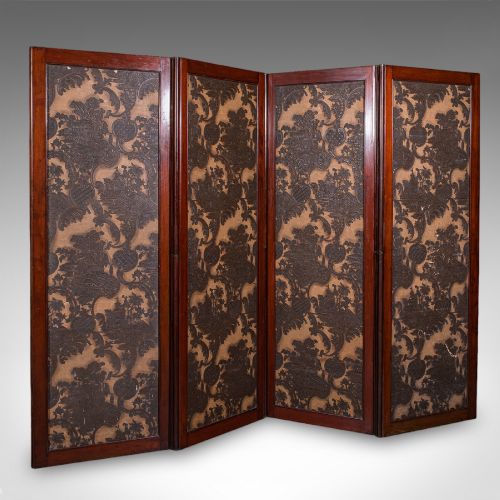
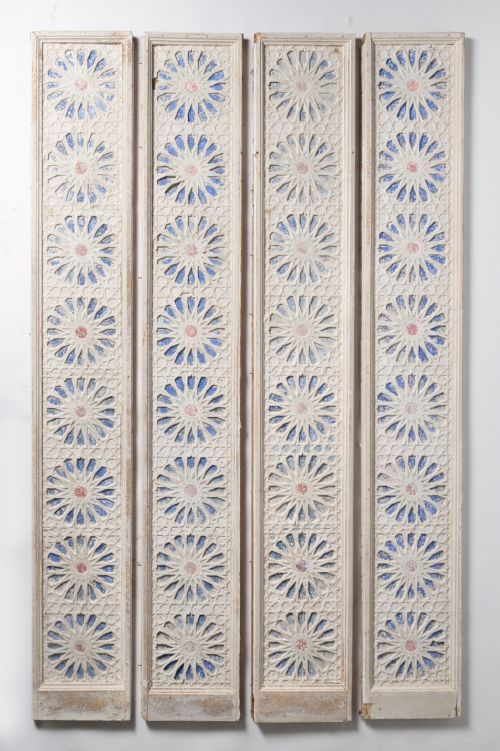
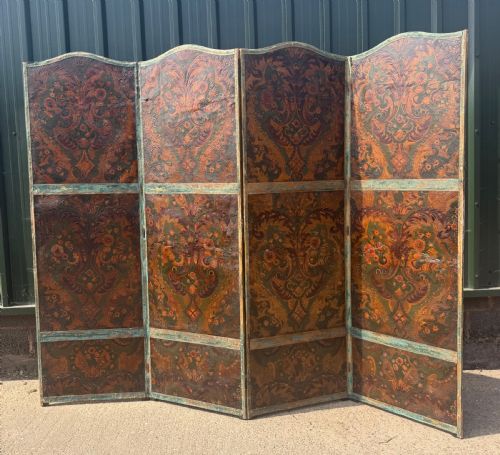
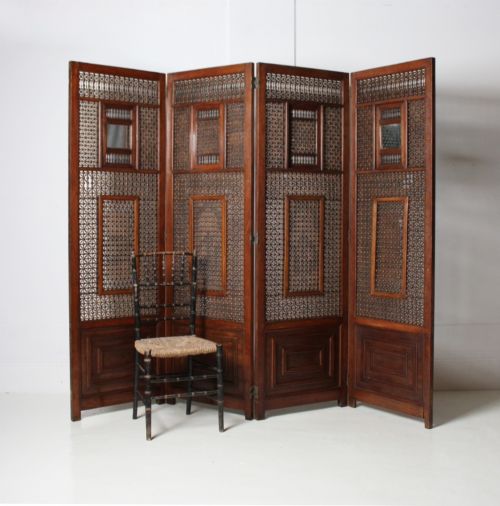
When searching for an antique four panel screen, buyers encounter folding partitions designed to divide spaces or provide privacy across domestic interiors. These pieces take the form of tall room dividers, dressing screens, and smaller fire guards constructed with four distinct leaves.
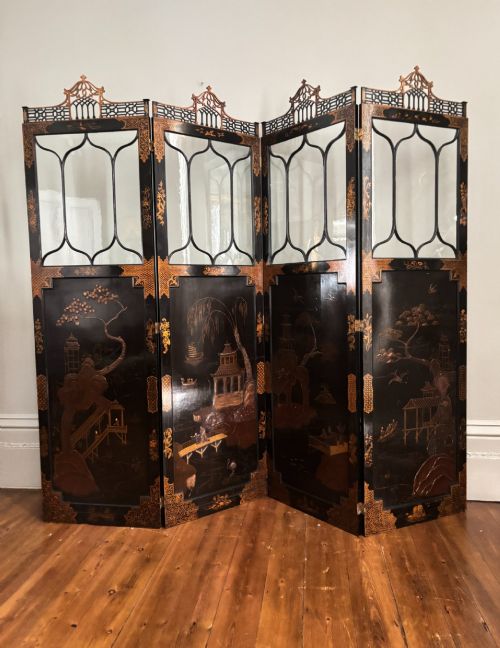
The selections span numerous periods, notably the nineteenth and early twentieth centuries, alongside earlier eighteenth-century examples. Common stylistic approaches range from Chinoiserie lacquer and carved hardwood to painted canvas and upholstered needlepoint panels.
Origin points vary widely, encompassing English mahogany frameworks, French leather works, and Japanese textile designs. Buyers frequently select these architectural partitions to alter room proportions and introduce historic texture.
How they were made
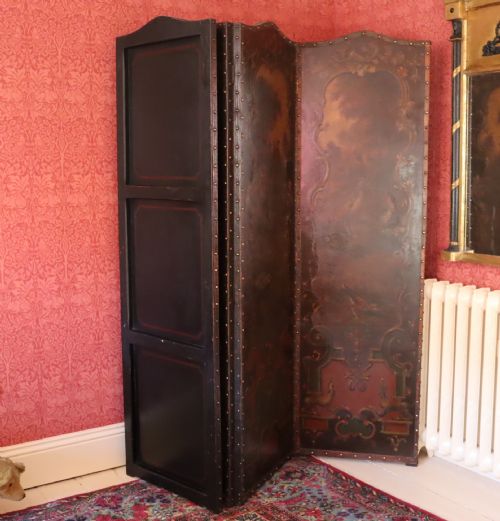
Maker construction relies on timber frames of mahogany, walnut, oak, and giltwood joined to support flexible hinges between leaves. These structures carry varied infill materials, including embossed leather, canvas, silk, paper mache, and heavy brass or iron mesh.
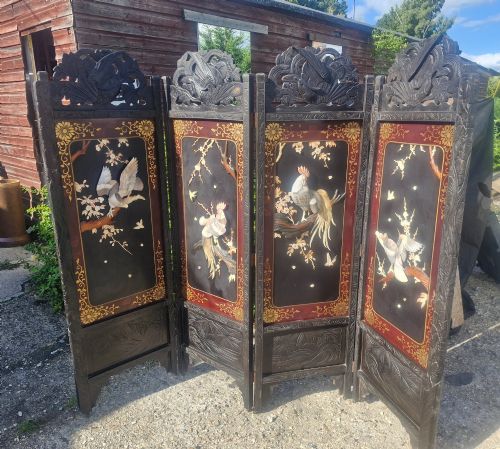
Decorative techniques involve hand painting, polychrome application, gilt embossing, needlepoint upholstery, and deep bone carving. Many surfaces display layered lacquer or applied scrap work, requiring careful assembly to maintain structural stability across multiple folding sections.
Antique Four Panel Screen Retail Price Guide 2026
Typical asking prices for four panel screen among the pieces listed under this phrase on Sellingantiques today, from the lower quarter to the upper quarter. They describe what is for sale here now, not the wider market.
Several Victorian screens doubled as photographer's backdrops for family portraits.
What varies in quality
Quality separates through the integrity of the original hinges and the stability of the timber framework supporting the four leaves. Superior examples retain intact hand-painted detailing, crisp carving, or well-preserved gilt embossing without extensive modern restoration.
The depth and execution of artistic embellishment, whether deep-carved bone figures or intricate Chinoiserie lacquer, dictate the tier of craftsmanship. Materials such as Cordoban leather or fine hardwoods elevate the physical weight and presence of the divider.
Paul Sormani·William Morris
The Antique Four Panel Screen Glossary
- Coromandel
- A type of Chinese incised lacquer work featuring dark grounds filled with ivory, jade, or painted highlights. This technique creates a textured surface across folding panels.
- Mashrabiya
- An architectural element of turned wooden lattice-work used to filter light and air. These panels appear in room dividers requiring intricate geometric patterns.
- Scrap work
- A Victorian craft method applying printed paper scraps onto a backing surface and varnishing the result. Such screens display dense collages of historic imagery.
- Needlepoint
- Canvas work embroidery executed with wool or silk yarn. Panels featuring this textile provide textured upholstery within wooden frames.
- Chinoiserie
- European interpretations of Chinese and East Asian artistic traditions. This style dominates decorative lacquer and painted screens from the eighteenth and nineteenth centuries.
Antique Four Panel Screen: Frequently Asked Questions
How do you place a four panel screen?
Position the screen with the folds angled slightly to ensure stability on a flat floor surface.
Arrange the panels to catch natural light or to frame a specific corner of the room.
Were these screens used as draught excluders?
Historic households utilised tall folding partitions to block cold drafts from entering doors and windows.
Heavier leather and wooden variants provided effective thermal barriers in large rooms.
How do you clean an antique lacquer screen?
Dust surfaces gently with a dry, soft microfiber cloth to prevent scratching the fragile finish.
Avoid liquid cleaners and modern solvents which can damage historic lacquer or painted layers.
What is a scrap screen?
Victorian scrap screens feature layered paper clippings pasted onto a canvas or wooden backing.
These personal creations document popular imagery and ephemera from the nineteenth century.
Can these screens support heavy weight?
Folding partitions are designed for self-support and space division rather than bearing heavy loads.
Leaning items against the fabric or panels can strain the hinges and frame joints.