



Antique Four Fold Screen
An antique four fold screen partitions a room or frames a space with hinged panels of wood, leather, canvas, or textile.
Antique Four Fold Screen
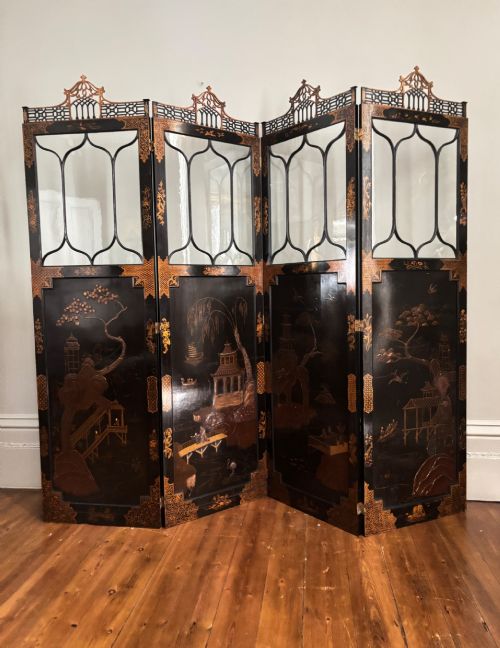
An antique four fold screen serves to divide rooms, create privacy, or act as a dressing partition. The pieces seen here span the 18th, 19th, and early 20th centuries, taking forms from grand country-house dividers down to smaller dressing screens.
Most examples met on this page are tall folding panels made in styles such as Victorian, Chinoiserie, Arts and Crafts, or Regency. They function as portable architectural elements that alter the proportions and flow of an interior.
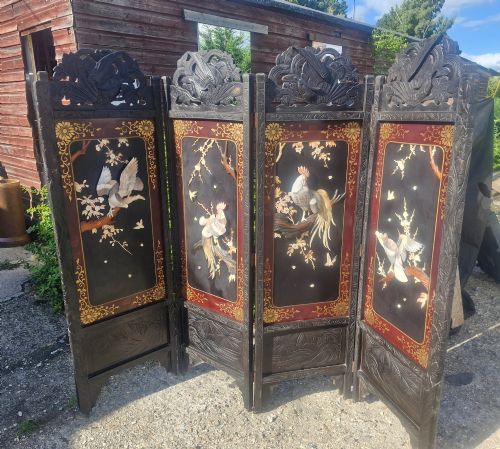
Makers and workshops across Britain, France, China, and Japan produced these panels using local timbers, imported lacquers, and heavy textiles. A buyer meets everything from plain mahogany frames to heavily carved or painted surfaces.
How they were made
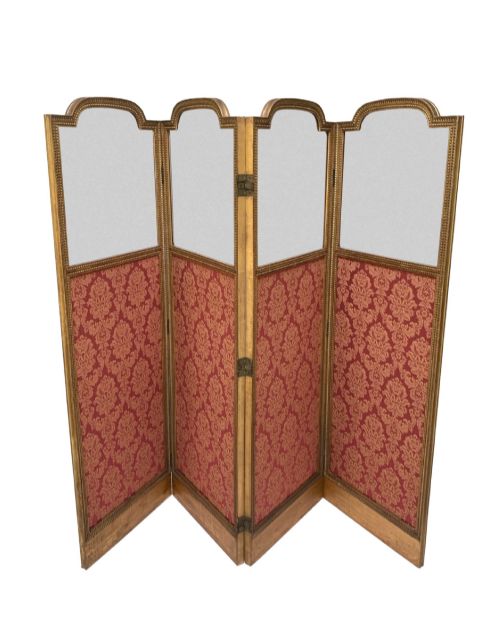
Makers constructed the structural frames of these screens in timbers such as mahogany, oak, walnut, and ebonised wood, joined with hinges to allow multi-directional folding. Panels were then infilled with stretched canvas, tooled leather, needlepoint, silk cotton, or paper mache.
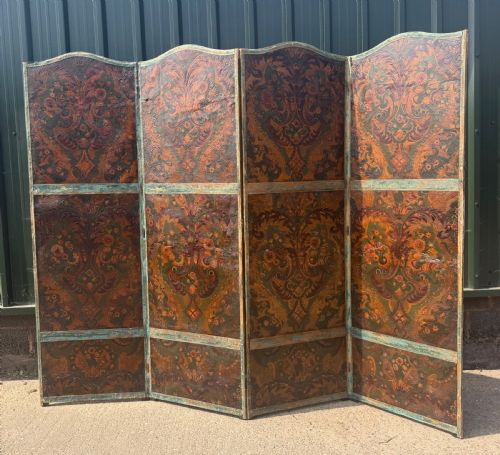
Decorative techniques relied on hand painting, polychrome work, gilt embossing, and deep bone or hardstone mounting. Lacquered surfaces required multiple coats applied to wood or papier mache, while leather panels were stamped, painted, and gilt by hand.
Several Victorian screens doubled as photographic props, capturing family memories behind layers of paper scraps and fabric.
What varies in quality
Quality rests in the depth of the carving, the crispness of the hand painting, and the integrity of the original hinges. Superior screens display finely detailed needlepoint, well-preserved tooled leather, or intricate lacquerwork that remains stable across all four panels.
The choice of primary timber and the complexity of the internal infill separate standard room dividers from exceptional salon pieces. Original decorative schemes that retain their depth of colour and surface texture hold greater visual weight.
Paul Sormani·William Morris
The Antique Four Fold Screen Glossary
- Chinoiserie
- European decorative style inspired by Chinese artistic traditions, often featuring painted lacquer, gilt motifs, and scenic landscapes. This aesthetic appears frequently on 18th and 19th century screens.
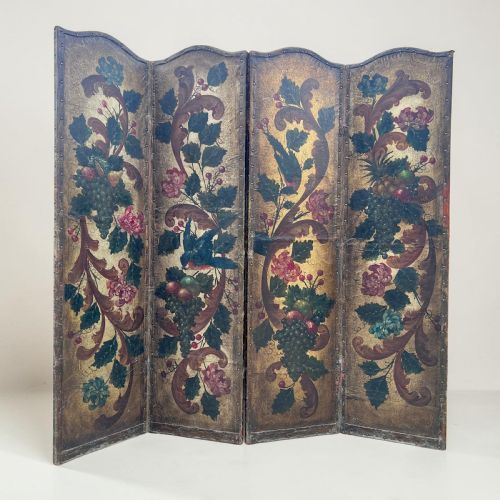
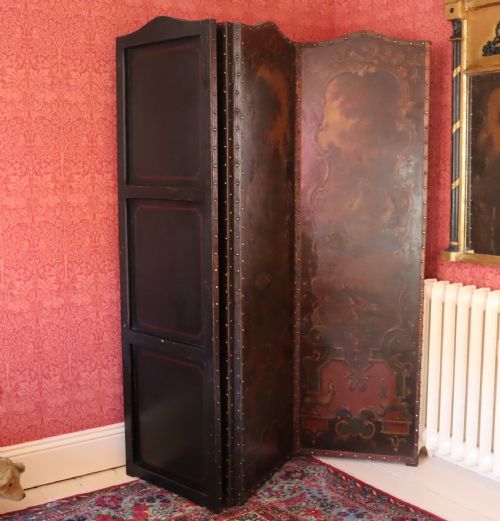
- Cordoban leather
- Heavy leather stamped, painted, and gilt in relief, originating from Spanish tanning methods. It was widely used for durable and ornate room dividers.
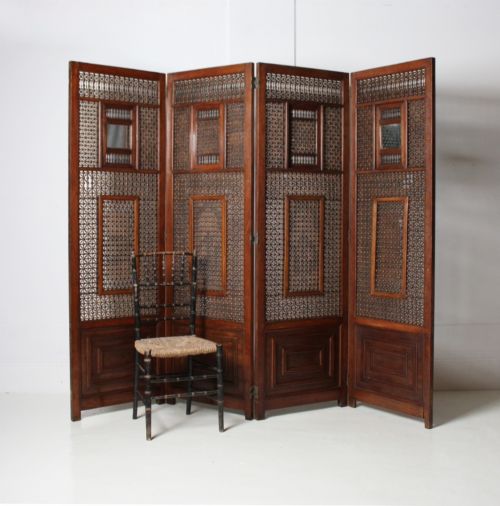
- Mashrabiya
- Traditional wooden lattice work formed from fitted turned bobbins, creating intricate geometric screens. Examples provide partial privacy while allowing air and light to pass through.
- Scrap work
- A Victorian craft method where printed paper scraps and engravings were collaged onto a canvas or wood panel surface. These screens often served as photographic props.
- Needlepoint
- Stitched textile work using wool or silk yarn on an even-weave canvas ground. It provides a tactile, upholstered surface within the wooden frame of a dressing screen.
Antique Four Fold Screen: Frequently Asked Questions
How were four fold screens used historically?
These screens partitioned large rooms to create private seating areas or served as dressing screens in bedrooms.
They also functioned as decorative wall backdrops and photographic props during the Victorian period.
What materials are common in these screens?
Frames typically utilise hardwoods such as mahogany, oak, and walnut, while panels employ leather, canvas, silk cotton, and needlepoint.
Asian imports often feature black lacquer, papier mache, and carved bone or hardstone mounts.
How do I tell an 18th century screen from a Victorian one?
Eighteenth century examples frequently showcase hand-painted Dutch or Cordoban leather with gilt chinoiserie motifs.
Victorian and Edwardian versions lean towards scrap work collages, needlepoint upholstery, and ebonised oak frames.
Are these screens stable enough for daily use?
Most antique four fold screens are freestanding and rely on the multi-directional fold of their hinges for balance.
Heavier wood and leather versions stand firmly, though care should be taken when placing them in high-traffic areas.