


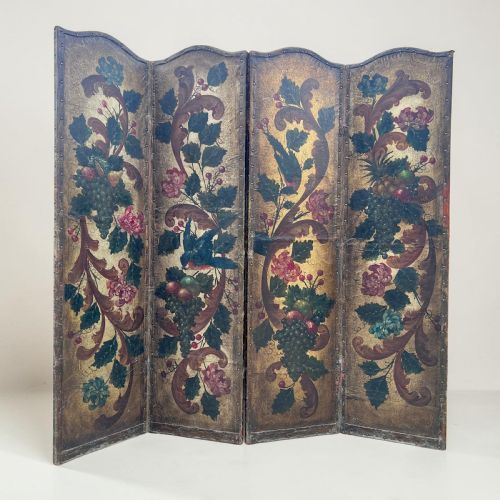


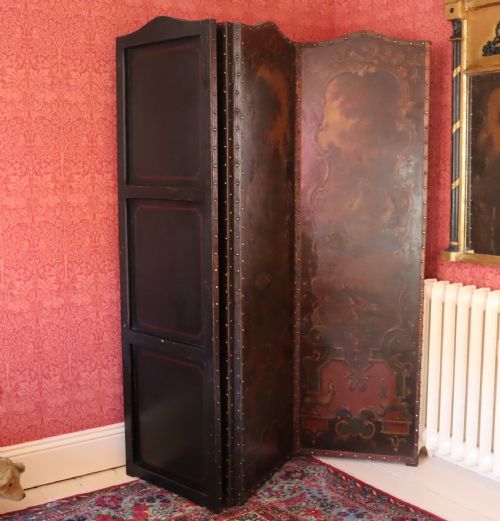


Hand Painted Room Divider
These hand painted room divider pieces bring flexible elegance and rich historic character to interiors through folding panels.
Hand Painted Room Divider
A hand painted room divider provides both functional separation and striking pictorial interest within a space. These folding screens span multiple panels connected by hinges, allowing them to adapt to different room layouts.
The selections here encompass diverse stylistic traditions including Chinoiserie, French Chateau, Victorian, and Continental Baroque. Folding screens and room dividers form the core of what appears in this group.
Originating across different centuries, these pieces include examples from the eighteenth, nineteenth, and early twentieth centuries. The typical configuration relies on three or four folding leaves or panels.
How they were made
Makers utilised timber, wood, and canvas as foundational structural supports for these folding panels. Brass hardware frequently forms the hinges connecting the separate leaves together.
Surface decoration relies on lacquer, oil paint, and gold leaf applied by hand. Certain examples employ embossed leather treated with pigments and metallic highlights.
Hand Painted Room Divider Retail Price Guide 2026
Typical asking prices for hand painted room divider among the pieces listed under this phrase on Sellingantiques today, from the lower quarter to the upper quarter. They describe what is for sale here now, not the wider market.
Listings feature periods spanning from the eighteenth century through to the mid-twentieth century.
What varies in quality
The refinement of the hand-painted brushwork distinguishes simpler items from superior examples. Skilled artistry in the pictorial details creates depth and visual harmony across the panels.
The choice of base material and decorative medium influences the overall character of each screen. Elaborate gilt embossing and deep lacquer finishes represent higher levels of craftsmanship.
The Hand Painted Room Divider Glossary
- Chinoiserie
- European artistic style reflecting Chinese motifs and decorative techniques. This aesthetic heavily influenced numerous painted folding screens.
- Cordoban
- Pertaining to decorated leather originating from Spain. These heavy leather panels often feature embossed and gilt designs.
- Lacquer
- Protective and decorative coating applied in multiple layers to wood surfaces. Asian and European makers utilised this technique for glossy finishes.
- Leaf
- An individual vertical panel composing a folding screen. Most screens utilise three or four leaves joined by hinges.
Hand Painted Room Divider: Frequently Asked Questions
How do I use a room divider?
A folding screen divides large spaces into intimate zones or conceals specific areas within a room. Position the panels at angles to ensure the screen stands stable on the floor.
They also function as decorative wall backdrops behind furniture pieces. Adjusting the folds alters the overall footprint and visual span of the divider.
How do I date a painted screen?
Examine the timber construction, hinge types, and underlying materials to establish an age bracket. Stylistic indicators like Victorian or eighteenth-century motifs offer further chronological clues.
Pictorial techniques and ageing patterns in the paint or lacquer guide the assessment. Comparing structural details with documented historical examples confirms the period.
What materials are common in screens?
Wood and timber provide the primary structural framework for most folding panels. Canvases and leather sheets frequently serve as the painted surface stretched across frames.
Surface enrichment often includes oil paint, lacquer, and gold leaf applications. Brass components typically secure the individual leaves together.
Are leather screens durable?
Historic leather panels utilise thick animal hides treated for rigidity and decorated with oils or embossing. These robust surfaces withstand normal interior conditions when handled with care.
Positioning leather screens away from direct heat sources preserves the material. Regular dusting maintains the painted and gilt surface details.