



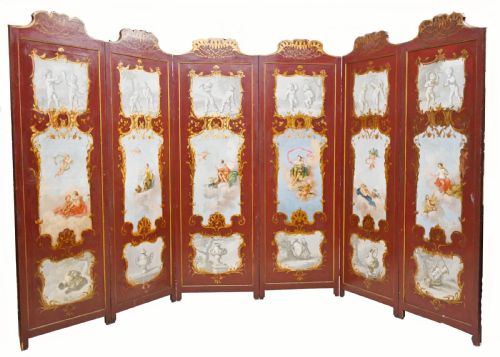

Decorative Folding Privacy Screen
A decorative folding privacy screen divides a room with carved bone, hand-painted leather or lacquered panels.
Decorative Folding Privacy Screen
A decorative folding privacy screen divides a room, frames a corner or hides a fireplace when not in use. These panels span from the eighteenth century to the mid-twentieth century, originating across Europe and Asia.
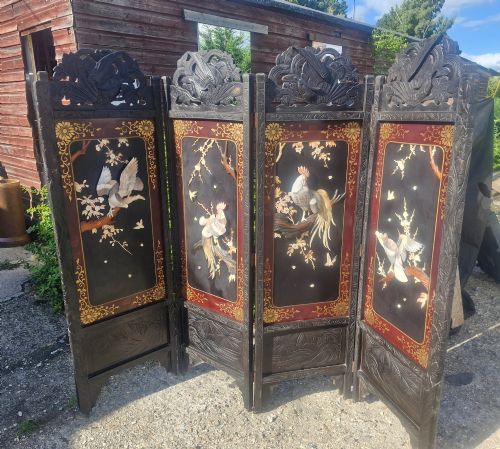
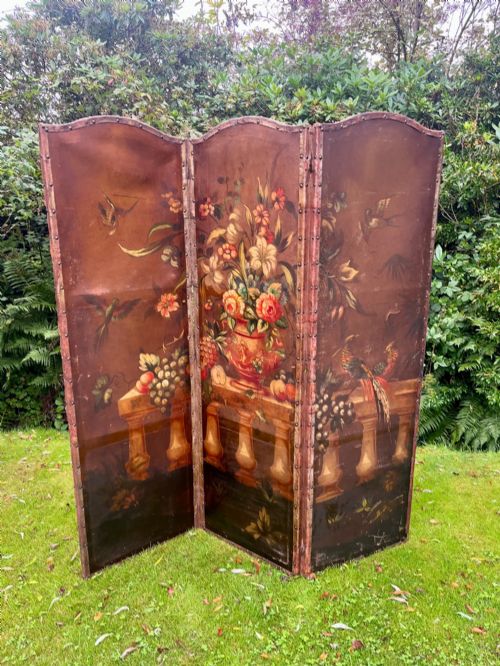
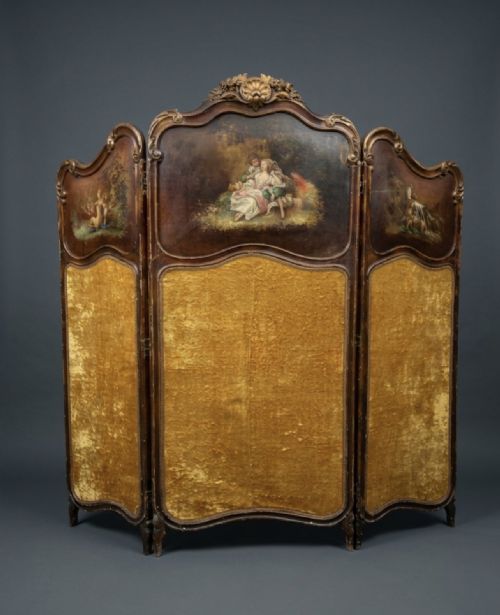
The version most commonly met on this page is the multi-fold wooden or leather panel painted with pastoral or Chinoiserie scenes. Examples range from compact Victorian modesty screens to large four-fold and six-fold room dividers.
Makers utilised materials from brass and bone to silk cotton and velvet fabric. Styles draw on French Rococo Revival, Continental Baroque, Japanese Meiji and Arts and Crafts traditions.
How they were made
Carpenters constructed frames in hardwood, oak or walnut, joining multiple panels with hinges to allow flexible folding. Artisans then stretched leather, silk cotton or velvet across the framework, or fitted solid wooden panels into place.
Surface decoration required specialist skills, including deep carving into bone, hand painting with oil paint, and gilt embossing on leather. Lacquered finishes and hardstone mounts added further depth to Asian and Chinoiserie pieces.
One Victorian screen doubled as a photographic prop, standing ready to transport sitters to an exotic backdrop before the camera lens clicked.
What varies in quality
The standard of a decorative folding privacy screen rests on the depth of the carving and the execution of the painted panels. Hand-painted leather and deep carved bone display artistic competency that mechanical reproduction cannot replicate.
The integrity of the structural wood and the original hinges determine the durability of the piece. Superior examples retain their original textiles, such as William Morris velvet fabric or early silk cotton, alongside untouched lacquer and gilt work.
The Decorative Folding Privacy Screen Glossary
- Cordoban leather
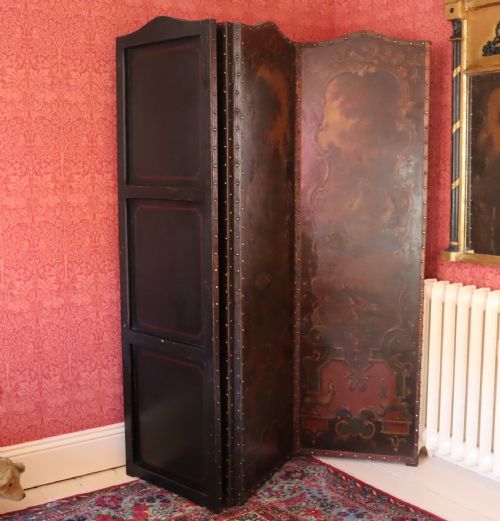
- Leather decorated with rich tooling, hand painting and gilt embossing, originating from Spanish tanning traditions. It provides a heavy, textured surface for historical room dividers.
- Modesty screen
- A low folding screen historically placed near a fireplace or dining table to deflect heat from the face. These smaller variants often feature hand-painted wooden or leather panels.
- Meiji
- A period of Japanese history spanning from eighteen sixty-eight to nineteen twelve, known for intricate craftsmanship. Pieces from this era frequently incorporate carved bone and detailed scenic panels.
- Rococo Revival
- A nineteenth-century design movement favouring ornate, asymmetrical scrolls and natural motifs. French examples in walnut utilise this style to frame pastoral painted scenes.
Decorative Folding Privacy Screen: Frequently Asked Questions
How do I clean a painted leather screen?
Dust the surface gently with a soft, dry cloth to remove loose particles without disturbing the pigment. Avoid using liquid cleaners or harsh chemicals on hand-painted or gilt-embossed leather.
Consult a textile or paper conservator if the paint shows signs of flaking or instability. Proper environmental humidity helps prevent the leather from drying out and cracking over time.
Were these screens used for privacy?
Historical households utilised folding screens to partition large, draughty rooms into private seating areas. They also served to block the heat of a fire or conceal unsightly corners.
Today, they function primarily as decorative room dividers or photographic backdrops in domestic interiors.
How can I date a wooden folding screen?
Examine the construction joints, hinge types and wood species used in the frame. Hand-carved walnut and oak point towards earlier European periods, while lacquered or bone-inlaid surfaces often indicate specific regional workshops.
Stylistic cues such as Arts and Crafts fabric or Chinoiserie motifs help narrow down the decade of manufacture.
Can a four-fold screen support its own weight?
A stable screen relies on angling the panels slightly in a zig-zag configuration rather than stretching them completely flat. This folding geometry allows the weight to distribute evenly across the hinges.
Heavier panels featuring hardstone mounts or thick wood require sturdy hinges to maintain structural balance.