




Antique Forest Painting
When you search for an antique forest painting, you open a window to centuries of woodland scenery rendered in oils and watercolours.
Antique Forest Painting
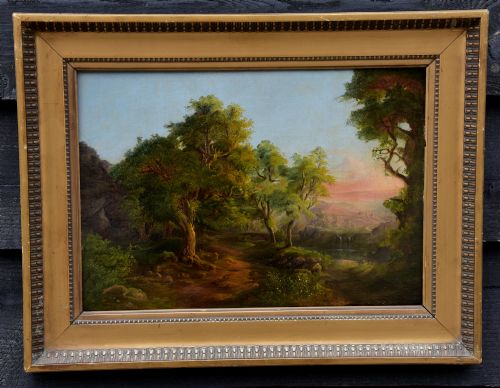
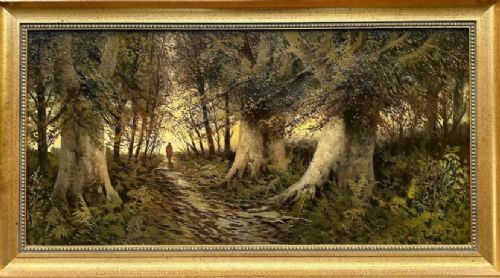
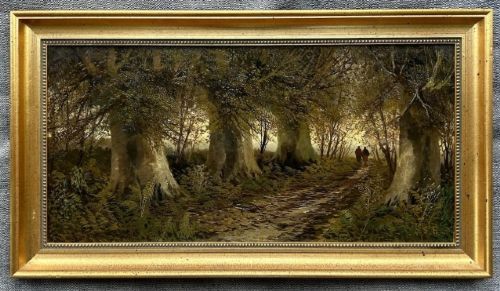
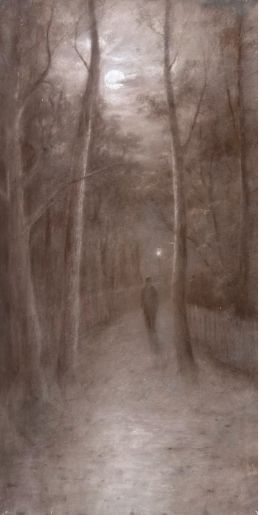
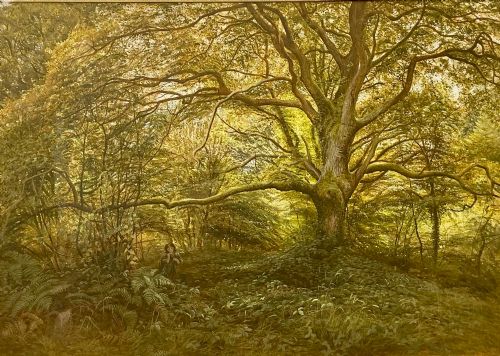
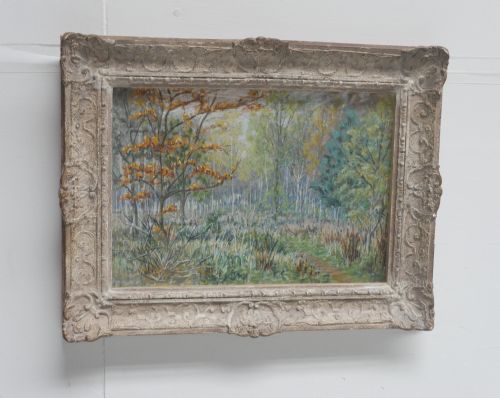
An antique forest painting captures woodland paths, dense canopies, and leafy clearings recorded by artists across the nineteenth and twentieth centuries. These works span intimate watercolours on paper and large oil paintings on canvas or wood panel, often depicting British and European landscapes.
Buyers encounter Victorian romantic interpretations alongside later impressionist and Edwardian woodland studies. The subjects range from quiet river glens and bluebell woods to dramatic sunset scenes framed by ancient trees.
Materials and technique
Artists applied oil paint or watercolour to prepared canvas, sturdy wood panels, mahogany boards, and heavy paper. Canvas supports often show traditional stretching over wooden frames, while panels provide a rigid base for detailed brushwork.
Pigments were layered to build depth in foliage and shadow, utilising brushstrokes ranging from precise realism to looser impressionistic marks. Watercolour works employ fluid washes to capture the transient light filtering through branches.
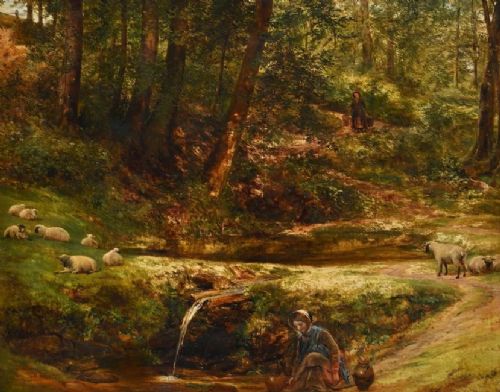
Several woodland scenes quietly hide stray cattle, wandering sheep drovers, and even a Saint Bernard rescue dog among the trees.
Distinctions in quality
Quality rests in the handling of light, shadow, and atmospheric depth within the woodland setting. Superior works demonstrate confident brushwork and a balanced composition that draws the eye naturally along a forest path or deep into a glade.
The sensitivity of the colour palette and the preservation of the paint surface distinguish accomplished studio output from more formulaic decorative pieces. Hand-signed works by known landscape painters generally reflect a higher standard of artistic execution.
Thomas W Lascelles·Richard Redgrave·Thomas Bromley Blacklock·Ernest Higgins Rigg·Frederick Golden Short
The Antique Forest Painting Glossary
- Oil on Canvas
- A traditional painting method where oil-based pigments are applied to a woven fabric stretched across a wooden frame. This medium allows for rich blending and textured impasto application.
- Wood Panel
- A rigid support made from timber such as mahogany or oak used by artists before canvas became universal. Panels offer a smooth, stable surface for fine detail.
- Watercolour
- A paint consisting of pigment suspended in a water-soluble binder, traditionally applied to paper. It creates luminous, translucent washes ideal for capturing atmospheric woodland light.
- Impressionism
- A nineteenth-century painting style characterised by relatively small, thin yet visible brush strokes and an emphasis on accurate depiction of light. Artists working in this manner prioritized transient outdoor effects.
Antique Forest Painting: Frequently Asked Questions
How do I date a woodland oil painting?
Dating relies upon examining the canvas type, stretcher construction, framing methods, and the artist's active period. Pigment analysis and stylistic conventions also offer clues to the decade of creation.
Paintings from the nineteenth century often feature heavier wooden stretchers and darker, earthier varnishes, while twentieth-century examples shift towards brighter palettes and lighter framing.
Where should I hang a forest landscape?
These works suit living rooms, studies, or hallways where natural light complements the earthy tones of the woodland canopy. Positioning the painting away from direct sunlight protects the pigments from fading over time.
A stable indoor climate prevents the canvas or wooden panel from expanding and contracting with humidity changes.
What is the difference between canvas and panel paintings?
Canvas paintings utilise woven fabric stretched over a wooden frame, providing slight give and a textured surface. Panel paintings use solid wood boards, offering a completely rigid base that preserves fine brushwork.
Both supports require careful environmental control to maintain the integrity of the paint layer.