


Antique Foo Dog Statues
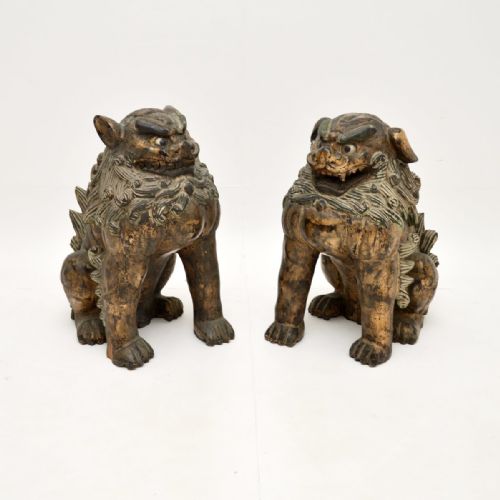
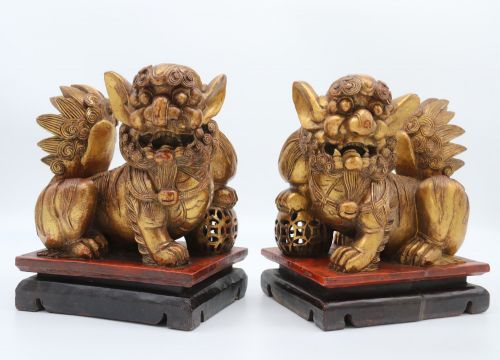
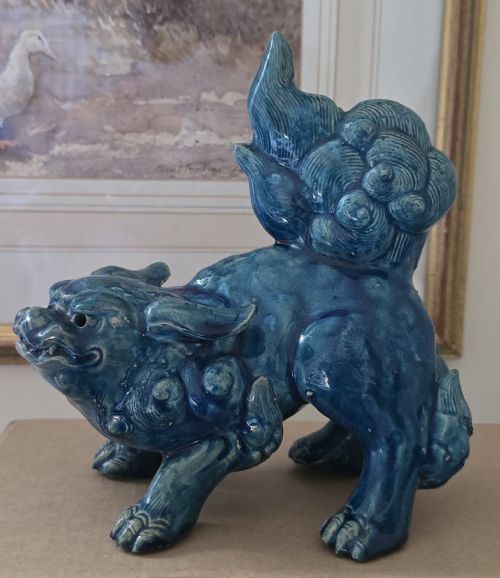
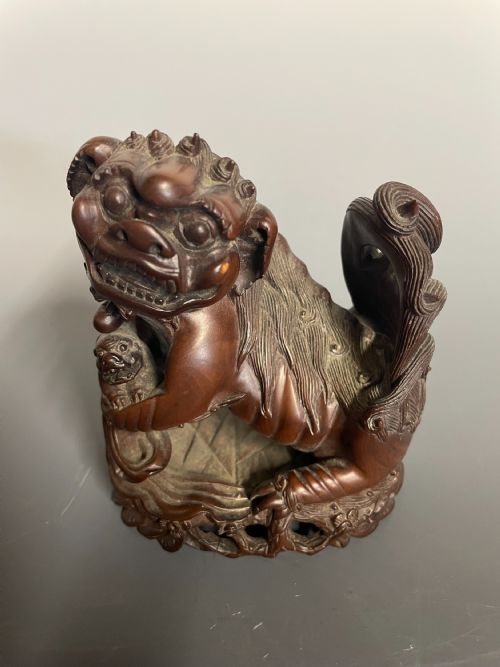
These antique foo dog statues are guardian lion figures cast in bronze, carved from wood and stone, or modelled in porcelain.
Antique Foo Dog Statues
When you search for antique foo dog statues, you look at protective guardian lions originating from Chinese and Japanese traditions. These figures serve as traditional temple guards and domestic protectors, rendered as single pieces or balanced pairs.
The selections on this page span the eighteenth, nineteenth, and early twentieth centuries. You meet forms ranging from large bronze temple lions to small porcelain figures and carved wooden bookends.
Originating broadly across Chinese dynasties and Japanese periods such as Meiji and Edo, these guardian figures manifest in diverse regional workshops. They appear as standalone sculptures, incense burners, and decorative figures for interior placement.
How they were made
Metalworkers utilise bronze, brass, and iron through casting techniques, occasionally adding gilt surfaces or enamel details. Potters shape clay and porcelain, applying turquoise, green, and coloured glazes before kiln firing.
The selection includes items from the Qing Dynasty, Meiji period, and Victorian era.
What varies in quality
The standard of carving and modelling dictates the success of each piece. Superior figures display crisp musculature, expressive facial detailing, and balanced proportions that reflect the skill of the maker.
Material selection and surface finish separate basic items from finer examples. Intricate wood grain, patinated bronze with original gilt or lacquer, and evenly fired porcelain glazes elevate the visual presence of the sculpture.
Unno Shomin
The Antique Foo Dog Statues Glossary
- Foo dog
- A traditional guardian lion figure derived from Buddhist iconography, placed to guard entrances and sacred spaces. They are also known as guardian lion dogs or temple lions.
- Shishi
- The Japanese term for a stone or ceramic guardian lion, frequently seen in pieces from the Meiji and Edo periods. These figures share roots with Chinese Buddhist lions.
- Okimono
- A Japanese decorative statue designed for display on a shelf or tokonoma alcove. These sculptures demonstrate high levels of craftsmanship in metal or ceramic.
- Shiwan
- A type of Chinese pottery known for expressive glazes and figurative modelling. Shiwan wares often depict Buddhist lion dogs with rich surface textures.
- Karashishi
- A Japanese representation of a Chinese lion dog, commonly shown playing with a brocade ball or standing alert. This motif appears frequently in porcelain and metalwork.
Antique Foo Dog Statues: Frequently Asked Questions
What is a foo dog?
A foo dog is a traditional guardian lion originating in Chinese art, symbolising protection and prosperity. Despite the name, these figures represent lions rather than dogs.
Craftsmen rendered them in pairs to guard temples, palaces, and homes. One figure typically guards a sphere while the other restrains a cub.
How were foo dogs used?
These figures functioned primarily as architectural and domestic guardians placed at thresholds, gates, and altars. Large bronze and stone pairs stood outside temples, while smaller carved wood and porcelain versions sat inside rooms.
Some pieces served specific domestic purposes, such as bookends or incense burners. They acted as symbolic protectors against malevolent spirits.
How do I date antique foo dogs?
Dating relies on material characteristics, tool marks, and stylistic traits associated with specific periods like the Qing Dynasty or Meiji period. Wood carvings show distinct hand-tool signatures, while bronzes exhibit period-appropriate casting seams and patination.
Glaze colours and ceramic bodies also provide clues to the era of production. Comparing base construction and wear patterns helps narrow the timeframe.
Where should I place them?
Place these guardian figures on mantelpieces, side tables, or shelves where their form can be appreciated from multiple angles. Pairs look balanced when flanking a doorway, fireplace, or central display.
Ensure heavier bronze or stone pieces rest on stable surfaces capable of supporting their weight. Keep wooden and lacquered examples away from direct heat sources.