


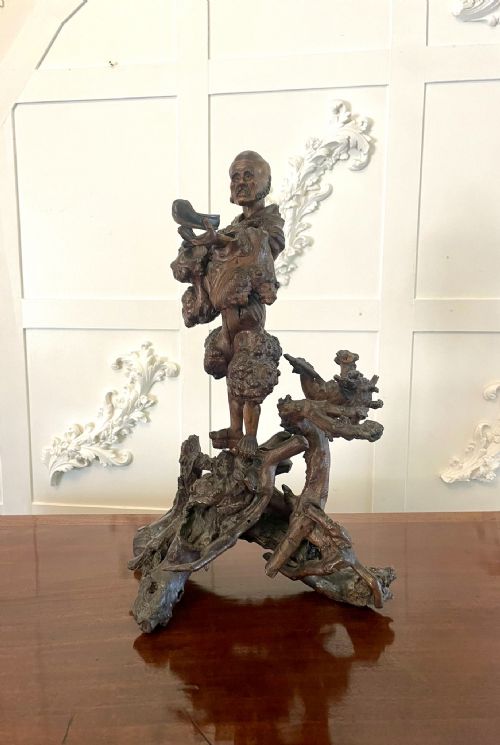


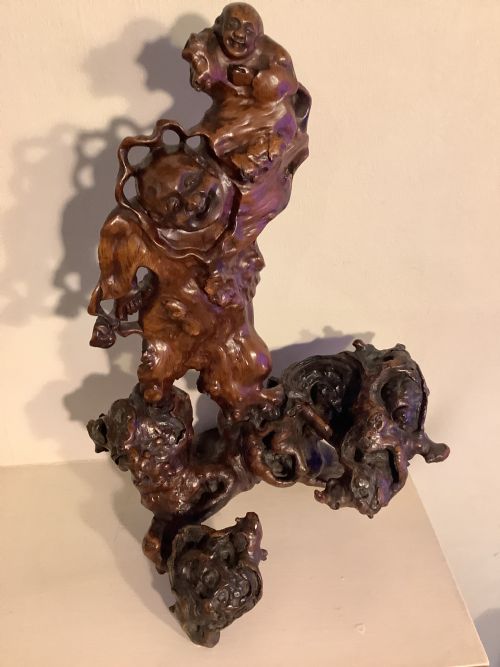
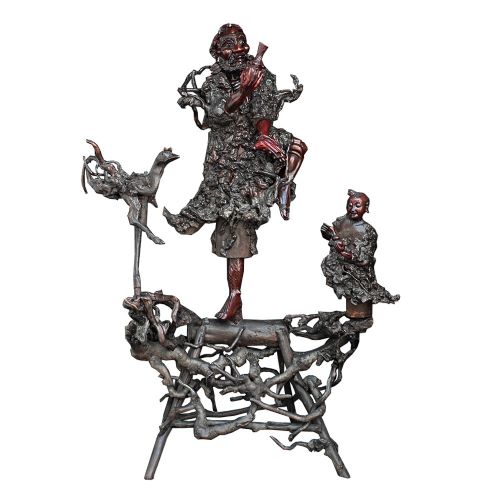


Antique Chinese Root Sculpture
These antique Chinese root sculpture pieces capture the organic forms of nature, shaped by traditional makers into tables, lamps, and figures.
Antique Chinese Root Sculpture
When you search for an antique Chinese root sculpture, you are looking at organic furniture, lighting, and figural carvings created during the nineteenth century. These pieces celebrate gnarled and twisted natural growth, often shaped to resemble figures, deities, or scholar's objects.
The versions most commonly met on this page date from the Qing Dynasty and utilise regional Chinese carving traditions. You will encounter standalone sculptures, table lamps fitted with wood, and small tables with inset tops.
Makers followed the natural contours of the wood rather than imposing a rigid geometric form. A typical carving turns a knot or twist of timber into a scholar, a lion dog, or a mythical figure.
Materials and construction
Carvers worked primarily with root wood, burr wood, and bamboo, selecting timber with complex natural grain and unusual knot formations. These materials were chosen for their durability and the character of their gnarled surfaces.
Working by hand, artisans carved details into the existing root formations to reveal figures or objects. Surfaces were finished to achieve a deep patina, sometimes augmented by lacquer or combined with brass elements.
Listings feature nineteenth-century items created from root wood, burr wood, and bamboo within traditional Chinese regional styles.
Judging quality and character
Quality rests in how cleverly the carver used the natural twists of the root to depict a man, animal, or object without overworking the material. The most successful pieces retain the wild, gnarled energy of the original timber.
The depth of the patina and the stability of the wood also set examples apart. A rich, warm surface shows age and handling, while crisp carving brings expression to figures like the scholar or the lion dog.
The Antique Chinese Root Sculpture Glossary
- Root wood
- Timber taken from the root systems of trees, prized for its twisted and irregular growth patterns. Carvers used these organic shapes to inspire figural sculptures.
- Burr wood
- A growth on a tree where the grain has grown in a deformed manner, resulting in complex patterns. It provides a highly decorative surface for carved objects.
- Qing Dynasty
- The final imperial dynasty of China, spanning from the seventeenth to the early twentieth century. Many nineteenth-century carvings originate from this period.
- Foo Dog
- A traditional guardian lion depicted in Chinese art and sculpture. These mythical beasts appear frequently in root and hardwood carvings.
- Patina
- The glossy sheen developed on wood surfaces over decades of handling and exposure. A good patina indicates age and regular contact.
Antique Chinese Root Sculpture: Frequently Asked Questions
What is an antique Chinese root sculpture?
These pieces are nineteenth-century decorative objects and furniture carved from twisted root wood, bamboo, and hardwood. Artisans followed the natural growth of the timber to create figures, tables, and lamps.
They reflect traditional Chinese aesthetics that celebrate the irregular and organic forms found in nature.
How were root carvings used?
In historical settings, root carvings served as objects of contemplation for scholars, or as functional items like tables, headrests, and lamp bases. Their unusual forms brought elements of the natural world indoors.
Today, they function as sculptural accents in both traditional and modern interiors.
How do I live with root wood?
Place root wood sculptures away from direct heat sources and sudden temperature changes to protect the dry timber. Regular dusting with a soft cloth maintains the surface.
Allow these tactile pieces room to breathe on a stable surface where their organic silhouettes can be appreciated from all angles.
How do I date a root carving?
Dating relies on observing the tool marks, the depth of the wood patina, and the stylistic traits associated with nineteenth-century Qing Dynasty craftsmanship. Comparisons with dated examples help narrow the period.
Materials like bamboo and specific regional styles also offer clues to the age of the piece.