

Antique Floral Wall Art
Antique floral wall art brings centuries of painted blooms and woven botanicals indoors, offering enduring colour and traditional craftsmanship for your walls.
Antique Floral Wall Art
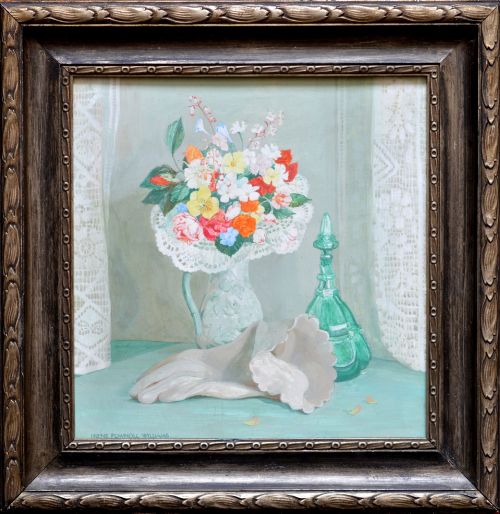
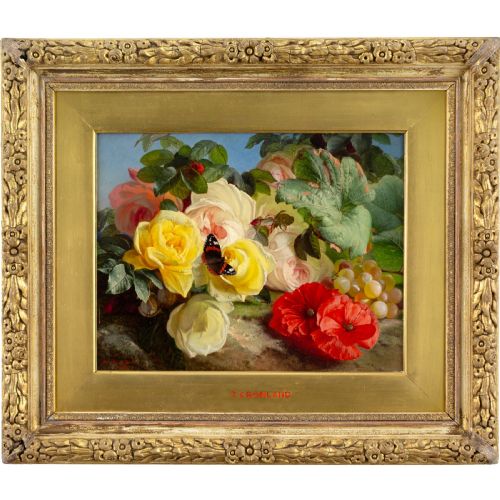
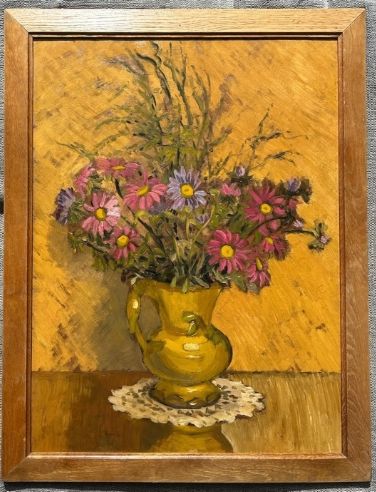
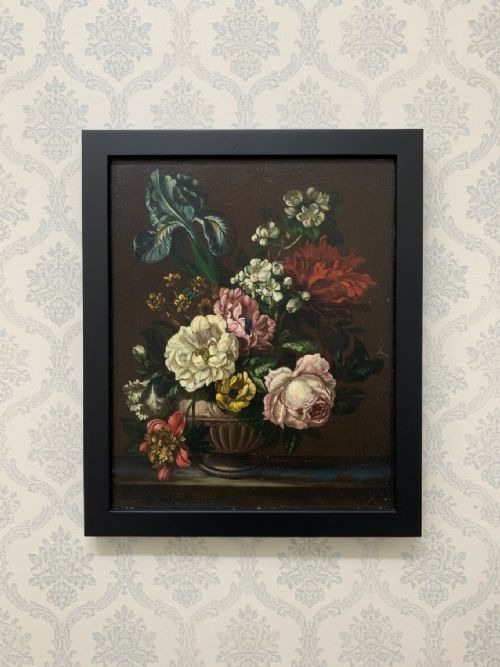
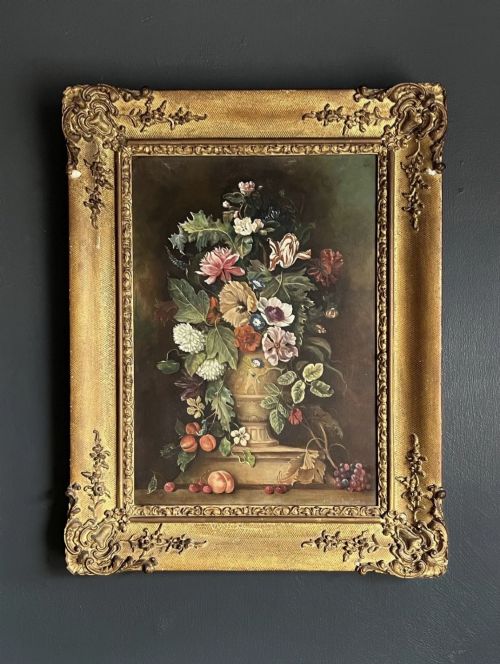
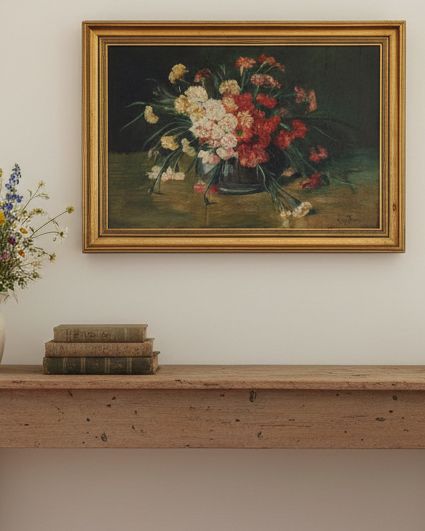
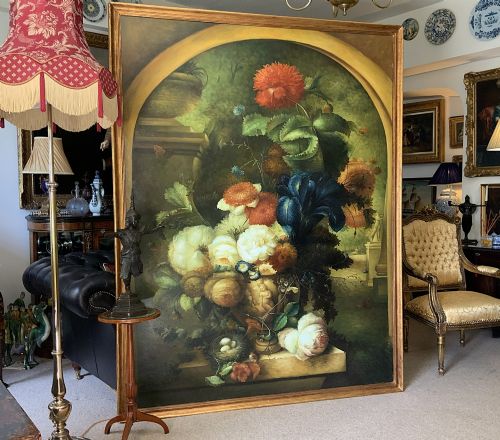
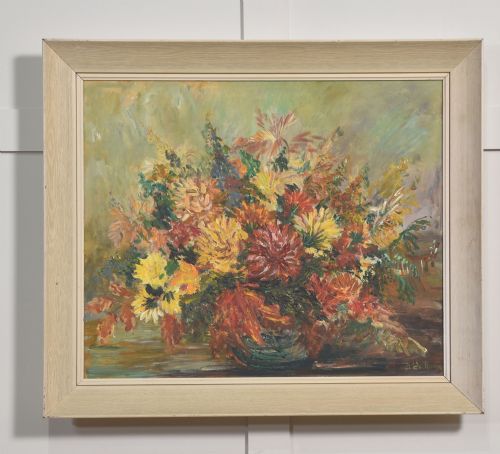
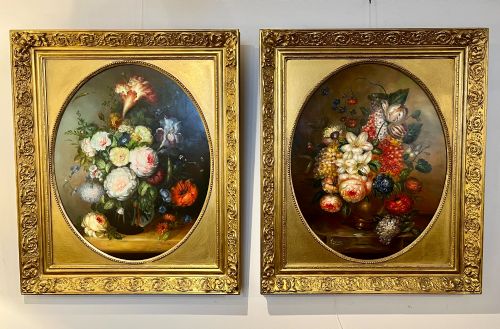
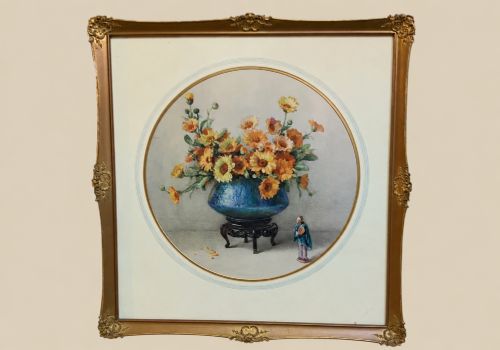
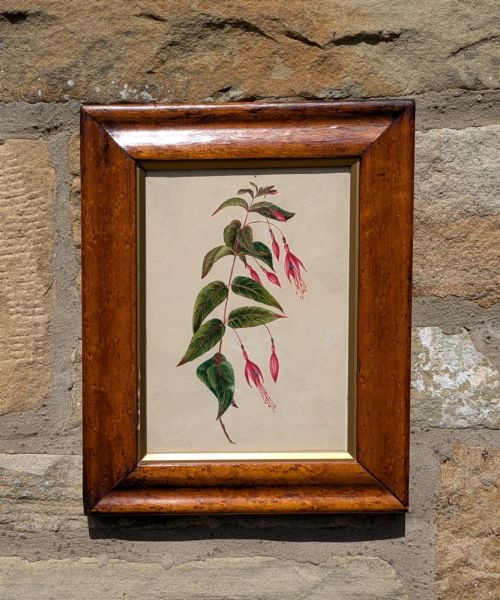
When you search for antique floral wall art, you encounter a diverse selection of painted, carved and textile-based pieces celebrating botanical subjects. The items range from detailed 19th-century watercolours of wild roses and fuchsias to large oil paintings of still life arrangements and Dutch style floral scenes.
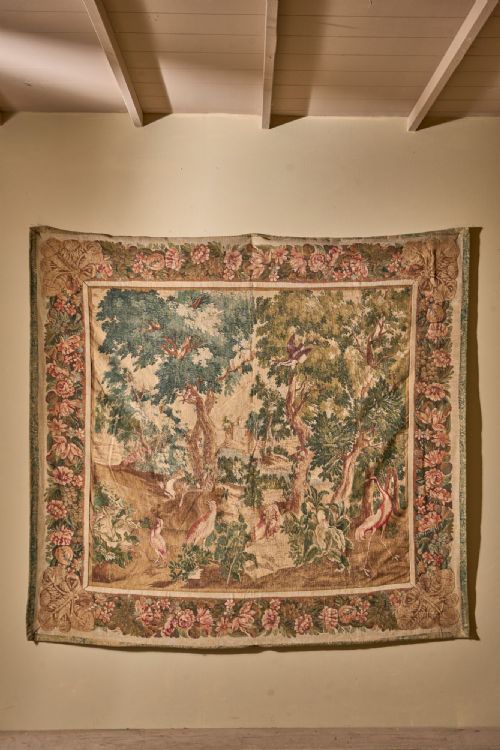
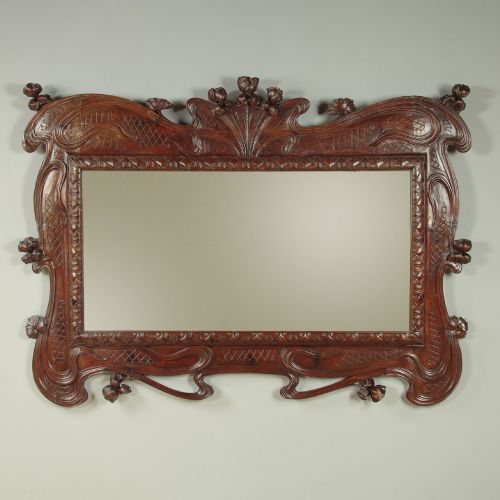
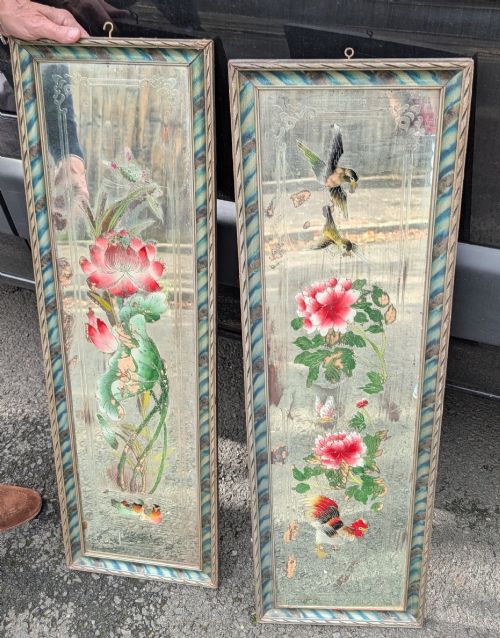
You will also find carved wooden wall reliefs, silk embroideries, tapestries and framed mirrors embellished with floral motifs spanning the Victorian, Art Nouveau, Art Deco and Regency periods. These works capture natural forms through mediums utilised by artists and craftspeople across Britain, Europe and beyond.
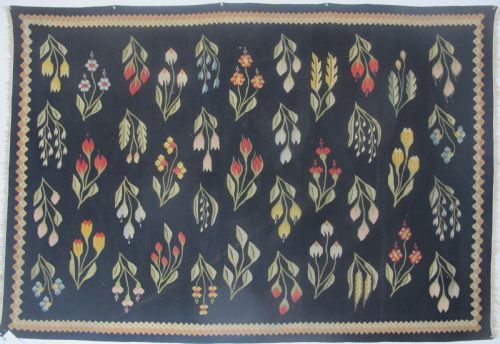
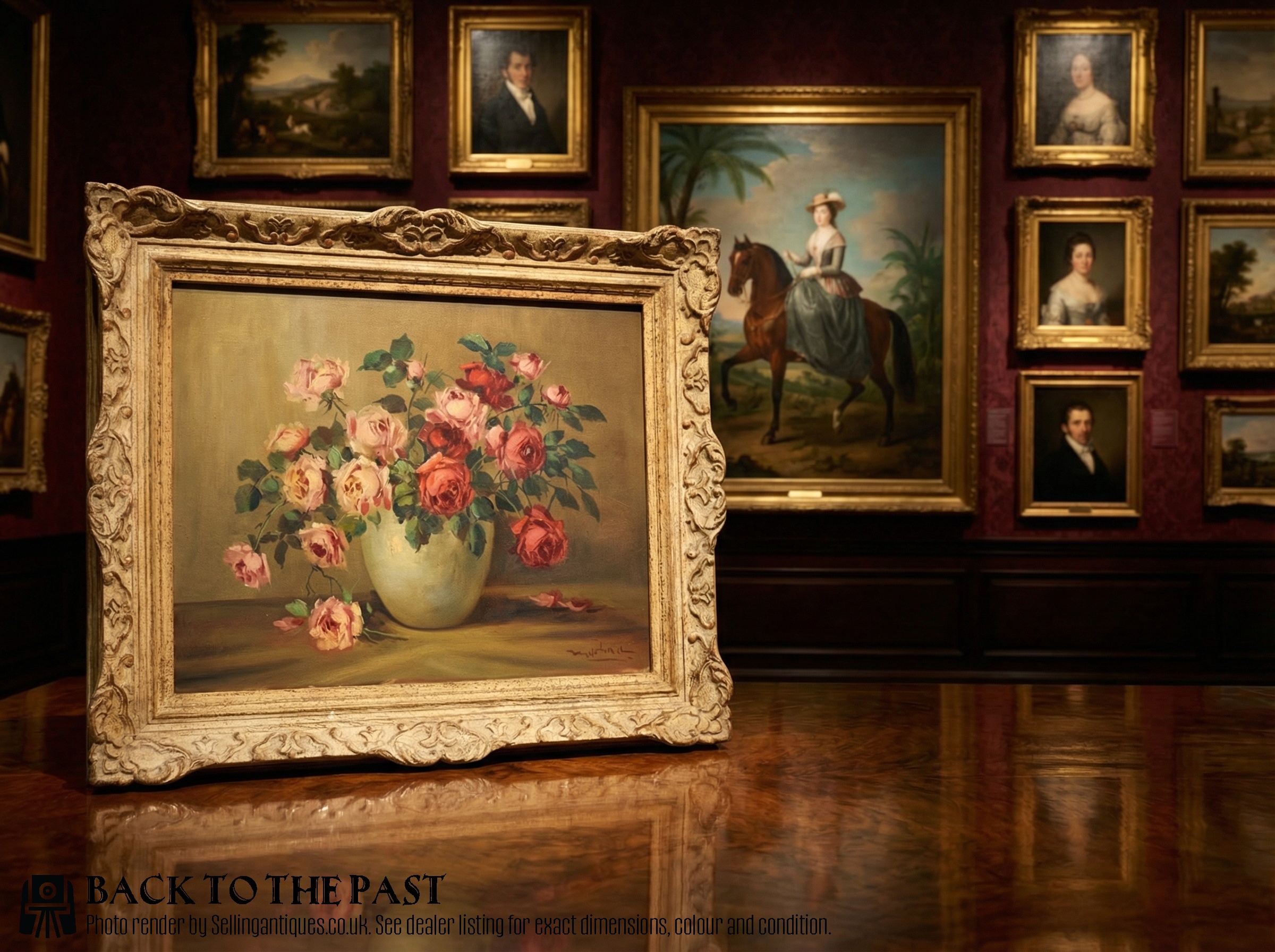
The most common pieces on this page are oil paintings on canvas or board depicting vases and baskets of summer flowers, alongside botanical watercolours and woven textiles like tapestries and suzanis.
How they were made
Makers utilised traditional canvas, wood panels, paper and glass as the foundation for painted works, applying oil paint, gouache or watercolour to render floral details. Frames were frequently constructed from wood with gilt gesso or carved ornamentation, enhancing the visual impact of the artwork.
Textile pieces rely on silk, wool and cotton threads, employing embroidery, tapestry weaving and needlework techniques to construct complex botanical and figurative patterns. Materials such as copper, ceramic and gold leaf also appear in frames, mirrors and decorative wall reliefs.
Antique Floral Wall Art Retail Price Guide 2026
Typical asking prices for floral wall art among the pieces listed under this phrase on Sellingantiques today, from the lower quarter to the upper quarter. They describe what is for sale here now, not the wider market.
Styles represented span the Dutch Golden Age, Victorian, Arts and Crafts, Art Nouveau and Art Deco periods.
What varies in quality
The standard of execution in brushwork, carving precision and textile density determines the relative refinement of each piece. Finer oil paintings exhibit careful tonal gradation and botanical accuracy in petals and foliage, whereas simpler works display broader, less defined strokes.
Material preservation also influences the piece, noting the original condition of canvas, panel supports and silk threads against later restoration or frame replacement.
Vincent Clare·Konstantin Stoitzner·Gaspar Peeter Verbruggen·Edwin Steele·D Hardy·Catherine Thomas
The Antique Floral Wall Art Glossary
- Still life
- A painting or drawing depicting inanimate objects, such as a vase of flowers or a basket of fruit. These compositions formed a major part of Dutch and 19th-century artistic output.
- Gilt gesso
- A plaster-like material applied to wood frames and covered with a thin layer of gold leaf. It provided a smooth surface for intricate moulding and gilding.
- Suzani
- A type of embroidered tribal textile originating from Central Asia, typically featuring large floral and sunburst motifs. They were traditionally worked in silk on a cotton foundation.
- Gouache
- An opaque water-based paint that dries to a matte finish, allowing for vibrant colour representation in botanical illustrations.
- Tapestry
- A form of textile art woven by hand on a loom, often incorporating wool and silk threads to depict floral scenes or historical narratives.
Antique Floral Wall Art: Frequently Asked Questions
How do I hang antique floral paintings safely?
Ensure your wall can support the weight of the piece, particularly for larger oil paintings in heavy gilt frames. Utilise appropriate picture hooks or fixings rated for the weight of the specific item.
Position the artwork away from direct sunlight and damp environments to protect the canvas, paper and pigments from fading or moisture damage over time.
What periods do these floral artworks come from?
The pieces span multiple centuries, with items originating from the 16th century through to the 1950s. You will find works reflecting specific historical movements such as the Dutch Golden Age, Regency, Victorian, Art Nouveau and Art Deco periods.
Dates are indicated where known, while others are attributed to broader stylistic eras like the 19th century based on materials and techniques.
How were antique floral textiles used?
Items like suzanis and tapestries served as wall hangings, decorative coverings or domestic furnishings in traditional households. They added warmth, colour and texture to interior spaces.
Needlework and silk embroideries were often framed or mounted to preserve the delicate threads and display the botanical needlecraft as fine art.
Can I identify the flowers in these pieces?
Many botanical watercolours and oil paintings depict recognisable species such as roses, fuchsias, carnations and summer blooms. Artists often captured these specimens with scientific accuracy or decorative intent.
Botanical studies from the 19th century frequently name the specific flower in the title or signature of the work.