
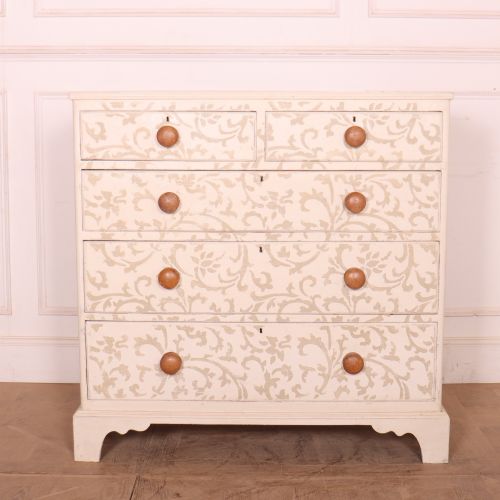
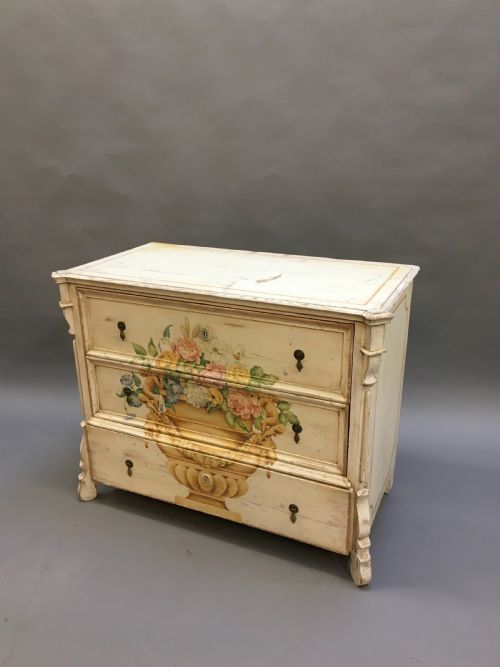


Antique Floral Painted Commode
These antique floral painted commode pieces combine utility with decorative brushwork, offering practical storage finished with painted botanical detail.
Antique Floral Painted Commode
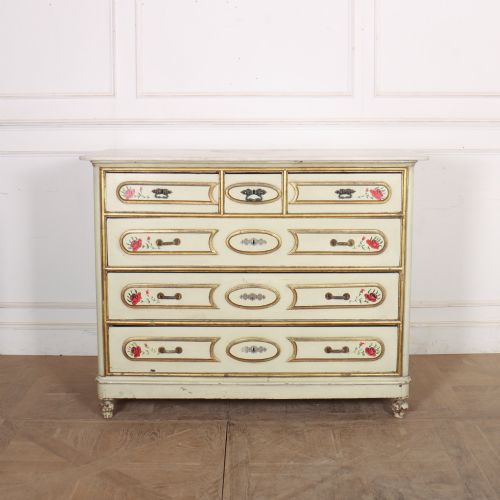
An antique floral painted commode provides enclosed storage while displaying decorative painted surfaces across its timber body. When you search for an antique floral painted commode, you encounter pieces that function as chests of drawers, cabinets, or bedside cupboards.
The selections span multiple periods, including the eighteenth, nineteenth, and twentieth centuries. Styles range from Sheraton Revival and Georgian to Edwardian and Victorian country designs.
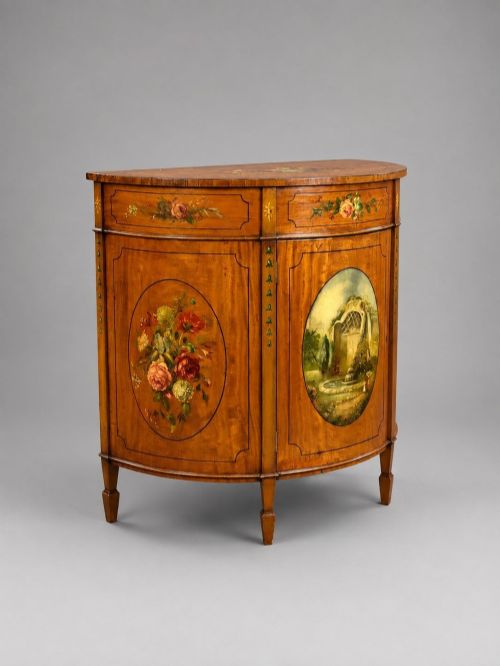
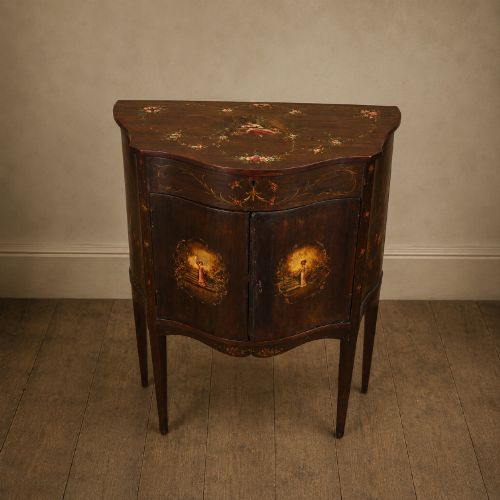
Surfaces typically utilise satinwood, pine, or mahogany as a base for hand-painted decoration. Forms vary from serpentine and bow-fronted chests to demi-lune cabinets and sideboards.
Materials and construction
Cabinet makers constructed the foundational carcase using timbers such as pine, satinwood, and mahogany. These woods provided stable surfaces for subsequent painting and decorative work.
Artisans applied paint directly to the wooden substrates, frequently incorporating classical panels, floral motifs, and inlaid details. Brass hardware often complemented the painted finishes on handles and drawer pulls.
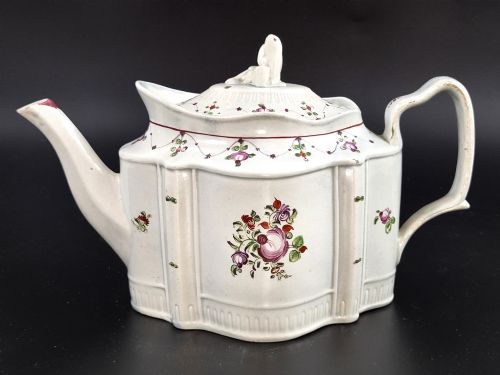
One unexpected item bridges furniture and dining by offering a ceramic commode-shaped teapot.
Quality variations
The refinement of the painted decoration separates standard examples from superior pieces. Crisp brushwork and well-preserved botanical or classical panels indicate higher execution skill.
Timber selection and joinery integrity define the structural standard. Finely figured satinwood and smooth drawer operation distinguish the top tier of furniture.
The Antique Floral Painted Commode Glossary
- Demi-lune
- A half-moon shape used for cabinets and commodes designed to sit flush against a wall.
- Serpentine
- A curved front shape featuring a convex centre flanked by concave ends, creating an undulating line.
- Bow front
- A convex, outward-curving front profile commonly found on chests of drawers.
- Satinwood
- A durable, lustrous timber native to India and Ceylon, frequently used as a fine veneer or solid wood for painted furniture.
- Sheraton Revival
- A late nineteenth-century design movement inspired by the neoclassical furniture of George Sheraton, often featuring satinwood and painted ornamentation.
Antique Floral Painted Commode: Frequently Asked Questions
What periods do these commodes come from?
The pieces span the eighteenth, nineteenth, and early twentieth centuries. Specific eras represented include the Regency, Victorian, and Edwardian periods.
Dates can often be inferred from construction techniques, timber choices, and stylistic revivals such as Sheraton Revival.
Where were these painted pieces made?
Origin locations vary across England, Spain, Venice, and the Netherlands. Continental workshops produced distinct regional interpretations of painted furniture.
English examples frequently display Sheraton Revival characteristics using satinwood and pine.
How do I maintain a painted antique?
Keep painted furniture away from direct sunlight and excessive moisture to protect the timber and pigments. Dust gently with a dry, soft cloth.
Avoid chemical polishes that can degrade historical painted surfaces and varnishes.
What wood is underneath the paint?
Base timbers typically include satinwood, pine, and mahogany. Artisans selected these woods for their stability and grain properties.
Paint was applied directly to the timber or over a prepared ground layer to create the decorative finish.