

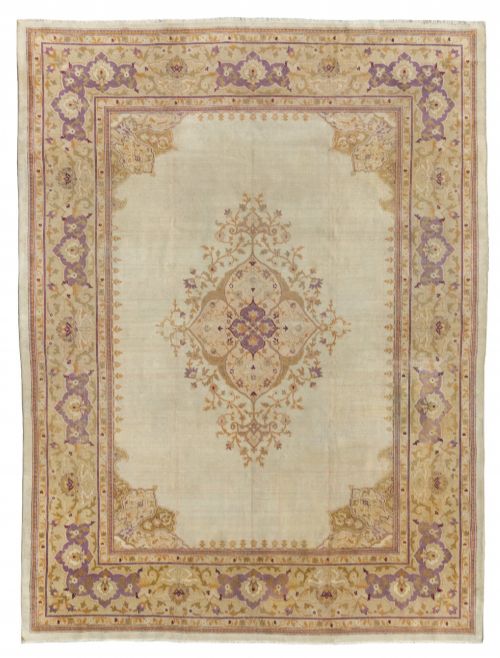


Antique Floral Mat
An antique floral mat brings woven botanical ornament into a room, offering patterned textiles worked across centuries.
Antique Floral Mat
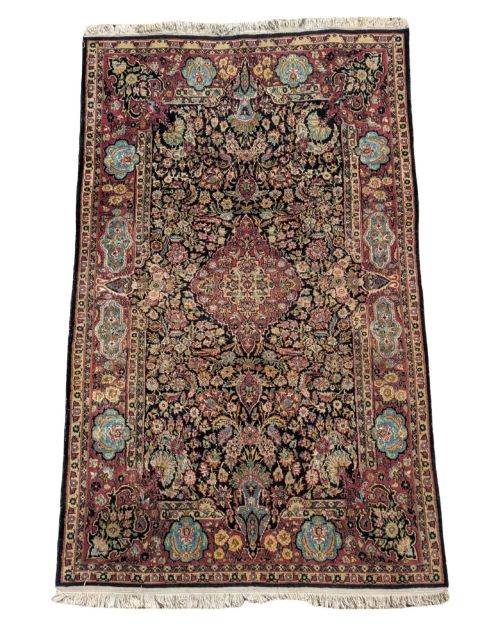
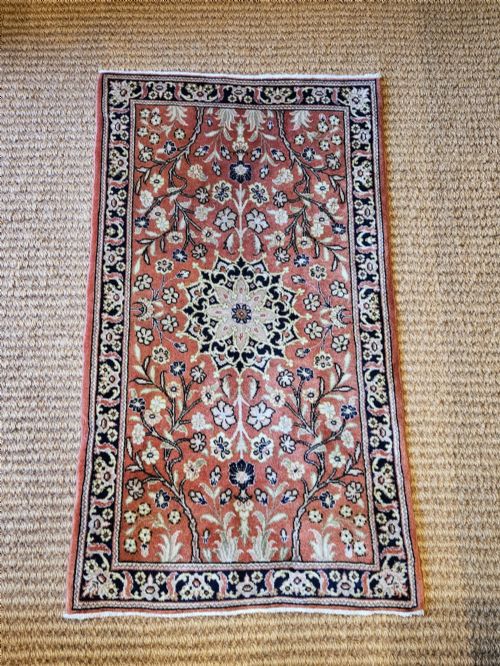
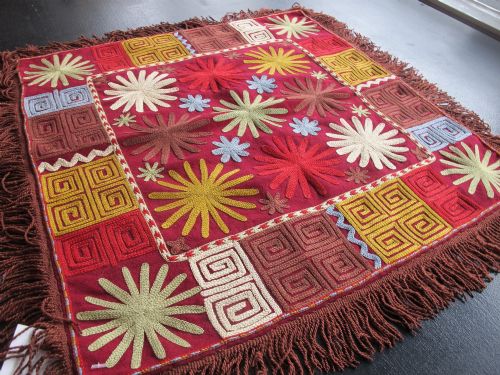
An antique floral mat encompasses woven rugs, carpets, prayer rugs, textile panels, and saddle covers featuring botanical ornament. These floor coverings and wall textiles span origins from Persia, the Caucasus, Turkey, India, China, and Uzbekistan.
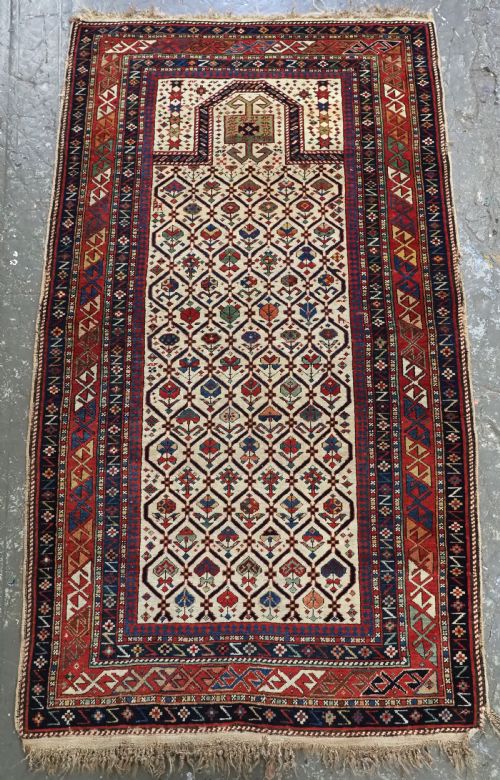
The pieces on this page range from room-sized carpets down to small village rugs and portable panels. Prayer formats and lattice designs appear alongside tile patterns and village compositions.
Makers utilised wool, cotton, silk, jute, and burlap as foundational materials, sometimes augmenting the pile with silk thread. Needlepoint and embroidery techniques also produce these floral surfaces.
Materials and construction
Weavers constructed these textiles predominantly from wool, cotton, and silk, employing both pile knots and flat surfaces. Silk highlights and silk thread details add luminance to wool foundations in specific regions.
Needlepoint work and embroidery utilise threads on supportive backings, while structural integrity relies on jute and burlap where appropriate. Regional traditions dictate whether a piece takes the form of a knotted pile rug or a stitched panel.
Materials recorded across the current inventory include wool, cotton, silk, jute, burlap, and leather.
Assessing quality and execution
Knot density and structural fineness separate standard village production from finer workshop carpets. Precision in executing floral lattices and prayer formats indicates the weaver's control over the medium.
The condition of the pile and the integrity of the materials influence how a textile holds its appearance over time. Finer materials like silk highlights elevate the visual depth of the woven design.
The Antique Floral Mat Glossary
- Prayer rug
- A textile featuring a mihrab or niche design intended for devotional use. These formats often incorporate floral lattice patterns.
- Millefleurs
- A pattern filled with a multitude of small flowers. This French term describes dense botanical compositions found on certain Persian rugs.
- Suzani
- An embroidered textile panel from Central Asia, often worked in silk on a cotton or linen ground. These pieces frequently follow floral prayer formats.
- Needlepoint
- A type of canvas work embroidery stitched by needle rather than woven on a loom. Portuguese and American examples utilise this method.
- Lattice
- An open, intersecting framework of lines forming a repeating grid across the ground. Floral lattices organise botanical motifs across the field of the rug.
Antique Floral Mat: Frequently Asked Questions
What is an antique floral mat?
An antique floral mat is a woven or embroidered textile featuring botanical designs, spanning rugs, carpets, and panels. These pieces originate from diverse weaving traditions across Asia and Europe.
Examples range from small village rugs to large carpets, produced in wool, silk, and cotton from the mid-nineteenth century onwards.
How do I identify regional styles?
Regional styles appear through distinct colour palettes, knotting densities, and structural motifs. Persian, Caucasian, and Turkish traditions each handle floral designs with unique geometry and drawing.
Comparing border bands and central field patterns helps connect a textile to its specific origin, such as Kirman or Dagestan.
Where were these textiles placed?
These textiles served functional roles as floor coverings, prayer mats, and decorative wall panels in historic interiors. Smaller formats functioned as personal mats or saddle covers.
Larger carpets anchored main rooms, while specialised prayer formats served individual devotional practices.
How should I care for an antique textile?
Protect antique wool and silk textiles from direct sunlight to prevent colour fading over time. Gentle vacuuming without a rotating brush maintains the pile.
Professional specialist cleaning is necessary when deep maintenance is required, avoiding harsh chemical treatments.