





Antique Floral Imari Platter
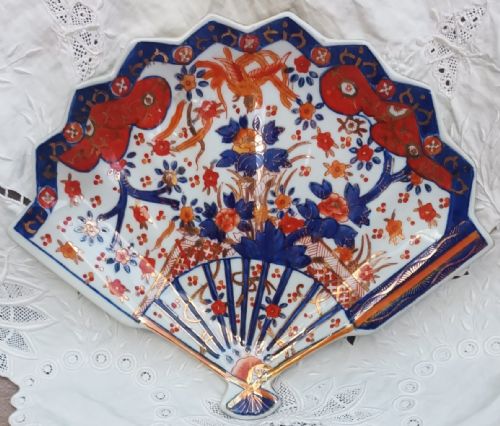
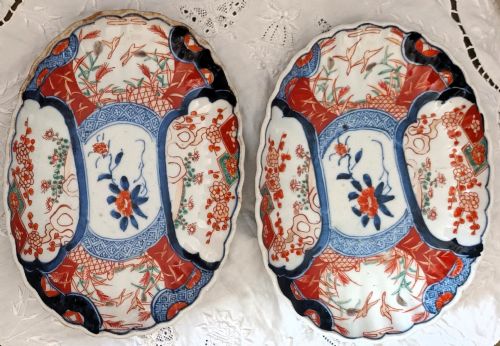
An antique floral imari platter brings vibrant colour and complex pattern to a room, drawing the eye with rich cobalt blue and iron red decoration.

Antique Floral Imari Platter
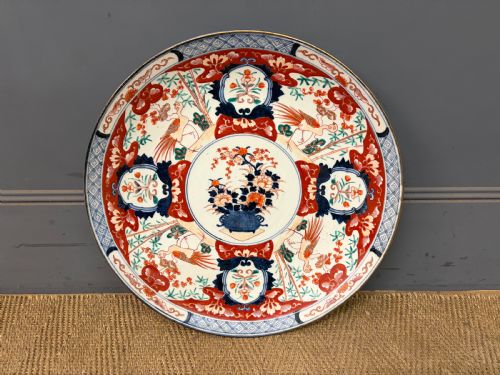
When searching for an antique floral imari platter, buyers encounter large chargers, serving dishes and decorative plates created in ceramic and porcelain. These pieces span periods from the Edo and Meiji eras through the Victorian age, carrying distinctive visual traditions.
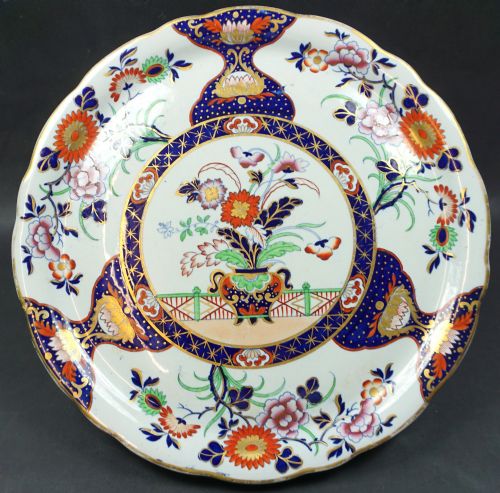
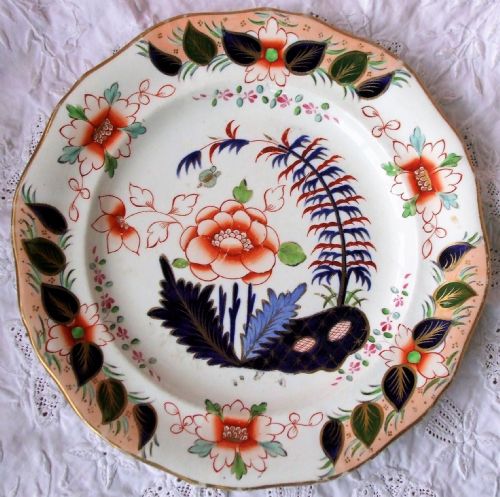
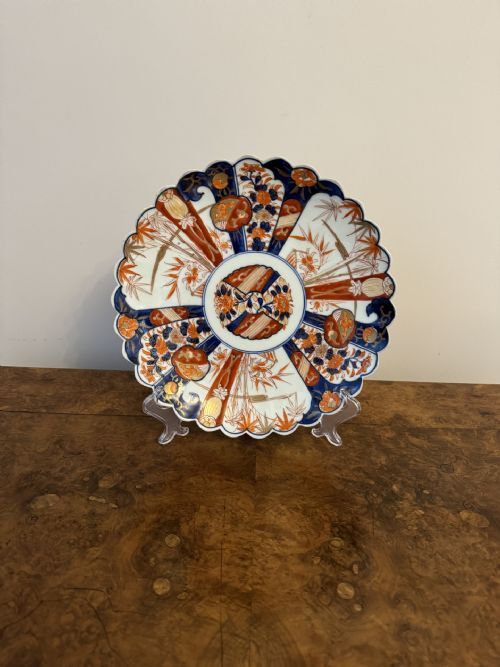
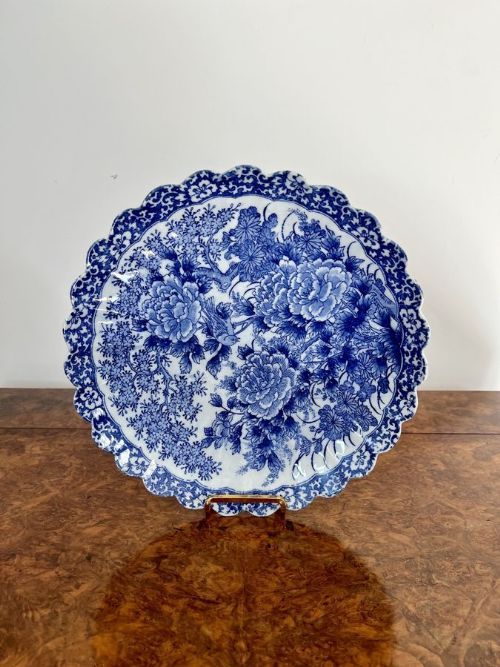
The version most commonly met on this page is a Japanese porcelain charger or plate featuring floral and bird motifs executed in the traditional imari palette. Alongside these Japanese works, English ironstone and stoneware plates decorated in imari patterns appear in the selection.
Forms range from wide circular chargers and scalloped edge plates to square dishes and meat platters. These items serve equally as wall chargers for display or as substantial serving platters for the table.
How they were made
Potters shaped porcelain and ceramic bodies into chargers and plates, frequently employing moulded forms with scalloped edges or square profiles. Cobalt underglaze was applied to the clay before firing to establish the deep blue elements of the pattern.
Enamel colours and gilding or gold leaf were added over the glaze during subsequent firings to build up the rich floral designs. Artisans painted botanical and avian motifs by hand onto the surface, creating intricate and colourful compositions.
Object forms range from standard round plates and wide wall chargers to square dishes, cheese dishes, and meat serving platters.
What varies in quality
The precision and detail of the hand painting separate finer examples from simpler production pieces, particularly in the rendering of floral and bird motifs. Crispness in the cobalt underglaze and the careful application of enamel and gilding determine the visual depth of the surface.
The weight and finish of the ceramic or porcelain body, along with the crispness of moulded edges such as scalloped rims, indicate the standard of manufacture. Larger chargers and plates that maintain balance and proportion across a broad surface area represent the higher end of the range.
John Davenport of Longport·Hicks & Meigh·John Ridgway
The Antique Floral Imari Platter Glossary
- Imari palette
- A decorative style utilising deep cobalt blue, iron red, and supplementary colours like gold, originating in Japan and later imitated in Europe. This palette creates the strong visual contrast characteristic of these wares.
- Charger
- A large decorative plate or platter traditionally used for ceremonial display or heavy service on the dining table. These substantial pieces form the centrepiece of many collections.
- Underglaze
- Pigment applied to ceramic ware before it receives a glassy coating and enters the kiln for firing. This technique protects the blue colour beneath a glossy seal.
- Ironstone
- A durable type of heavy earthenware patented in England during the nineteenth century to imitate porcelain. It provides a robust body for platters and dinner services.
- Meiji Period
- The era in Japanese history spanning from 1868 to 1912, known for significant production of export ceramics and decorative arts. Pieces from this time often feature elaborate hand-painted details.
Antique Floral Imari Platter: Frequently Asked Questions
How were imari platters used?
These large dishes served both a decorative function on walls and sideboards and a practical purpose for presenting food at formal meals. Their robust porcelain and ceramic construction allowed them to handle heavy serving duties.
Over time, larger chargers transitioned primarily into display pieces owing to their significant size and decorative painted surfaces.
Are these pieces Japanese or English?
The selection includes both traditional Japanese export wares from the Edo and Meiji periods and nineteenth-century English interpretations. English potteries adopted the distinctive palette for ironstone and stoneware plates.
Examining the paste and the style of the brushwork helps distinguish between Japanese porcelain and English ceramic alternatives.
How do I live with a charger?
Large chargers suit wall display using appropriate plate hangers or placement on sturdy sideboards and tables where their colours can be appreciated. Their bold floral patterns anchor a room's decorative scheme.
Care involves gentle dusting and avoiding abrasive cleaners to protect the delicate enamel and gilding on the surface.
What defines the imari palette?
The traditional palette relies on a combination of underglaze cobalt blue and iron red, frequently augmented with gilt highlights. This strict chromatic range creates the striking contrast seen across generations of makers.
Additional enamel colours like green and yellow sometimes appear to flesh out floral and bird compositions.