



Antique Floral Cameo Vase
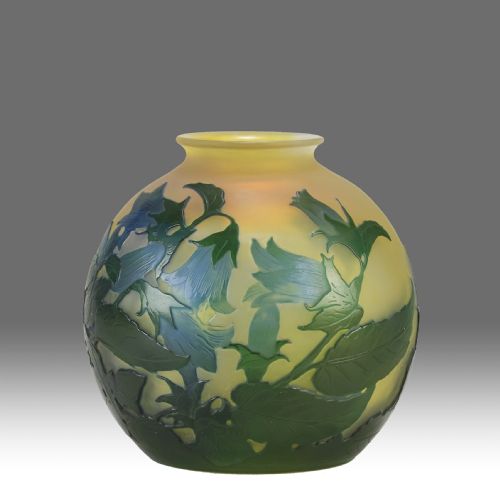
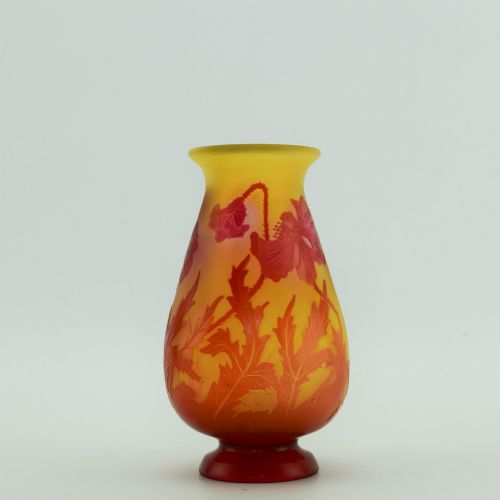
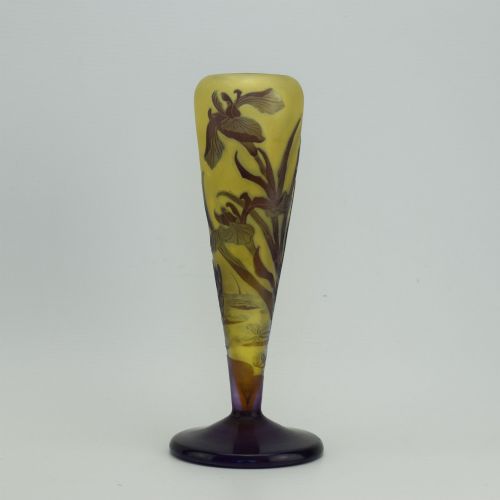
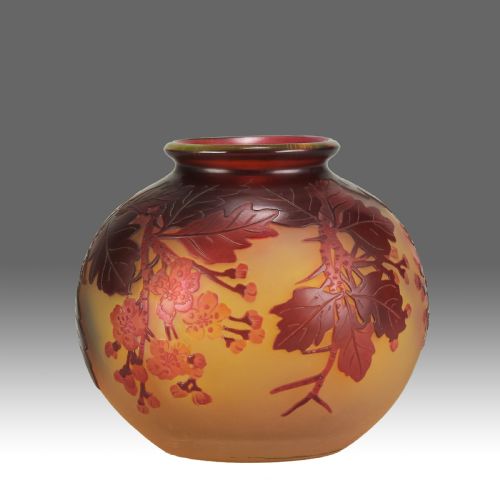
An antique floral cameo vase brings organic French glasswork into a room through layered motifs of campanula, iris, and poppy.
Antique Floral Cameo Vase
An antique floral cameo vase is a vessel formed from layered glass, carved or etched to reveal botanical designs like cornflowers, hydrangeas, and honeysuckle. These pieces belong predominantly to the Art Nouveau period, stretching across the late nineteenth century and the opening decades of the twentieth century.
The most common examples encountered on this page originate from French workshops and feature distinct floral subjects such as clematis, begonias, and apple blossom. Makers utilised different coloured glass layers to create naturalistic relief, depicting stems and petals with botanical accuracy.
The forms vary from slender footed shapes to banjo profiles and large decorative vessels. Each piece captures the organic curves and asymmetrical lines characteristic of the Art Nouveau style.
Glassmaking and carving techniques
These vessels rely on blown glass foundations built with multiple coloured layers fused together while hot. Artisans then applied acid-etching and manual carving to cut away outer layers, leaving raised floral designs in sharp contrast to the background.
Some workshops enhanced the carved cameo glass with enamel, enamelled details, or gold leaf highlights. This added colour variation and surface texture to subjects like sweet peas, ferns, and solanacees.
Techniques such as souffle or blow-out methods pushed the hot glass outward into metal moulds before final surface carving. The combination of acid biting and wheel engraving allowed makers to control the depth and translucency of the finished floral motif.
Several vases are named after specific garden flora, immortalising fleeting blooms like montbrecia and campanula in permanent glass.
Assessing craftsmanship and depth
Quality in these vessels depends upon the precision of the glass layering and the depth of the carving. Superior pieces display crisp definition between the floral subject and the frosted or transparent ground, with careful graduation of colour across petals and leaves.
The sophistication of the botanical drawing dictates the standing of a piece, with naturalistic rendering of stems and blossoms marking out finer examples. Integrated surface treatments, such as subtle enamelling or selective gilding, separate standard productions from more ambitious works.
Emile Gallé·Daum Frères·Daum Nancy·Baccarat·Paul Nicholas·D'Argental
The Antique Floral Cameo Vase Glossary
- Cameo Glass
- Glass formed with two or more distinct layers of contrasting colours, where portions of the exterior layer are removed to create a raised design. This technique requires patient carving or acid-etching.
- Acid-Etched Glass
- Glass exposed to hydrofluoric acid to eat away exposed surfaces and create matte textures or recessed background layers. It is often combined with manual wheel-cutting.
- Frosted Glass
- Glass treated to produce a textured, non-reflective surface that diffuses light. This finish frequently serves as a contrasting backdrop for polished floral motifs.
- Souffle or Blow-Out
- A method where hot glass is expanded into a metal armature or mould to shape the basic contours before further carving. It creates high-relief botanical forms.
- Enamelled Glass
- Glass decorated with melted glass powders or pigments fused to the surface by heat. This adds fine colour details to carved floral elements.
Antique Floral Cameo Vase: Frequently Asked Questions
How do I identify an authentic piece?
Authentic examples display layered glass structures with hand-finished carving rather than superficial surface paint or moulded relief without depth. Signatures or cameo signatures corresponding to known French makers typically appear etched or enamelled on the body or base.
Examine the weight, the transition of colours through the glass layers, and the precision of the botanical engraving. Genuine pieces from this era show natural variation in the glass wall thickness and the hand-carved details.
What subjects appear on these vessels?
Botanical subjects dominate these designs, reflecting the strong influence of the natural world during the Art Nouveau period. Common floral motifs include poppies, irises, cornflowers, clematis, honeysuckle, and apple blossoms.
Other natural forms such as ferns, aquatic plants, and specific garden flowers like begonias and sweet peas frequently encircle the body of the vessel. Each design aims to capture the growth habits of the plant.
Where were these pieces made?
The vast majority of these glass objects originated in France, particularly around centres of glassmaking such as Nancy and Paris. Prominent studios and factories employed skilled glassblowers and carvers to produce these luxury decorative items.
French makers drove the Art Nouveau movement in glass, developing advanced acid-etching and layering techniques. These regional workshops exported their work internationally, establishing lasting reputations.
How should I display my vase?
Position the vessel where light can pass through the glass layers, as backlighting reveals the translucency and colour gradients of the cameo design. Place it away from direct sunlight sources that might cause excessive heat accumulation, and on a stable surface where it will not be knocked.
Keep the piece clear of crowded surroundings so the silhouette and the carved floral details remain fully visible. Routine placement on a mantelpiece or dedicated display cabinet allows the colours of the glass to be appreciated from multiple angles.