

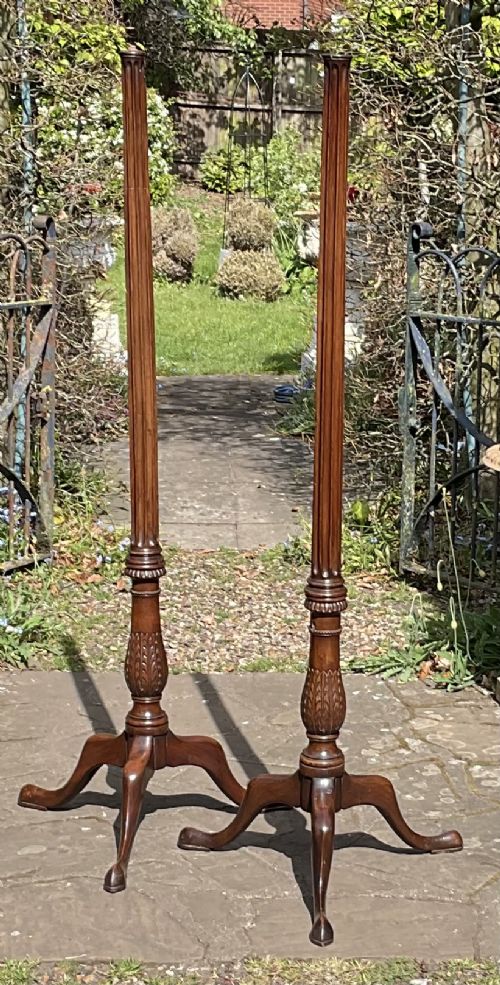


Antique Floor Torchere
An antique floor torchere brings height and dramatic illumination to a room, functioning as both a practical light source and a sculptural presence.
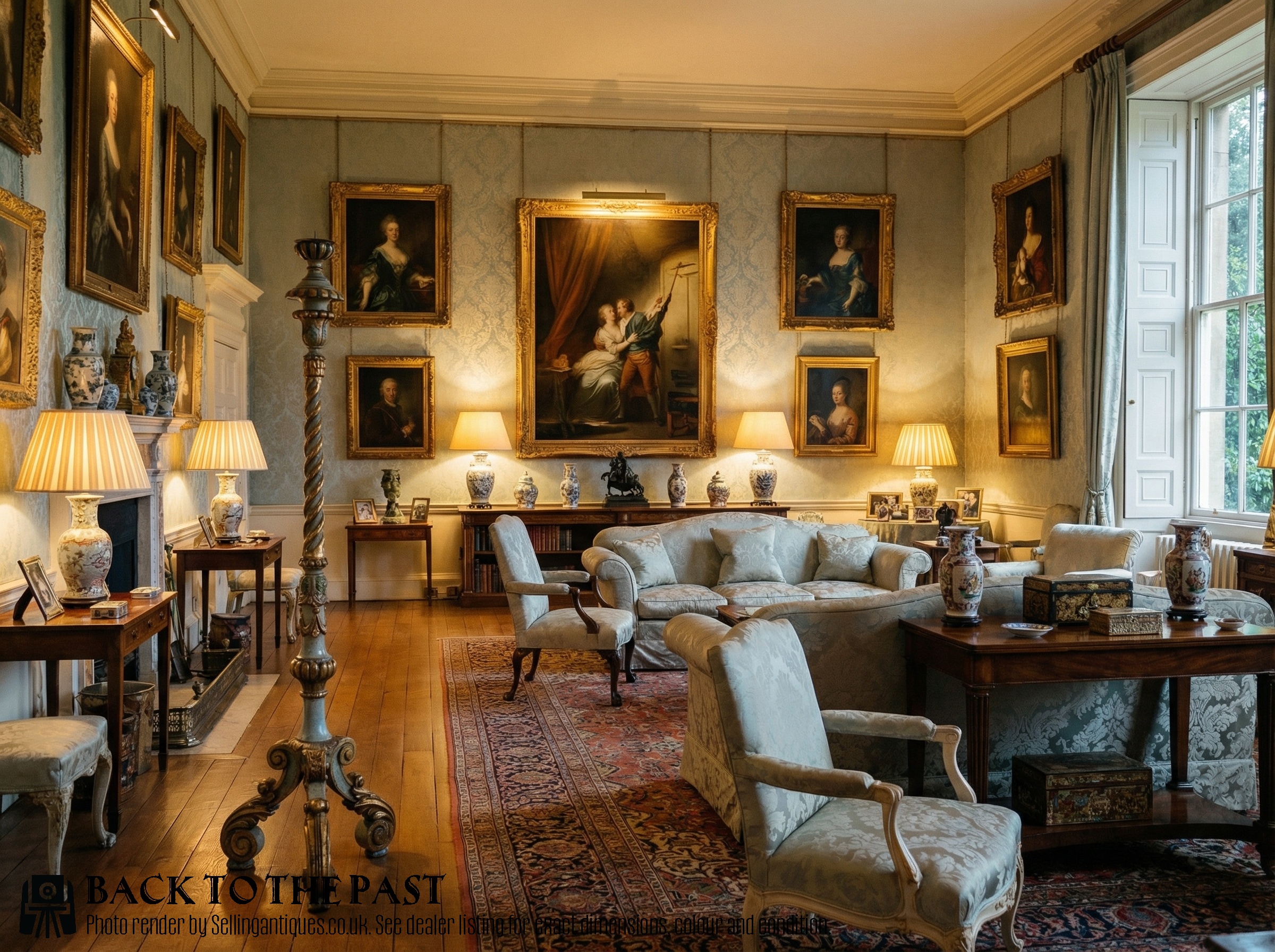
Antique Floor Torchere
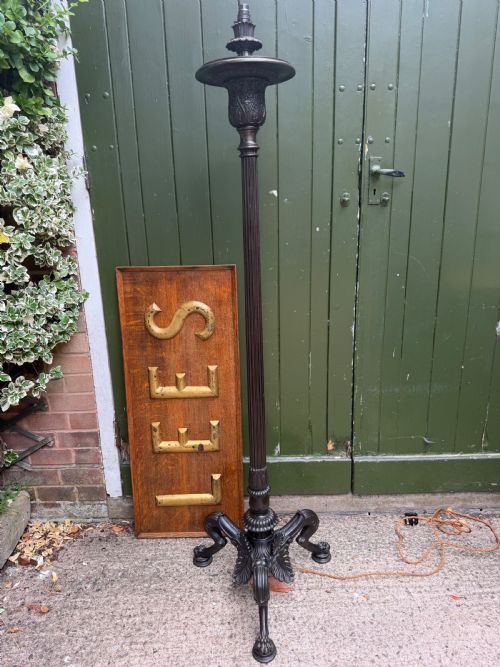
An antique floor torchere stands as a tall vertical support designed originally to hold candles or lights, evolving through the eighteenth, nineteenth and early twentieth centuries into elaborate standard lamps and pedestals.
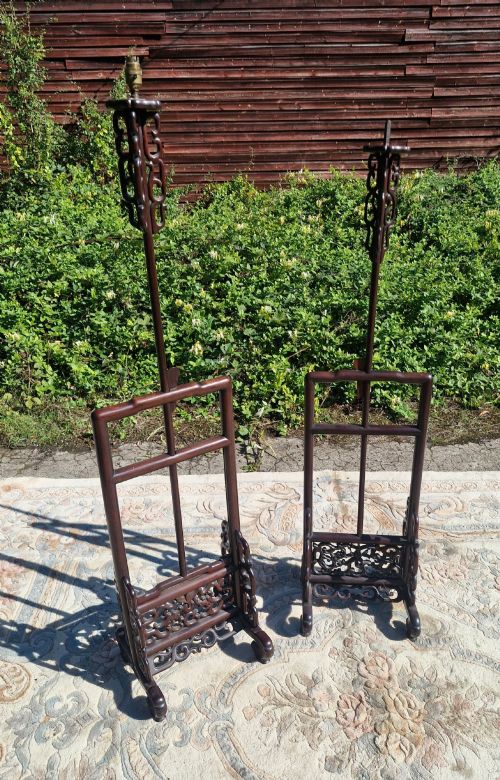
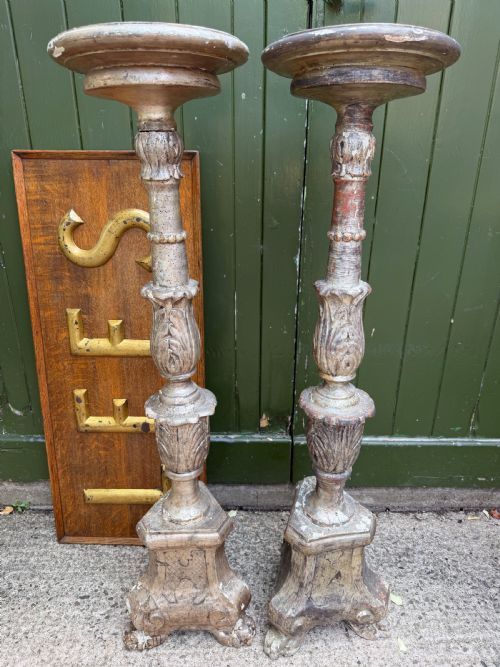
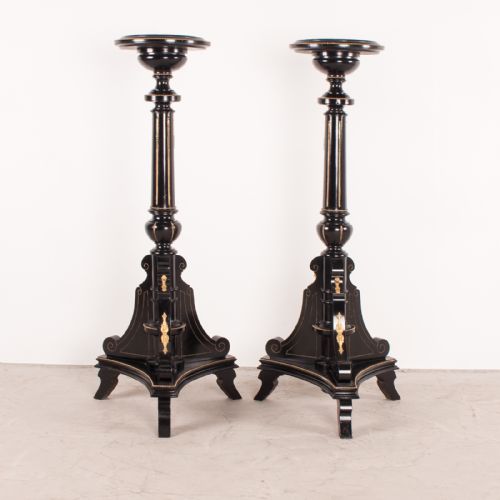
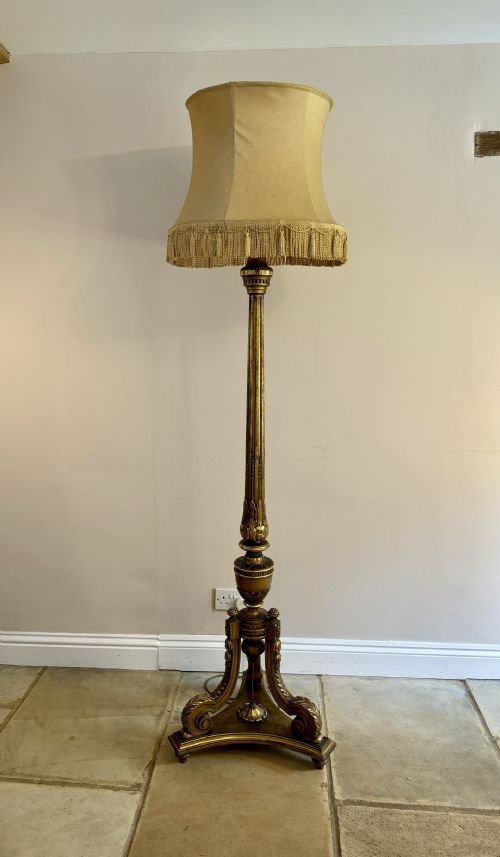
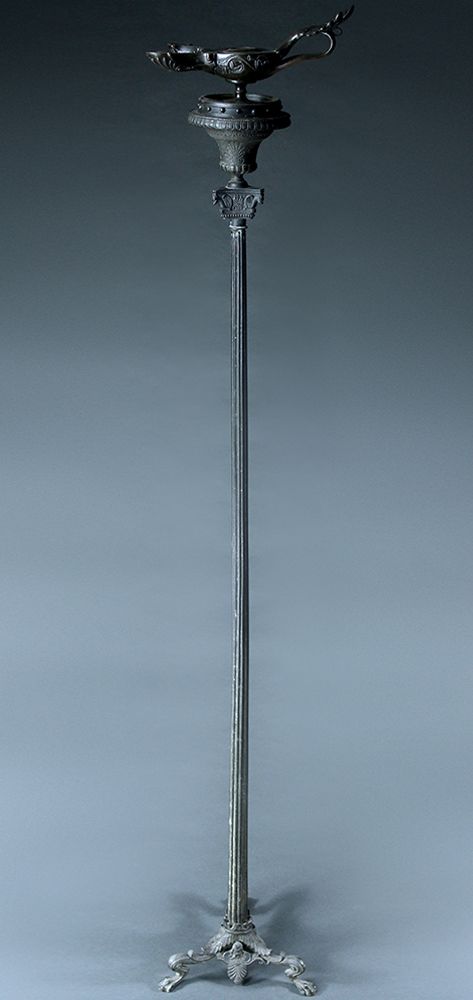
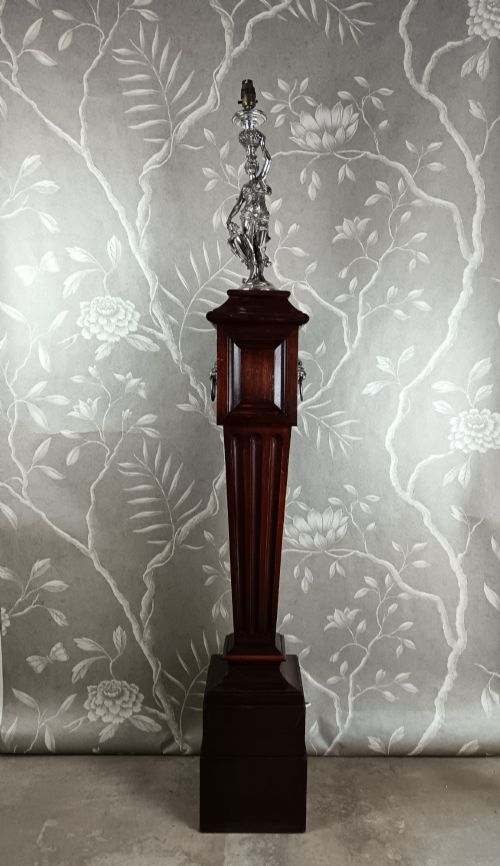
The pieces appearing on this page encompass grand Italian and Venetian carved wood figures, neoclassical bronze designs, and later wooden or metal standard lamps originating from English and continental workshops.
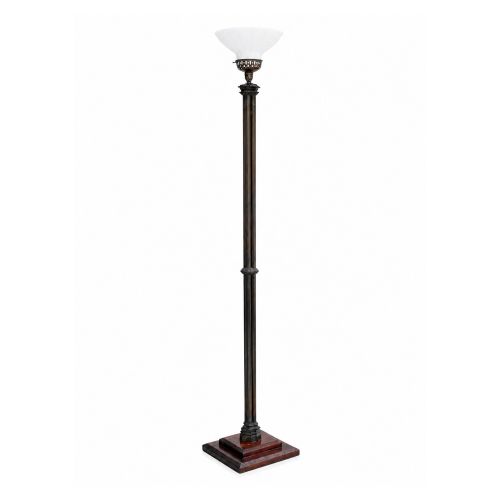
Buyers encounter varied forms ranging from giltwood candle stands and figural pedestals to Art Deco uplighters and Gothic Revival floor lamps, spanning periods from the eighteenth century to the 1930s.
Materials and construction
Carvers shaped wood such as mahogany, pine and walnut into intricate figures, columns and pedestals, often applying layers of gesso, gold leaf, silvering or polychrome paint to achieve rich decorative surfaces.
Foundries cast bronze, iron and brass into detailed classical figures, bases and lamp standards, frequently combining patinated metal with gilt highlights or silver-plated elements.
Artisans constructed functional lighting by integrating glass shades, wiring for electricity, or retaining candle holders within traditional wooden and metal frameworks.
Listings feature items spanning from the 18th century through the 1930s, utilising materials including carved wood, bronze, brass, and glass.
Distinctions in quality
The refinement of the carving or casting determines the visual impact, separating deeply articulated wooden drapery and expressive figural bronze work from simpler turned standards.
Original surface treatments dictate historical integrity, distinguishing pieces that retain their untouched giltwood, polychrome paint or patinated bronze from those with later repainting or stripped finishes.
The presence of maker signatures, distinct foundry marks, or documented attribution to known sculptors elevates the historical significance of a standard lamp.
Humphrey Hopper·F. De Luca·François-Christophe-Armand Toussaint·Coutan·WMF
The Antique Floor Torchere Glossary
- Torchere
- A tall ornamental stand or floor lamp designed to hold a light source. The form originates from seventeenth-century candle stands before adapting to gas and electric illumination.
- Gesso
- A plaster mixture applied to wood surfaces as a smooth base for gilding or painting. It allows craftsmen to carve crisp decorative details before applying gold leaf.
- Polychrome paint
- Decoration executed in multiple colours. This technique appears frequently on Venetian figural stands and carved wooden surfaces.
- Standard lamp
- A vertical floor lamp that supports a light fitting at height. The term is often used interchangeably with taller torcheres adapted for electricity.
- Patinated bronze
- Metal treated with chemicals or aged naturally to produce a rich surface colour. It protects the metal while adding depth to figural sculptures.
Antique Floor Torchere: Frequently Asked Questions
What is an antique floor torchere?
An antique floor torchere is a tall decorative stand or lamp designed to elevate a light source, candle or decorative figure above floor level.
These pieces served both illuminating and display purposes in grand interiors, transitioning from early wooden candle holders to electrified nineteenth and twentieth-century standard lamps.
How were torcheres used historically?
Torcheres were placed in corners, flanking doorways or beside furniture to provide ambient illumination by holding candles or oil lamps.
Over time, many historical stands were adapted to accommodate gas or electric lighting while retaining their original decorative height and sculptural form.
How do I live with a torchere?
A torchere fits well in corners or empty wall spaces where its height introduces vertical line and dramatic lighting without consuming floor area.
They pair effectively with traditional or eclectic interiors, acting as focal points that draw the eye upward and cast soft, indirect illumination.
How can I tell periods apart?
Periods are identified through stylistic cues such as Regency neoclassical restraint, Victorian ornamentation, or the geometric lines of Art Deco design.
Materials and construction methods also provide clues, with eighteenth-century pieces typically showing hand-carving and gesso work, while later nineteenth and twentieth-century examples incorporate cast metals and updated wiring.