
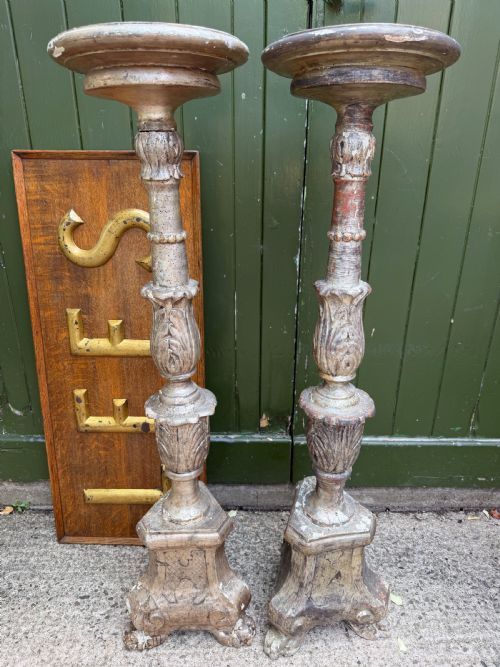
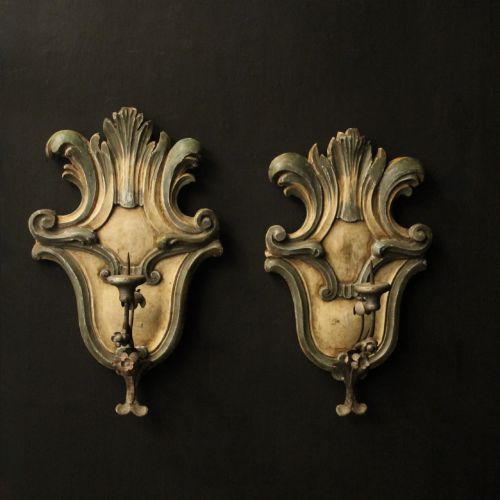
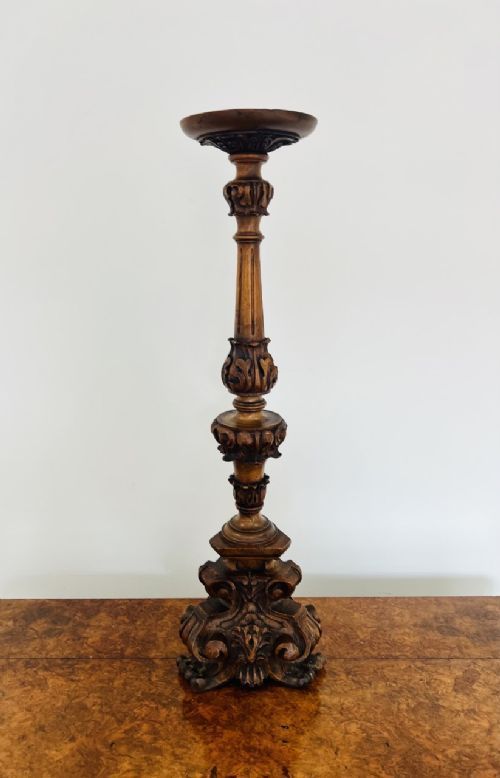
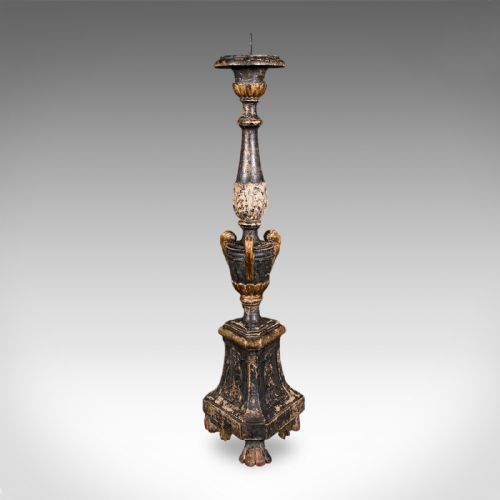


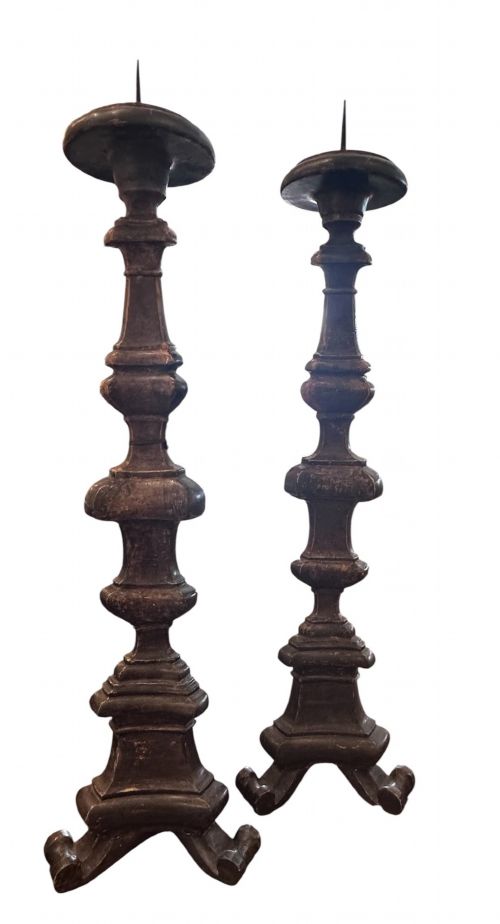


Carved Wooden Pricket
These carved wooden pricket pieces bring centuries of continental church craftsmanship straight to your mantelpiece.
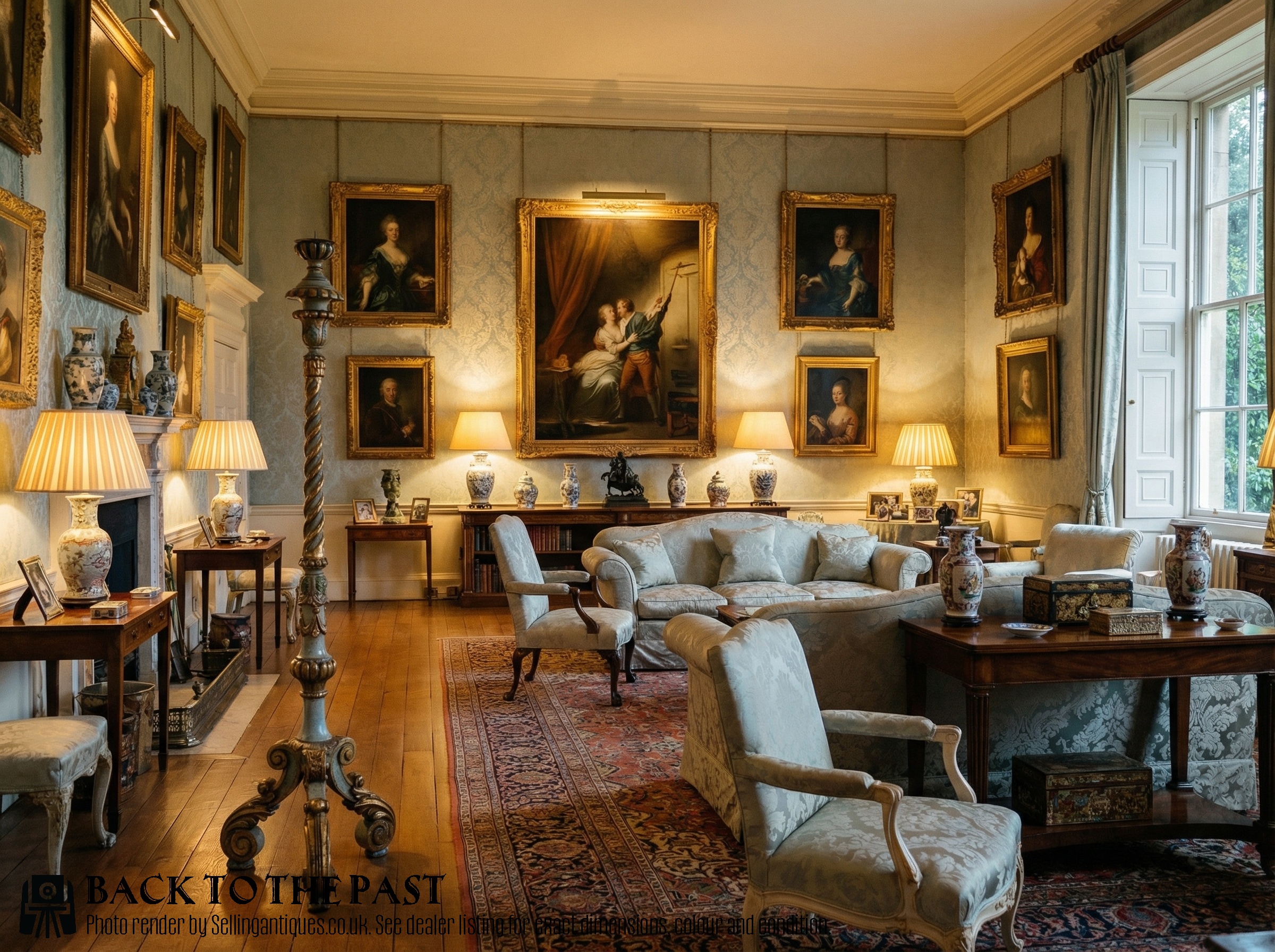
Carved Wooden Pricket
When you search for carved wooden pricket, you encounter liturgical lighting designed with an upright spike to hold large candles securely in place. The selection here leans heavily towards Italian and French examples, spanning the eighteenth and nineteenth centuries.
You will find tall altar-style candle-stands, torchieres, and table lamp conversions among the listings. These objects originated in religious settings before finding favour in domestic interiors during the baroque revival periods.
The forms range from single acolyte figures to impressive pairs of altar-type candle-holders. Most pieces demonstrate regional European styling, notably Italian Florentine and Venetian designs.
How they were made
The makers shaped pine, walnut, and other timbers through hand carving before applying foundational layers of gesso. This prepared surface provided a smooth base for subsequent decorative treatments.
Artisans finished many surfaces using gold leaf, silver leaf, or mecca silvering to mimic solid precious metals. Polychrome pigments also appear, adding colour and depth to the carved wooden details.
The listings span from the seventeenth century through to the early twentieth century, encompassing Georgian, Victorian, and Baroque Revival styles.
What varies in quality
Quality rests primarily in the depth and crispness of the hand carving on the wood. Pieces featuring intricate figures or elaborate baroque scrollwork demand greater sculptural skill than simpler turned shafts.
The integrity of the original giltwood or silver leaf surface dictates much of the visual appeal. Surviving historical gilding with natural ageing shows superior craftsmanship compared to later, heavier repaint layers.
The Carved Wooden Pricket Glossary
- Pricket
- A sharp metal spike atop a candlestick designed to impale the base of a candle and hold it upright. This form predominated in ecclesiastical settings before socket candlesticks became common.
- Torchere
- A tall stand or candlestick designed to support a light source. These often feature decorative carved wooden shafts.
- Giltwood
- Wood that has been coated with a thin layer of gold leaf or gold paint. This technique creates a rich decorative surface on furniture and altar pieces.
- Gesso
- A plaster mixture applied to wood as a base for painting or gilding. It fills grain and creates a smooth canvas for the artisan.
- Mecca
- A transparent amber-coloured varnish applied over silver leaf to imitate the warmer tone of gold. Craftsmen utilised this method to achieve rich metallic effects economically.
Carved Wooden Pricket: Frequently Asked Questions
What is a pricket candlestick?
A pricket candlestick uses an upright metal spike rather than a socket to hold a candle. The candle base rests directly upon this point.
Historically, this design accommodated the large, heavy wax candles used in churches and ceremonial spaces.
How do I date an antique wooden pricket?
Dating relies on examining the underlying timber, the style of the hand carving, and the composition of the gesso and gilding layers. Eighteenth-century examples often display baroque forms and heavier proportions.
Nineteenth-century pieces frequently reflect revival styles influenced by earlier Italian and French designs.
Were these originally lamps?
Most of these pieces started life as church candlesticks, altar lights, or torchieres designed for wax candles. Many have since been converted sensitively into table lamps for modern electrical use.
Unconverted pricket sticks remain available for traditional display or decorative use.
How do I care for giltwood?
Giltwood surfaces require gentle dusting with a soft, dry cloth to protect the delicate gold or silver leaf layers. Avoid using water, liquid cleaners, or chemical polishes.
Keep the pieces away from direct sunlight and heat sources to prevent the gesso and wood from cracking.