

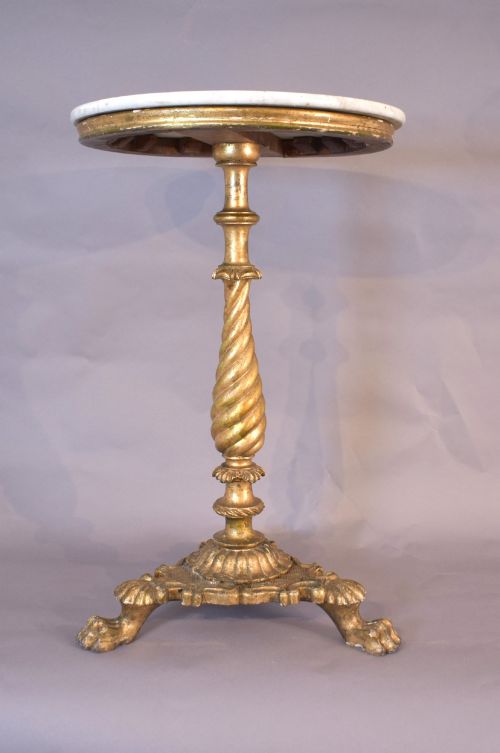


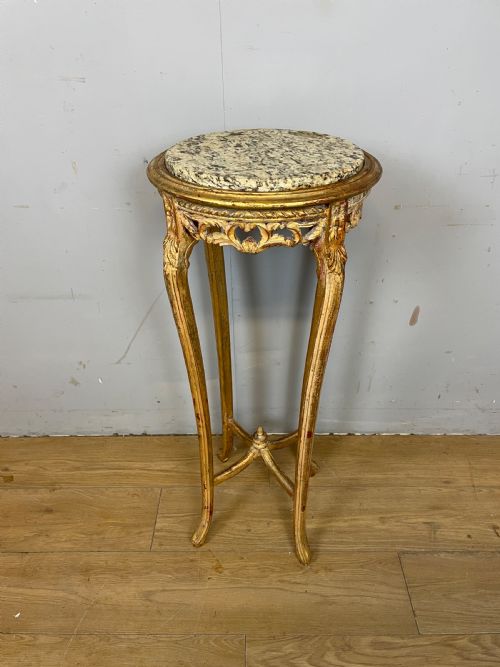

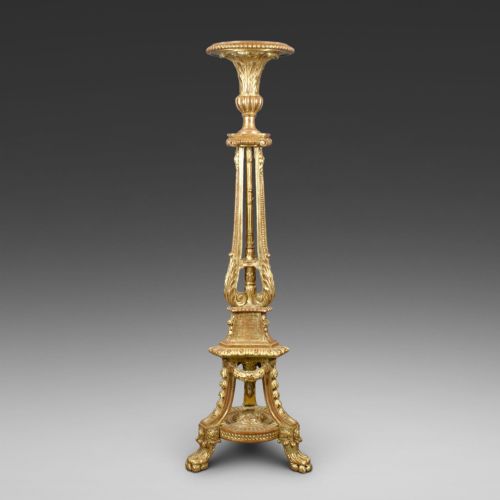


Gilt Wood Plant Pedestal
These gilt wood plant pedestal items bring architectural height and golden warmth to a room, offering a classic stage for display.
Gilt Wood Plant Pedestal
A gilt wood plant pedestal stands as a tall supporting column, table, or torchere designed to elevate plants, urns, and decorative objects. You meet these pieces in forms such as circular tables, columns, plinths, and tripod stands originating from the eighteenth, nineteenth, and early twentieth centuries. The selection spans distinct regional expressions, including French Chateau, Victorian Neoclassical, Venetian Revival, and Regency revival styles.
Most examples you encounter date from the nineteenth century, finished with carved wood, gesso, paint, or gold leaf. Makers often paired these gilded structures with marble tops or incorporated brass mounts to enhance their decorative impact in domestic interiors. They function equally well as plant stands, lamp tables, or independent decorative columns within a room.
Materials and construction
Makers shaped these stands from timber, applying layers of gesso to build up intricate carved details such as acanthus leaves, fluting, and figural motifs before gilding the surface with gold leaf or metallic paint. Many pieces integrate inset marble tops or contrasting ebonised wood and mahogany elements to provide a durable and luxurious upper surface for heavy planters or lamps.
Joinery methods reflect the period of manufacture, utilising traditional framing techniques for columns, tripods, and pedestal bases. Surfaces frequently combine carved wooden structures with painted or lacquered finishes, occasionally augmented by ormolu mounts and brass detailing.
The inventory includes diverse regional interpretations such as Venetian Revival, French Neoclassical, and Regency revival.
Factors of quality
Quality rests in the crispness of the carved ornamentation and the depth of the gilding applied over the gesso ground. Finer pieces demonstrate superior hand-carving in the wood, well-fitted marble tops, and balanced proportions that maintain stability despite slender columns.
The sophistication of the design distinguishes regional or revival schools, such as French neoclassical or Venetian interpretations, from simpler utilitarian stands. Careful execution of secondary details, including painted decoration or lacquering, elevates the status of an individual pedestal.
Gillow and Co·Marguerite
The Gilt Wood Plant Pedestal Glossary
- Torchere
- A tall stand designed specifically to support a light source or decorative urn. These slender pieces often feature elevated platforms and elaborate carved decoration.
- Gesso
- A plaster-like mixture applied to wood surfaces as a smooth base for subsequent gilding or painting. It allows craftsmen to carve sharp, intricate details before applying gold leaf.
- Ormolu
- Gilded bronze mounts applied to furniture and decorative objects. This technique was frequently utilised on French pieces to accent corners and joints.
- Plinth
- The lowest architectural support or base of a column or pedestal. It provides stability and visual grounding for the vertical shaft above.
Gilt Wood Plant Pedestal: Frequently Asked Questions
What is the difference between a torchere and a pedestal?
A torchere traditionally carries a light or an urn, whilst a pedestal supports a broader range of objects including sculptures and plants.
Both serve to elevate items within a room, though torcheres often display a more slender and decorative profile.
Can these stands support heavy plants?
Most sturdy nineteenth-century columns and marble-topped tables easily bear the weight of substantial potted plants.
Tripod designs and slender antique stands require careful placement to ensure stability on uneven floor surfaces.
How do I identify a French nineteenth-century piece?
French pieces often display neoclassical motifs, ormolu mounts, or painted finishes characteristic of Parisian workshops.
Details like parquetry and refined gesso work further distinguish continental examples from domestic British equivalents.
Where should I place a gilt wood pedestal at home?
These pieces suit corners, window alcoves, or flanking positions beside fireplaces and doorways.
They work effectively to draw the eye upward and introduce reflective golden tones into darker interior spaces.