



Antique Floor Gong
These antique floor gong pieces bring a commanding resonant presence and traditional craftsmanship into a room.
Antique Floor Gong
An antique floor gong serves as a striking furnishing designed to summon households to meals or mark hours.
The pieces listed on this page encompass dinner gongs, dinner gong frameworks, and related timepieces.
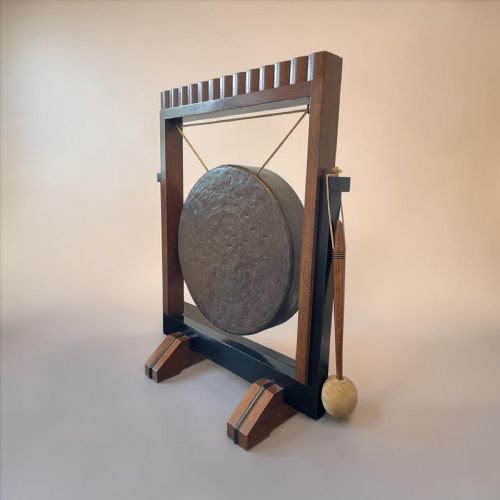
Victorian and nineteenth-century examples dominate the selection, alongside later Arts and Crafts and Art Deco interpretations.
Materials and construction
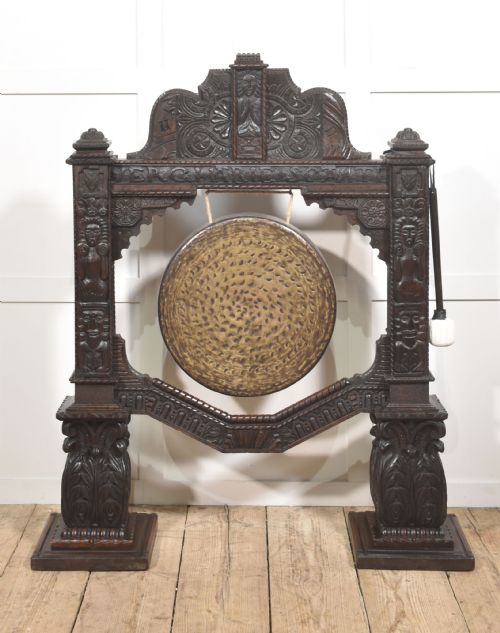
Frames are constructed from sturdy timbers including oak, walnut, and mahogany, often featuring carved Gothic Revival or Arts and Crafts details.
Sound is produced by striking bronze or brass gongs suspended within the wooden or wrought iron stands by cord.
The selection spans pieces from the 1800s through to the 1930s, utilising oak, walnut, mahogany, brass, bronze, and cord.
Assessing quality
Quality rests upon the depth of the timber carving and the architectural ambition of the frame, ranging from simple oak structures to monumental Gothic Revival designs.
The acoustic resonance of the bronze or brass disc and the integrity of the suspension cord distinguish superior examples.
The Antique Floor Gong Glossary
- Dinner gong
- A freestanding musical percussion instrument utilised in large homes to announce meals. It sits upon a dedicated floor stand.
- Gothic Revival
- A design style drawing inspiration from medieval architecture, frequently seen in pointed arches and heavy timber carving on these frames.
- Arts and Crafts
- A movement prioritising traditional craftsmanship and visible construction methods, visible in walnut and oak gong stands from the period.
- Cord
- The stout string or rope utilised to suspend the metal disc from its wooden frame so the vibration remains unimpeded.
Antique Floor Gong: Frequently Asked Questions
How were dinner gongs used?
These instruments were positioned in hallways or reception rooms to signal the serving of meals.
Servants struck the metal disc with a mallet to create a deep, carrying tone heard throughout the house.
Where should I place a floor gong?
A generous hallway or large living room provides adequate space for a freestanding wooden frame.
Ensure there is sufficient clearance around the suspended disc for the sound to resonate properly when struck.
How do I date an antique gong?
Examination of the timber species, joinery methods, and stylistic motifs offers the clearest indication of age.
Heavier carved oak pieces often point towards Victorian Gothic Revival production, whilst cleaner lines suggest Art Deco or Arts and Crafts periods.
What materials make up the frame?
Frames are principally built from dense hardwoods such as oak, walnut, and mahogany.
Some examples incorporate wrought iron or painted metal elements alongside brass components and suspension cord.