


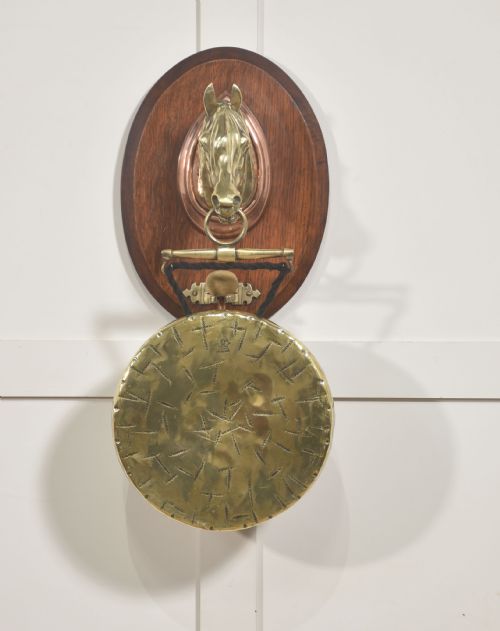


Vintage Dinner Gong
A vintage dinner gong summons households to meals with a deep, resonant tone, combining decorative presence with historic utility.
Vintage Dinner Gong
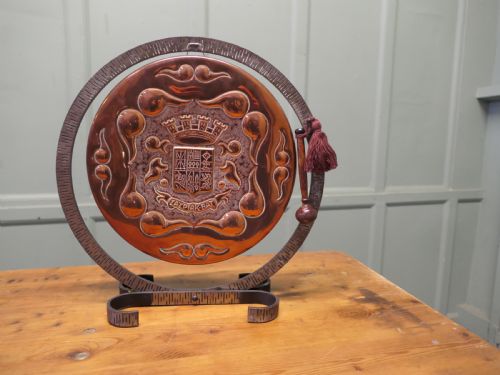
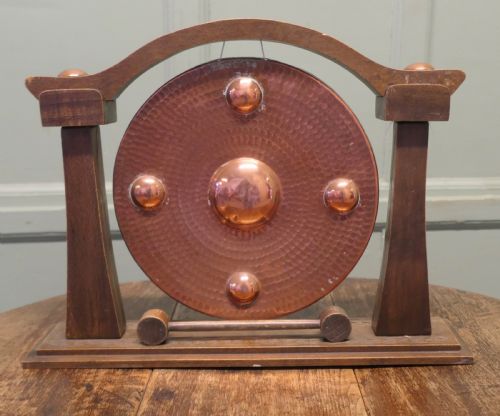
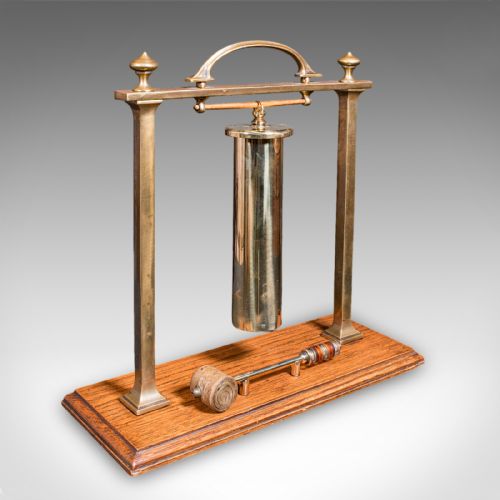
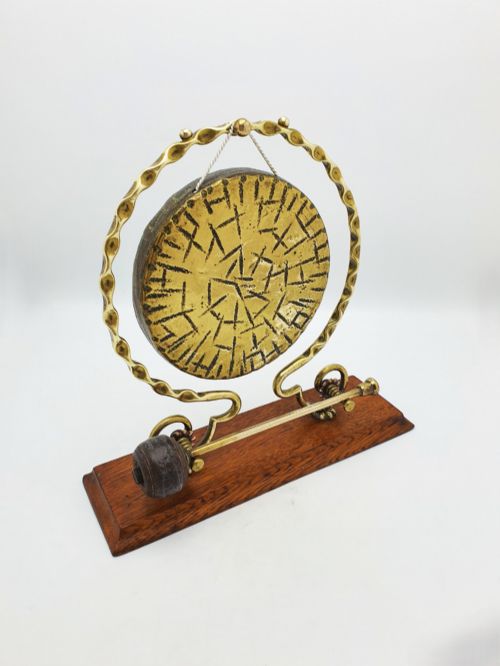
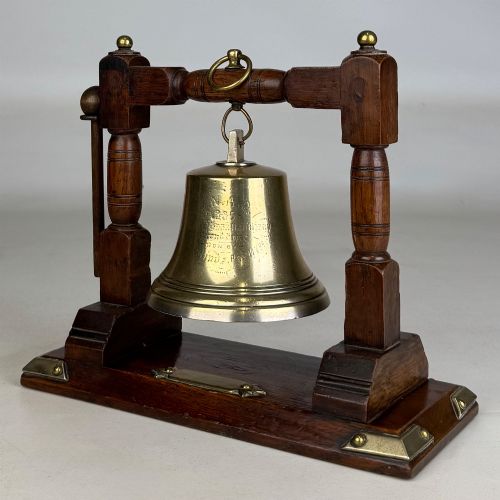
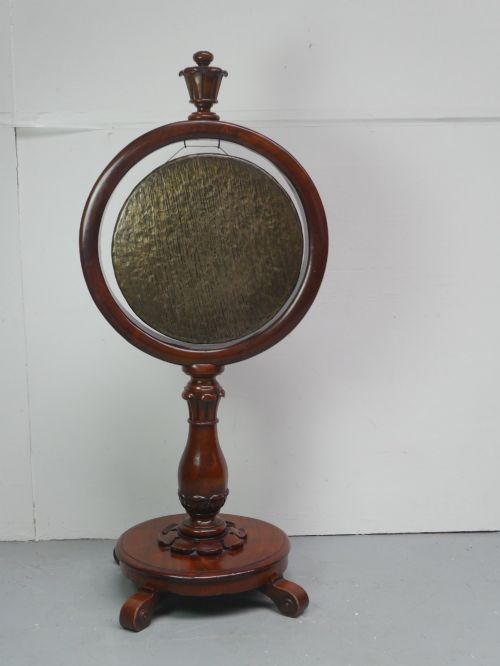
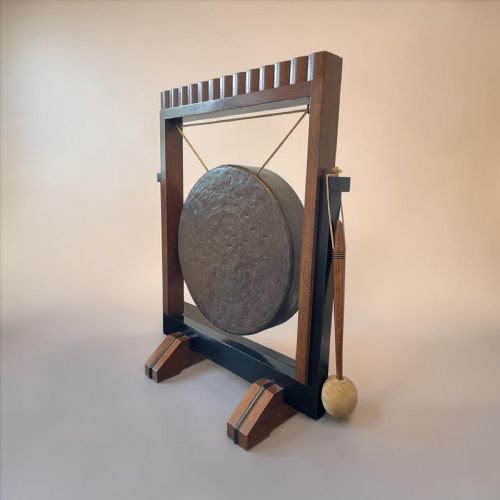
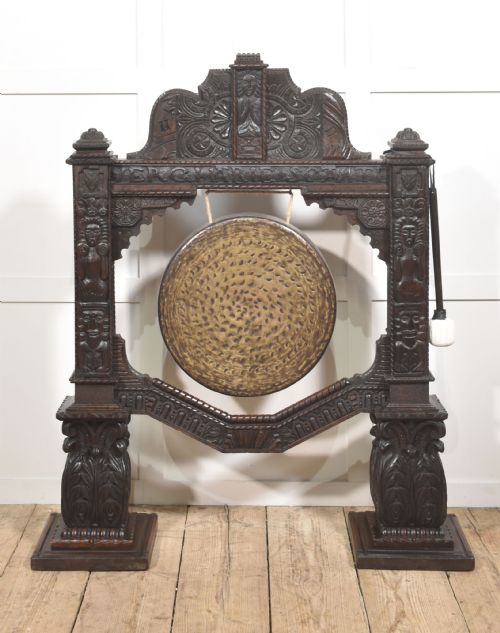
A vintage dinner gong serves as a striking focal point, traditionally used in large country houses and domestic settings to announce the evening meal. When searching for this phrase, buyers encounter striking percussion instruments mounted in dedicated frames designed to sit on tables or hang from walls.
The version most frequently met on this page combines a resonant metal disc or bell with a sturdy wooden stand, often accompanied by a handheld striker. These pieces span periods from the Victorian and Edwardian eras into the twentieth century, reflecting the domestic rituals of past generations.
Designs range from simple tabletop arrangements to elaborate floor-standing pieces and wall-hanging units. Materials vary from straightforward oak frames to carved hardwood and novelty animal horn mounts.
How they were made
Craftsmen utilised robust metals such as brass, copper, bronze, and silver plate to forge the striking plates and bells that produce the characteristic acoustic resonance. These metallic elements are frequently paired with timber frames constructed from oak, mahogany, walnut, or mango wood.
Decorative detailing incorporates specialised techniques including hand hammering, intricate carving, and cord work. Frameworks often reflect distinct design movements like Arts and Crafts, Gothic Revival, Art Nouveau, and Aesthetic Movement aesthetics.
Materials recorded across the inventory include brass, oak, copper, bronze, silver plate, mahogany, walnut, mango wood, and cord.
What varies in quality
Quality in a vintage dinner gong is defined by the acoustic resonance of the metal and the integrity of its mounting frame. Superior examples demonstrate careful metallurgy and solid timber construction that sustain a clear, resonant tone when struck.
The artistry of the carved woodwork and the finesse of metalwork details further separate standard productions from exceptional pieces. Design complexity, such as specialised novelty mounts or distinct stylistic influences like Chinese export carving, elevates the character of the object.
The Vintage Dinner Gong Glossary
- Dinner gong
- A percussion instrument mounted on a stand, historically used in large homes to announce meals. It consists of a metal disc or bell struck with a mallet.
- Striker
- The handheld mallet or beamer used to hit the gong disc. These often feature matching wooden or metal handles.
- Arts and Crafts
- A design movement emphasising handcraftsmanship and simple folk traditions. Pieces from this style often feature visible joinery and hammered copper elements.
- Gothic Revival
- An architectural and decorative style drawing inspiration from medieval forms. Gongs in this style display pointed arches, heavy tracery, and dark oak frames.
- Aesthetic Movement
- A nineteenth-century artistic current prioritizing aesthetic value over narrative or moral theme. Such pieces often exhibit refined, stylized ornamentation.
Vintage Dinner Gong: Frequently Asked Questions
How were dinner gongs used?
Household staff used dinner gongs to audibly signal that a meal was served, carrying the resonant sound across large rooms and corridors.
Family members and guests gathered in the dining room upon hearing the chime, a practice central to formal domestic routines.
Where should I place a table gong?
Table gongs suit sideboards, entrance halls, or mantelpieces where their decorative stands can be appreciated alongside the striking plate.
Ensure adequate clearance around the suspended disc so the mallet can reach it freely without striking surrounding furniture.
How do I identify an Edwardian gong?
Edwardian pieces often feature lighter oak frames and refined brass mounts reflecting early twentieth-century interior tastes.
Stylistic cues bridge late Victorian ornamentation and cleaner Edwardian lines, sometimes accompanied by specific period date markers.
What materials make up these gongs?
The sounding elements consist primarily of brass, copper, bronze, or silver plate, selected for their acoustic properties.
Supporting stands utilise woods such as oak, mahogany, walnut, and mango, occasionally incorporating cord, iron, or cow horn.