


Edwardian Hall Chimes
Edwardian hall chimes are tall upright timepieces and gongs that fill a domestic space with resonant acoustic sounds.
Edwardian Hall Chimes
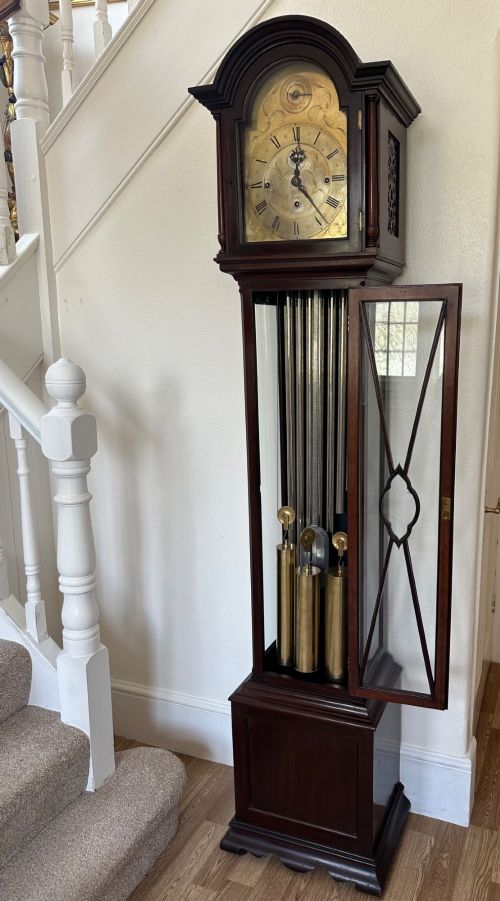
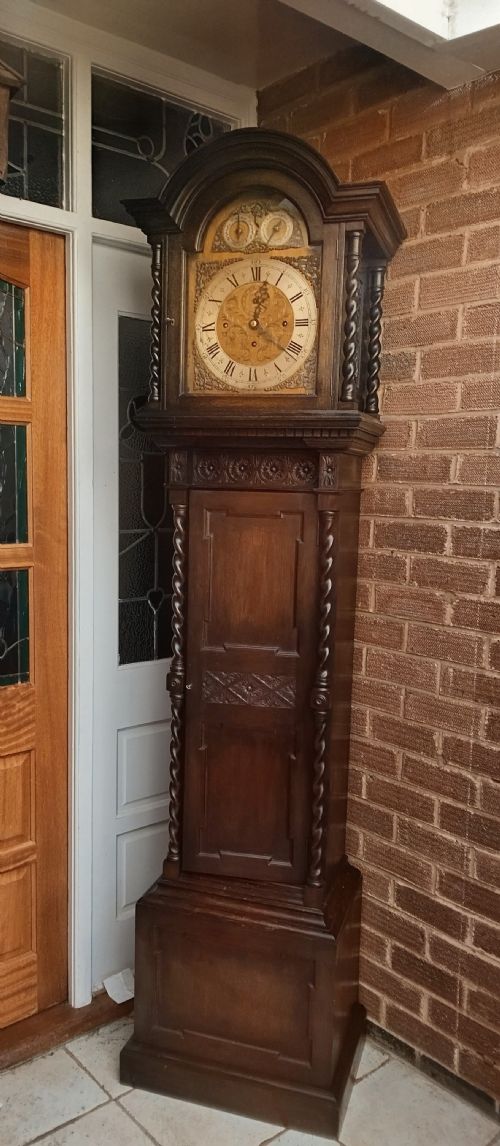
When someone searches for edwardian hall chimes, they encounter tall wooden cases housing complex acoustic mechanisms designed to mark time with melodies. These pieces primarily manifest as longcase clocks, grandfather clocks, and smaller grandmother clocks originating from the Edwardian era and adjacent decades.
The versions most commonly met on this page combine timber cabinetry with striking or chiming movements, ranging from tall tubular bell longcase clocks to compact grandmother clocks. Cabinet forms encompass straightforward domestic proportions alongside more elaborate expressions.
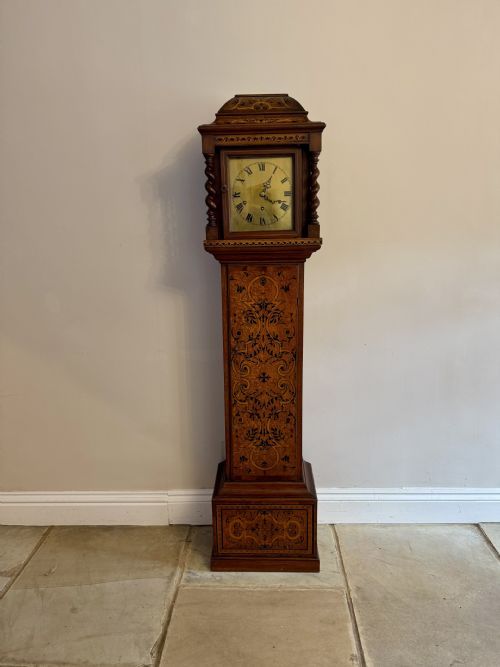
Origins and periods span from the nineteenth century through the Edwardian period into the 1920s and 1930s. Woods such as mahogany and oak dominate the visible forms, frequently enhanced by satinwood inlay or carved detailing.
How they were made
Cabinet makers constructed the tall outer housings using solid timbers like mahogany, oak, and walnut, often applying veneer and satinwood inlay to enrich the visual surface. Glass panels protected the dial and pendulum compartments while allowing visibility of the internal mechanics.
Clockmakers fitted complex gear trains, weights, and tubular bell or gong movements inside these wooden cases to produce quarter chiming and hour strike functions. Metal components including brass and steel formed the intricate mechanisms, escapements, and acoustic tubes.
Some tall wooden housings conceal a musical glockenspiel alongside standard timekeeping weights.
What varies in quality
The sophistication of the internal movement dictates the acoustic and mechanical standard of the piece, distinguishing multi-tune and tubular bell systems from standard strikes. Heavier weights and complex chiming trains require superior engineering to maintain accurate timekeeping alongside musical output.
Cabinet construction and decorative execution separate standard production from exhibition pieces. Finely carved mahogany, precise marquetry, and balanced proportions reflect higher standards of regional or workshop craftsmanship.
The Edwardian Hall Chimes Glossary
- Tubular bell movement
- A chiming system utilising suspended metal tubes struck by hammers to produce resonant, chime-like tones rather than traditional coiled gongs. This mechanism became popular for rich acoustic output in large cases.
- Marquetry
- The art of applying decorative pieces of veneer to a structure to form intricate floral or geometric patterns. Satinwood inlay is frequently utilised in this manner.
- Quarter chiming
- A movement capability that sounds a musical sequence every fifteen minutes in addition to striking the full hour. Westminster chimes are a common example of this function.
Edwardian Hall Chimes: Frequently Asked Questions
Where were edwardian hall chimes placed?
These tall timepieces stood in domestic entrance halls, stairwells, and principal living rooms where their acoustic properties could resonate through the house. Their upright proportions suited narrow circulation spaces.
Placing them away from damp exterior walls and direct heat sources helped protect the wooden cabinetry and internal brass movements from environmental distortion.
How do grandfather and grandmother clocks differ?
Grandmother clocks are scaled-down versions of traditional grandfather clocks, featuring shorter and narrower wooden cases designed for smaller domestic interiors. Both house weight-driven movements and pendulums.
Despite the difference in height, grandmother clocks often contain complex quarter-chiming or musical mechanisms similar to their larger counterparts.
What woods were used for the cases?
Cabinet makers utilised mahogany, oak, and walnut as the primary structural timbers for these tall clock housings. Satinwood inlay provided contrast and decorative detail.
Glass was integrated into the door panels to display the swinging pendulum and weights within the wooden trunk.
How do tubular bells work?
Tubular bell movements suspend metal tubes inside the tall clock case, which are struck by internal hammers linked to the gear train. This arrangement produces a deep, resonant chime.
Different tube lengths and diameters alter the pitch of the musical sequence played at the quarters and hours.