


Antique Floor Covering
These antique floor covering pieces bring woven historical designs into rooms through handmade carpets and rugs from various periods.
Antique Floor Covering
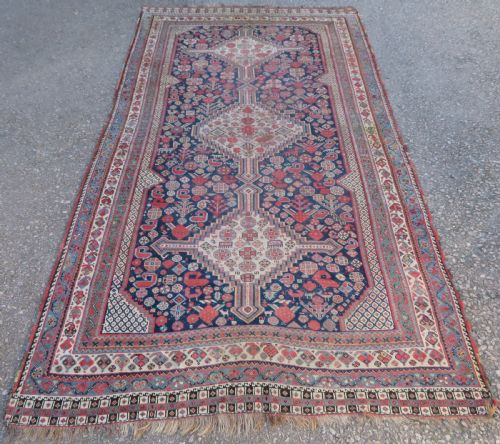
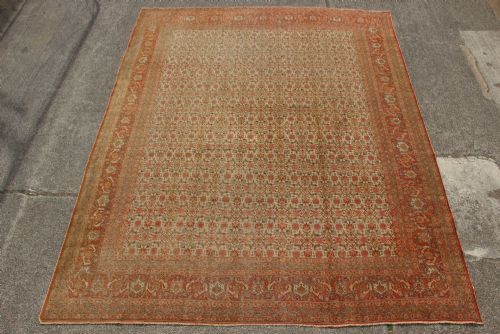
An antique floor covering search reveals woven carpets and rugs originating primarily from Persian, Ottoman, Caucasian, and Chinese traditions. Buyers encounter large room-size carpets alongside smaller tribal rugs, saddlebags, and cushions.
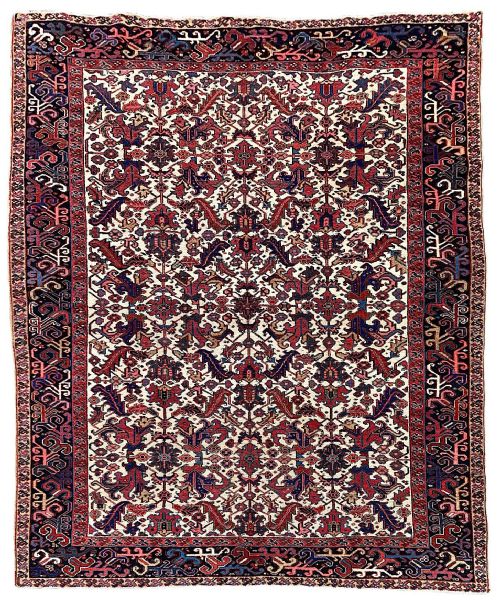
The selections span from the mid-nineteenth century through the 1930s, showing regional weaving methods from centres such as Heriz, Ushak, Tabriz, and Isfahan. Most examples are traditional floor textiles designed for durability and decorative impact.
While carpets dominate the selections, the inventory also encompasses related soft furnishings and woven bag faces produced by nomadic and village weavers. Each piece reflects the specific stylistic vocabulary of its geographic origin.
How they were made
Makers utilised wool and hand-spun wool as the primary pile materials, knotted by hand onto foundational warps and wefts. Silk appears in specific decorative contexts, providing contrast to the heavier woollen grounds.
Dyers employed natural materials to colour the wool, creating the deep blues, reds, and pink grounds seen across Persian and Turkish weaving centres. The resulting pile withstands heavy foot traffic while retaining flexibility.
Nomadic weavers occasionally incorporated wandering willow trees and playful birds into carpets designed strictly for dusty tent floors.
What varies in quality
The density of the knotting and the precision of the drawing dictate the distinction between standard village production and fine workshop carpets. Tighter knots allow for sharper rendering of floral and geometric motifs.
The depth and complexity of the dye work, particularly the variation of tone within individual wool yarns, separates superior examples from simpler ones. Structural integrity across the borders and foundation determines the resilience of each textile.
Benlian·Haroon Kashan·Mokhtashem
The Antique Floor Covering Glossary
- Pile
- The upright yarn loops that form the functional surface of a carpet. This layer absorbs foot traffic and displays the woven pattern.
- Warp
- The vertical foundation threads stretched tightly on the loom before knotting begins. Wefts are then passed horizontally across these threads.
- Weft
- The horizontal threads interlaced between the warps to stabilise the carpet structure. They hold the rows of knots firmly in place.
- Saddlebag
- A utilitarian container woven in nomadic regions for transport on animals. The surviving faces are often collected as small decorative rugs.
- Ground
- The main background field of a carpet behind the central medallions and border patterns. Its colour defines the visual character of the piece.
Antique Floor Covering: Frequently Asked Questions
How do I clean an antique rug?
Professional dusting and gentle washing preserve the lanolin in the wool. Avoid harsh chemical treatments that strip natural dyes.
Regular vacuuming with a suction-only attachment prevents dirt accumulation within the pile.
Where were Oushak carpets made?
Oushak carpets originated in the town of Usak in western Turkey. Weavers there utilised distinctive muted colour palettes and large-scale floral motifs.
These textiles gained prominence in European and Ottoman interiors alike.
What is a Heriz carpet?
Heriz carpets come from the mountainous region of north-west Persia. They feature geometric medallions and durable cotton foundations designed for heavy domestic use.
Village weavers produced these robust designs using high-quality local wool.
Are tribal rugs durable?
Nomadic tribal rugs utilise sturdy hand-spun wool and sturdy structures. They were built for daily use in harsh environments.
With appropriate placement and underlays, they withstand modern foot traffic.