


Anatolian Floor Carpet
An anatolian floor carpet brings historic Turkish weaving tradition into a room through generous scale and rich natural materials.
Anatolian Floor Carpet
An anatolian floor carpet spans large formats, runner proportions, and area rugs originating from Turkish weaving centres. Pieces matching this search phrase date from the nineteenth century into the early decades of the twentieth century, encompassing both grand room-size carpets and village formats.
The selection frequently encounters major stylistic groups such as Oushak, alongside specific regional village types including Bergama, Melas, Konya Karapinar, Kula, and Ghiordes. Buyers encounter everything from large pale room carpets to smaller tribal pieces with strong geometric or floral motifs.
Makers produced these textiles for domestic use or export, resulting in varied formats from long runners to square carpets and two-part kilims. Each piece reflects the aesthetic of its specific Anatolian district, bridging traditional Ottoman design with the demands of period interiors.
How they were made
Weavers constructed these textiles predominantly on cotton or wool foundations, utilising hand-spun wool for the pile alongside variations such as angora wool, silk, art silk, and mercerised cotton. These organic materials provide the structural integrity and tactile warmth characteristic of the region.
Dye methods and knotting techniques determine the visual depth of the pile, while flatweave kilim constructions utilise tight interlocking or slit-tapestry methods. The integration of wool and cotton yarns allows the carpets to maintain durability under foot traffic while retaining flexibility across large expanses.
Current listings feature nineteenth and early twentieth-century periods, utilising materials from standard wool and cotton to art silk and floss silk.
What varies in quality
Quality rests upon the fineness of the knotting and the handling of scale across large room dimensions, where proportion determines visual balance. Master weavers achieved harmonious compositions even in massive formats, ensuring motifs remain crisp rather than congested.
The depth and absorption of dye stuffs govern the character of the surface, as superior wool takes colour with variations that develop patina over decades. Subtle shifts in tone across the field elevate a textile above flatly dyed commercial alternatives.
The Anatolian Floor Carpet Glossary
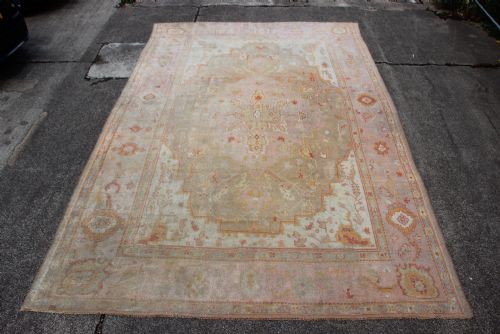
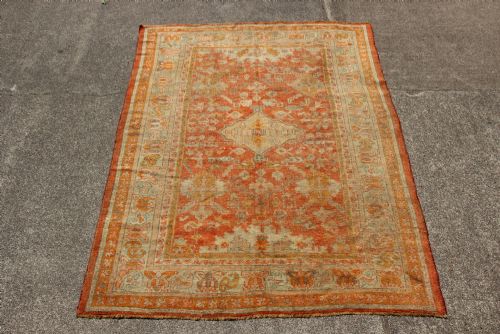
- Oushak
- A major tradition of Turkish carpet weaving known for softer palettes, large-scale floral motifs, and relaxed geometry. These carpets often utilise pale or pink grounds suited to large interior spaces.
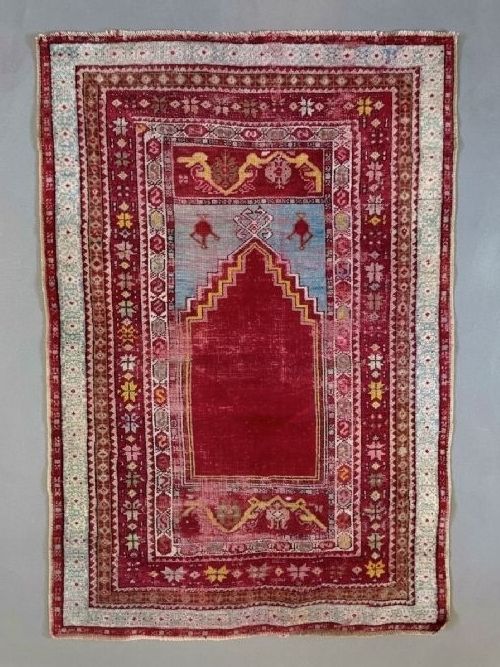
- Prayer rug
- A textile featuring a distinct mihrab or arch design at one end, traditionally used for individual prayer. These formats often display concentrated regional ornamentation in the niche.
- Kilim
- A flatweave textile produced without a pile by tightly interweaving warp and weft threads. This technique creates geometric patterns visible from both sides of the fabric.
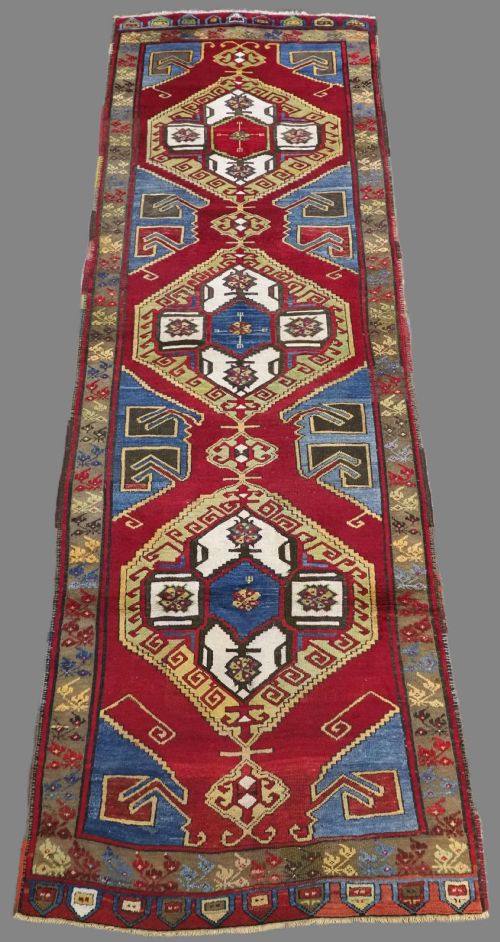
- Runner
- A long, narrow carpet format designed for hallways, corridors, or alongside furniture. These pieces maintain proportional width while extending significantly in length.
- Bergama
- A village carpet style originating from northwestern Turkey, typically characterised by bold geometric medallions and saturated primary colours. These pieces reflect traditional rural weaving methods.
Anatolian Floor Carpet: Frequently Asked Questions
Where should I place a large carpet?
Large room-size carpets suit principal living areas, dining rooms, or reception spaces where furniture can sit comfortably on top of the field. Their generous dimensions help anchor an interior scheme.
Ensure the room allows sufficient border visibility around the edges to appreciate the weaving style and proportions properly.
How do I care for wool pile rugs?
Regular gentle vacuuming without a rotating brush roll prevents dust accumulation within the wool pile. Professional cleaning by specialists in antique textiles preserves the natural lanolin.
Keep the rug away from direct, prolonged sunlight to prevent uneven fading of the natural dye stuffs across the surface.
What distinguishes an Oushak from a village rug?
Oushak carpets typically feature expansive fields with reduced, open floral designs and softer colourways intended for formal interiors. They often measure much larger than standard village pieces.
Village rugs like Bergama or Melas display denser geometric structures, smaller formats, and more saturated regional palettes reflecting local tribal traditions.
Can I use a runner in a hallway?
Runners fit narrow spaces such as corridors, entryways, or alongside bedroom furniture. Their elongated proportions guide movement through a home while adding warmth to wooden floors.
Utilising a suitable underlay prevents slipping and cushions the foundation yarns against hard subfloors.
How do I identify a prayer rug?
Prayer rugs feature a prominent pointed arch or mihrab shape at one end of the field, directing the orientation of the design. This architectural motif often encloses floral or geometric symbols specific to the weaving region.
Unlike room carpets meant for central floor placement, these smaller formats were traditionally portable items for devotional use.