

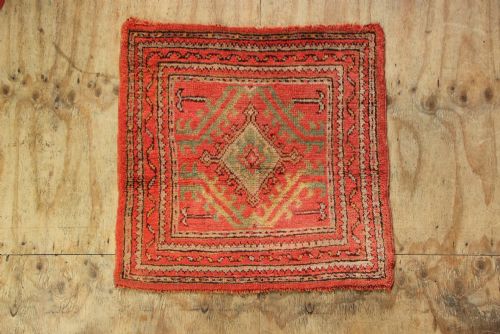


Red and Green Carpet
A red and green carpet brings warmth and striking contrast to a room through centuries of traditional weaving artistry.
Red and Green Carpet
A red and green carpet encompasses floor coverings originating from various international weaving traditions, including Anatolian, Caucasian, Persian, and European workshops. These textiles appear in formats ranging from square Oushak pieces and runners to large room-sized carpets dating from the eighteenth century into the twentieth century.
Buyers seeking this aesthetic encounter diverse regional styles such as Turkish prayer rugs, Kazak village rugs, and grand Persian room carpets. The selection on this page demonstrates how weavers balanced these two dominant hues across different periods, from traditional village pieces to formal workshop productions.
Materials and Construction
These floor coverings rely principally on natural wool for the pile, providing resilience and warmth underfoot, while cotton frequently forms the structural warp and weft foundations. Certain regional pieces utilise silk or include alternative materials like pine for associated storage chests.
Weavers employed traditional knotting and flatweaving techniques suited to their specific geographical origins, whether working in Anatolian village traditions or established Persian workshops. The longevity of these textiles stems from the careful selection of durable animal fibres combined with time-honoured construction methods.
Red and Green Carpet Retail Price Guide 2026
Typical asking prices for red and green carpet among the pieces listed under this phrase on Sellingantiques today, from the lower quarter to the upper quarter. They describe what is for sale here now, not the wider market.
Listings feature pieces spanning from the eighteenth century through to the 1920s, utilising wool, cotton, and silk across Anatolian, Persian, and European styles.
Factors of Quality
Quality in these textiles depends heavily upon the precision of the weave and the depth of the dye work. Finer knot densities allow for sharper geometric or floral definition, distinguishing regional village pieces from grander city workshop carpets.
The sophistication of the palette and the harmonious balance between red and green tones dictate the visual success of the piece. Superior examples display masterful dye saturation that retains its visual impact across centuries of use.
The Red and Green Carpet Glossary
- Pile
- The upright yarn loops that form the usable surface of a carpet. This soft upper layer absorbs wear and displays the woven design.
- Warp
- The stationary longitudinal threads stretched on a loom before weaving begins. These parallel strands form the foundational skeleton of the rug.
- Weft
- The horizontal threads passed across the warp strands to lock the knots in place. Together with the warp, they create the sturdy foundation grid.
- Kilim
- A flatwoven carpet or rug produced without a pile. These lighter textiles rely entirely on the interlocking of warp and weft threads.
- Prayer rug
- A small textile featuring a specific architectural niche design indicating the direction of prayer. These pieces were traditionally used for personal devotion.
Red and Green Carpet: Frequently Asked Questions
How do I care for an antique carpet?
Protect the wool pile by keeping the textile out of direct sunlight to prevent dye fading. Vacuum gently with a suction-only attachment without using a rotating brush.
Rotate the rug periodically to ensure even wear across high-traffic areas. Professional cleaning should be undertaken sparingly by specialists experienced in antique textiles.
Where were these carpets originally made?
The pieces originate from major historical weaving centres across Turkey, the Caucasus, Persia, and India. Each region developed distinct structural characteristics and aesthetic motifs.
Village weavers often produced geometric tribal designs, while urban workshops favoured intricate floral compositions and grand room-sized formats.
How do I determine the age of a rug?
Age is assessed by examining the structure, materials, dye types, and stylistic conventions used in the weaving. Natural dyes and hand-spun wool generally point towards older traditional production.
Comparing specific border motifs and medallion structures against documented examples helps narrow down the period of manufacture.
Can I place these rugs in busy hallways?
Many of these durable wool carpets handle moderate foot traffic well when placed over a quality underlay. Runners are specifically suited for corridors and long entryways.
Delicate silk or very fine historical pieces require more sheltered locations to preserve their structural integrity over time.