




Antique Flatback Vase
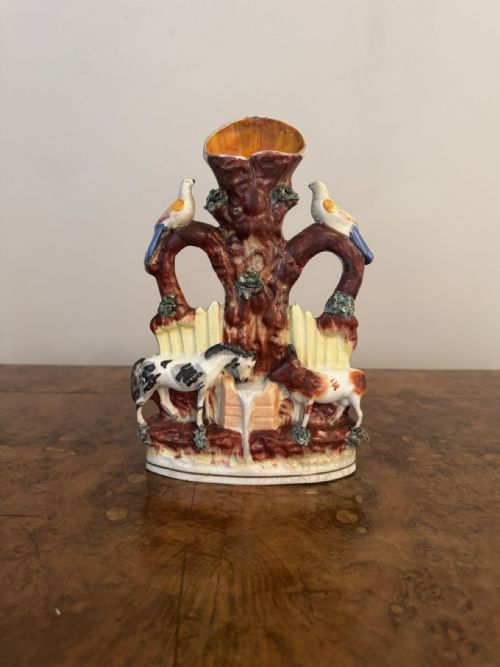
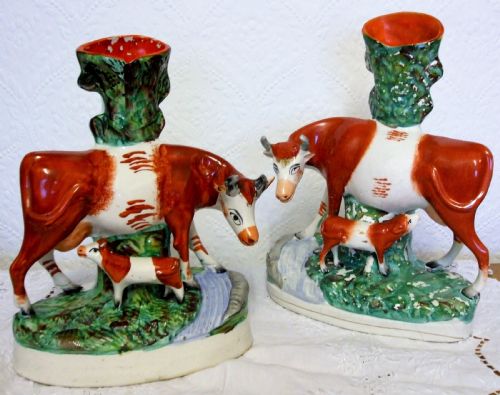
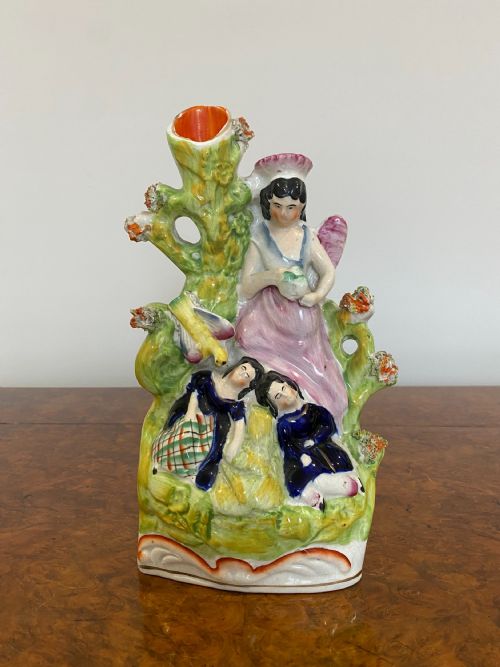
These antique flatback vase pieces are Staffordshire earthenware figures and spill holders designed to stand proudly against a mantelpiece wall.
Antique Flatback Vase
When you search for an antique flatback vase, you are looking at nineteenth-century Staffordshire pottery figures and spill holders shaped with a flat, undecorated rear side. The version you are most likely to meet on this page is a Victorian earthenware figure group or spill vase depicting animals, castles, or human characters.
The nineteenth-century pieces recorded here span several decades from eighteen-sixty to nineteen-hundred, capturing the evolving tastes of the Victorian era. Many take the form of spill vases featuring cows, deer, Scots harvesters, or narrative groups such as the Band of Hope and Babes in the Wood.
Staffordshire potters designed these ceramic figures specifically to be viewed from the front on narrow shelves, meaning the modelling stops short at the back. Pairs of spill vases and single castle ornaments remain the most common formats encountered among these listings.
How they were made
Gold leaf accents occasionally highlight specific decorative elements on the better nineteenth-century examples, catching the light against the glossy lead glaze surface. Firing in traditional kilns gave each piece its characteristic ceramic weight and individual surface texture.
Listings feature Victorian earthenware figures and spill vases spanning the nineteenth century from eighteen-sixty to nineteen-hundred.
What varies in quality
Proportion and scale also define the hierarchy within these figures, as larger paired spill vases and complex multi-figure groups demand greater skill from the potter. Pieces with well-preserved glaze surfaces and minimal kiln distortion represent the stronger survivals from this period.
The Antique Flatback Vase Glossary
- Flatback
- A ceramic figure or vase modelled in the round at the front with a flat, plain reverse designed to stand against a wall. This construction saved clay and simplified placement on narrow Victorian mantelpieces.
- Spill vase
- A hollow cylindrical holder intended to contain wooden spills used for lighting candles and fires. Potters often combined these tubes with animal or human figure groups.
- Earthenware
- A porous pottery body fired at lower temperatures than stoneware or porcelain. It requires a glaze coating to become completely watertight.
- Lead glaze
- A glossy vitreous coating containing lead oxide applied to pottery before firing. It creates a smooth, shiny surface finish across nineteenth-century figures.
- Staffordshire figure
- A ceramic ornament produced in the pottery towns of Staffordshire during the Victorian era. These decorative pieces depicted popular subjects ranging from domestic animals to historical figures.
Antique Flatback Vase: Frequently Asked Questions
What is an antique flatback vase?
An antique flatback vase is a nineteenth-century Staffordshire ceramic vessel featuring a decorative front and a flat unadorned back. These pieces were made to sit flush against a wall on a mantelpiece.
Most examples combine a figure group with an integrated hollow cylinder designed to hold wooden fire lighters.
How do I date a Staffordshire flatback?
Dating relies on stylistic clues, subject matter, and the handling of the ceramic body and glaze. Victorian pieces commonly date from the mid to late nineteenth century.
Makers rarely marked these earthenware objects, so comparison of the moulding style remains essential for establishing an approximate period.
Were these vases used for flowers?
Victorian spill vases were primarily utilitarian items meant to hold wooden tapers for lighting household fires and candles. Their narrow cylindrical openings accommodated thin spills rather than large floral arrangements.
Over time, many survived as decorative mantel ornaments rather than active fire-lighting accessories.
Why is the back flat?
Potters left the reverse side flat so the figures could rest securely against cottage walls and mantelpieces. This design choice also saved material and made production more efficient.
Collectors often search specifically for this flatback construction as a hallmark of nineteenth-century Staffordshire work.