
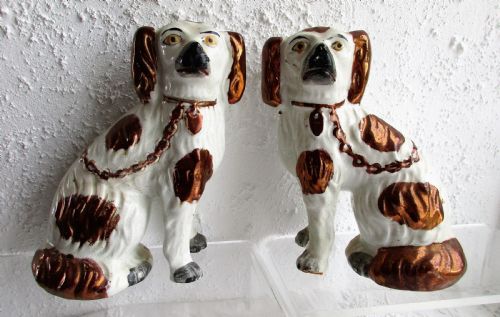


Antique Fireplace Spaniel Pair
These antique fireplace spaniel pair figures are traditional ceramic mantel ornaments designed to sit facing one another by a hearth.
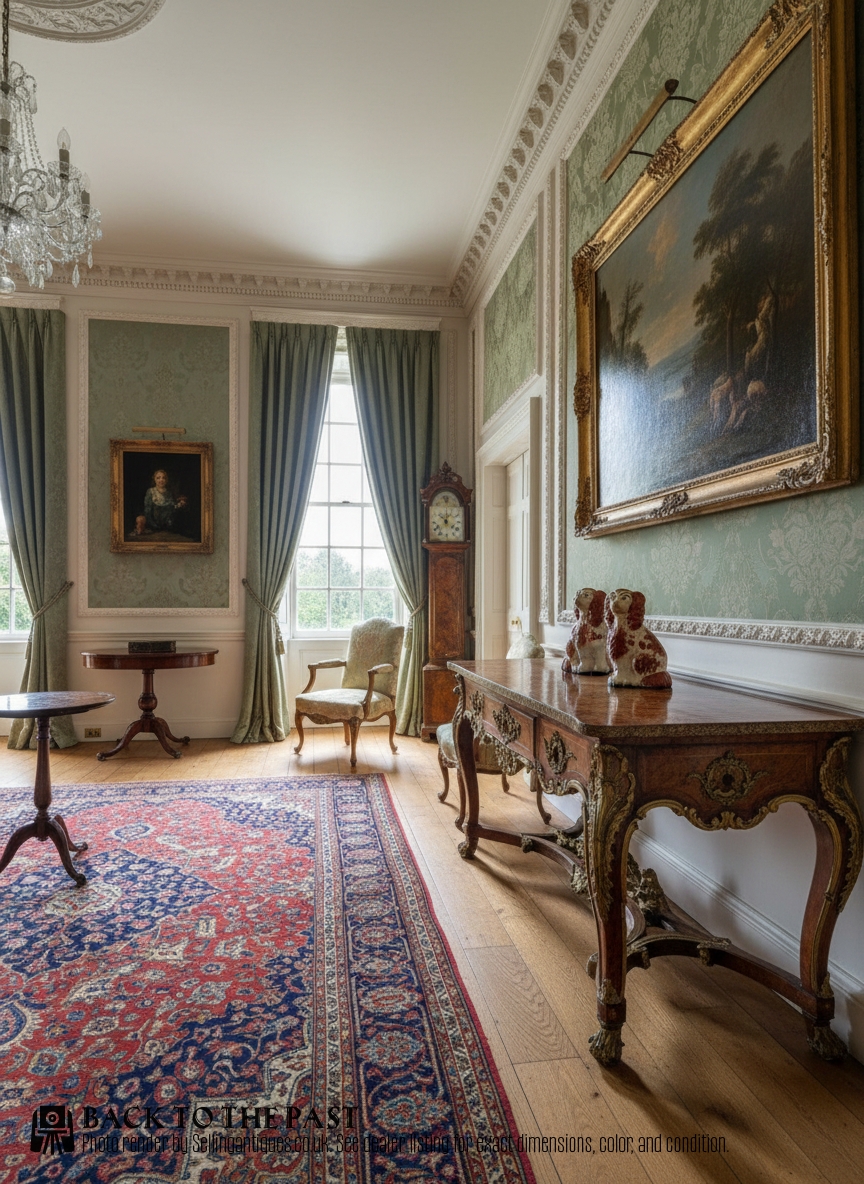
Antique Fireplace Spaniel Pair
An antique fireplace spaniel pair consists of matched ceramic dog figures modelled as seated spaniels, historically placed on either side of a fireplace mantel. Most examples on this page date from the Victorian period, spanning the mid to late nineteenth century.
The form typically depicts the King Charles spaniel breed, often referred to as comforter spaniels. These ornaments appear in various colourways, including classic white with gilt highlights, black and white, red and white, and rich copper lustre finishes.
Materials and production methods
Potters shaped these figures from earthenware and ceramic bodies, utilising slip casting or moulding techniques typical of nineteenth-century production. Artisans applied glaze and hand-painted details such as enamel markings, gold leaf, and copper lustre finishes before firing.
Listings span the nineteenth century, featuring earthenware bodies finished with enamel, gilt, and copper lustre.
Distinctions in quality
Scale and presence also distinguish better examples, with larger pairs and those retaining original glass eyes or well-preserved gilding standing apart from simpler, smaller decorative figures.
The Antique Fireplace Spaniel Pair Glossary
- Comforter spaniel
- A traditional term for the small toy spaniels kept as lapdogs in the nineteenth century, which inspired these ceramic mantel figures. These dogs were popular companions in Victorian parlours.
- Copper lustre
- A metallic glaze technique that produces a reflective, copper-coloured sheen over the ceramic body. It creates a warm, coppery glow under fireplace light.
- Earthenware
- A porous type of pottery fired at lower temperatures, commonly used for nineteenth-century Staffordshire figures. It forms the structural base beneath the glazed surface.
- Gilt
- A thin layer of gold leaf or gold paint applied to ceramic details such as chains, lockets, and collars. This embellishment catches the light in a dimly lit room.
- Staffordshire pottery
- Earthenware figures produced by potteries in the Staffordshire region of England. This area dominated the manufacture of nineteenth-century mantel ornaments.
Antique Fireplace Spaniel Pair: Frequently Asked Questions
Where did fireplace spaniels sit?
These ceramic spaniels traditionally stood at either end of a domestic fireplace mantelpiece, facing inward toward the grate.
Pairs were arranged symmetrically to frame the hearth during the Victorian era.
How do I date these spaniels?
Dating relies on stylistic clues, ceramic bodies, and the specific palette of enamels or lustre used by nineteenth-century potters.
Most examples on this page originate from the Victorian period between eighteen-sixty and eighteen-ninety.
What colours do they come in?
The listings show several distinct colour schemes, including plain white with gilt accents, black and white, and red and white.
Copper lustre finishes also appear frequently among the nineteenth-century examples.
How should I clean them?
Dust the ceramic surfaces gently with a soft, dry brush to preserve the delicate glazes and hand-painted enamel details.
Avoid using liquid cleaners or abrasive cloths, which can damage the antique gilt and lustre.