



Antique Fireplace Chenets
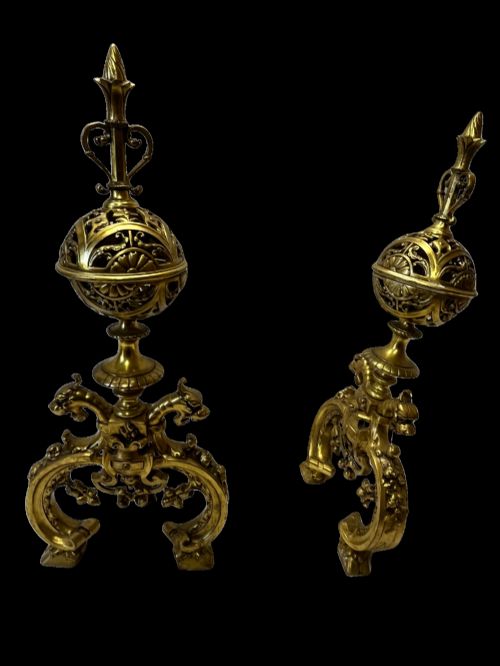
These antique fireplace chenets are hearth supports crafted to hold logs, predominantly originating from French and English workshops across the nineteenth century.
Antique Fireplace Chenets
When you search for antique fireplace chenets, you encounter substantial metal supports designed to sit within the hearth and elevate firewood for better combustion. The selection relies heavily on nineteenth-century pieces, spanning periods from Regency to Victorian, alongside earlier revivals.
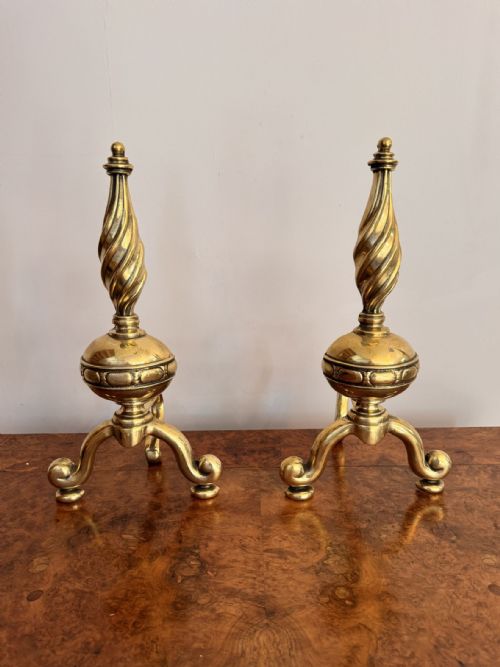
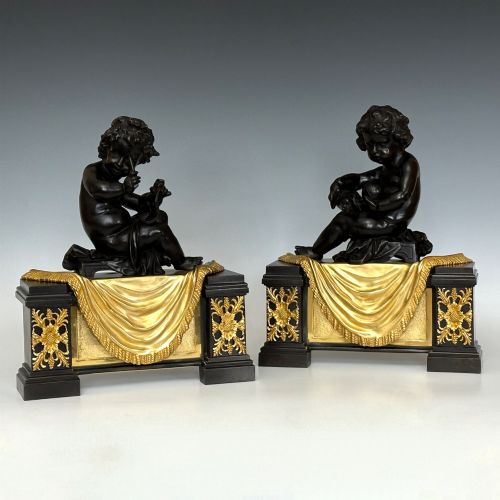
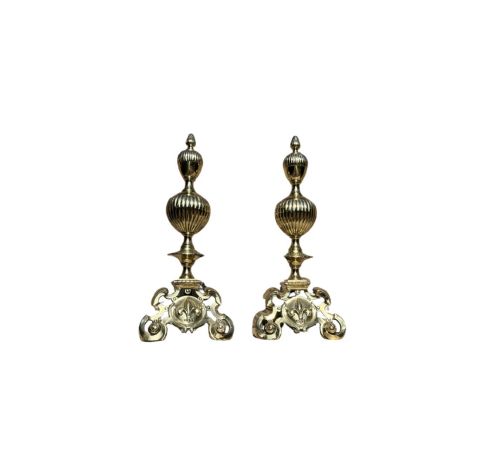
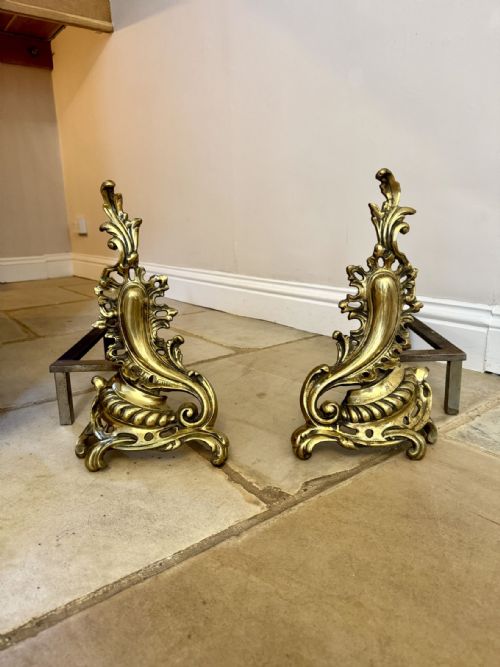
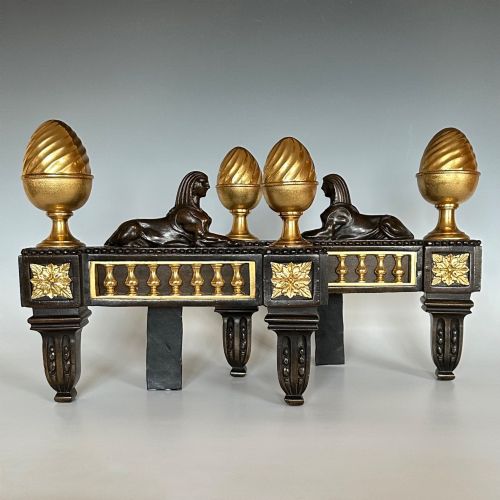
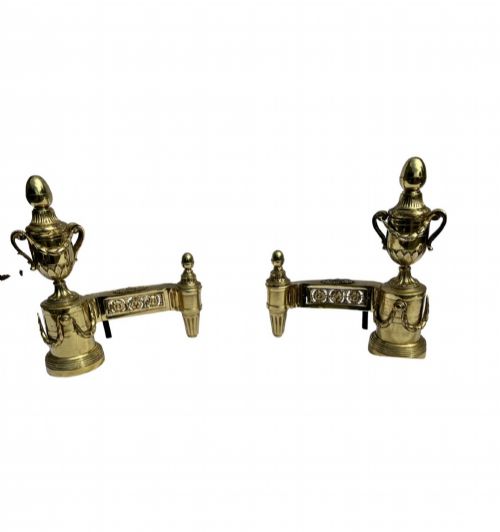
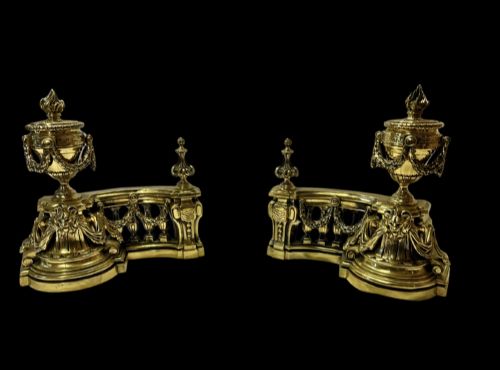
French designs dominate the options, often manifesting as gilt bronze or ormolu in the Rococo and Louis styles, while English alternatives favour solid cast brass and iron. These accessories frequently appear in pairs, serving both a functional role in managing logs and an ornamental purpose framing the fireplace opening.
Materials and construction methods
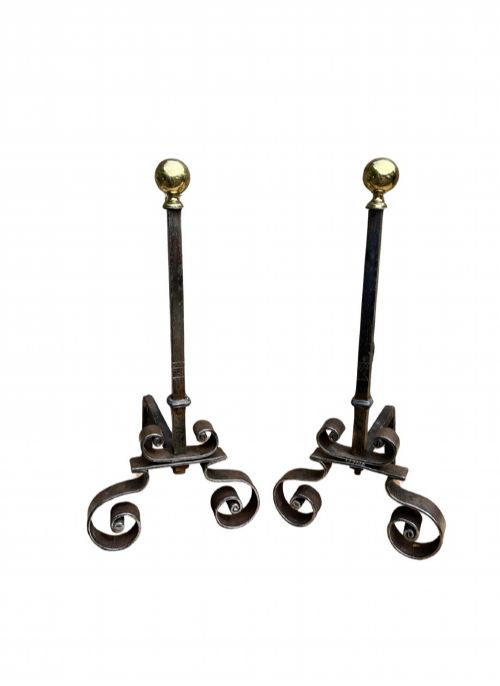
The construction relies on metals such as brass, bronze, cast iron, and wrought iron, frequently shaped through casting and forging techniques. Ormolu and gilt bronze finishes provide decorative surface enhancement on many French examples.
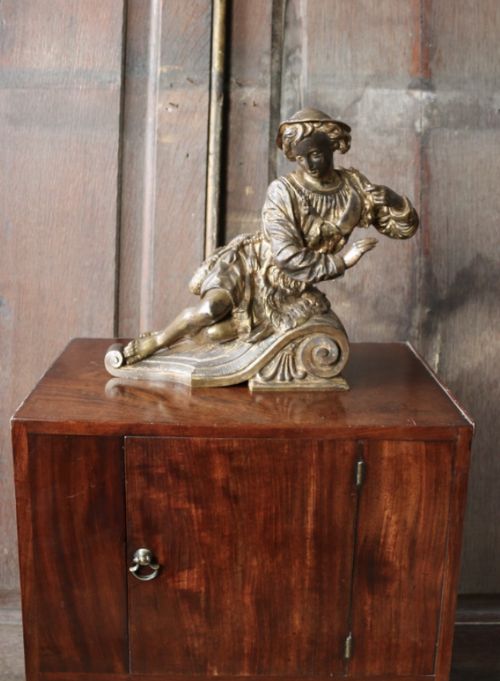
Foundry work allows for intricate detailing, particularly in figural and rococo motifs, while robust iron and steel forms provide the structural integrity required to support heavy timber.
Periods visible include Regency, Victorian, and the eighteenth century alongside revival styles from the eighteen-fifties onward.
Evaluating craftsmanship and execution
Quality separates through the crispness of the casting and the depth of the chased details on bronze and brass surfaces. Superior examples display refined figural modeling and secure joints rather than generalized smoothing.
The weight of the metal and the precision of the assembly indicate the standard of production, distinguishing standard utilitarian hearth hardware from high-status decorative works.
James Cartland And Son
The Antique Fireplace Chenets Glossary
- Chenet
- An alternative term for an andiron, used predominantly in French contexts. These metal supports hold burning logs above the hearth floor.
- Ormolu
- Gilded bronze produced by applying a mercury-gold amalgam to a bronze base. This technique creates a durable golden finish seen on decorative nineteenth-century examples.
- Andiron
- A horizontal support raised on legs, placed in pairs inside a fireplace. They keep logs elevated to improve air circulation and burning.
- Firedog
- A heavy metal support functioning identically to an andiron, often featuring a decorative front standard.
- Rococo
- An ornate artistic style characterised by asymmetrical scrollwork, C-scrolls, and naturalistic plant motifs. It appears frequently on nineteenth-century French hearth furniture.
Antique Fireplace Chenets: Frequently Asked Questions
What are antique fireplace chenets used for?
These pieces function as firedogs or andirons to hold logs inside an open hearth. Raising the wood improves airflow beneath the fire.
Beyond utility, they serve as decorative architectural ornaments that anchor the visual appearance of the fireplace.
How do I identify French styles?
French pieces often utilise ormolu, bronze, and gilt finishes with elaborate Rococo or Louis-style scrollwork and figural motifs.
English variants tend to rely on heavier cast brass or iron with simpler geometric or Regency proportions.
Are these suitable for modern fireplaces?
Many pairs fit standard hearth openings, provided the depth and weight match the scale of the grate.
Buyers often measure the width and height of the firebox to ensure proper clearance before placement.
What materials are most common?
Brass and bronze dominate the upper tiers of decorative hearth furniture, sometimes paired with gilt surfaces.
Iron and steel appear frequently in more utilitarian or strictly structural roles.