


Antique Figurative Drawing
An antique figurative drawing captures the human form through hand-rendered lines, offering intimate glimpses into past lives and artistic traditions.
Antique Figurative Drawing
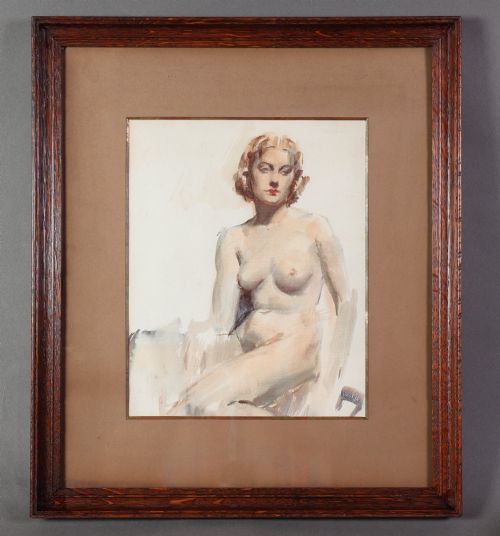
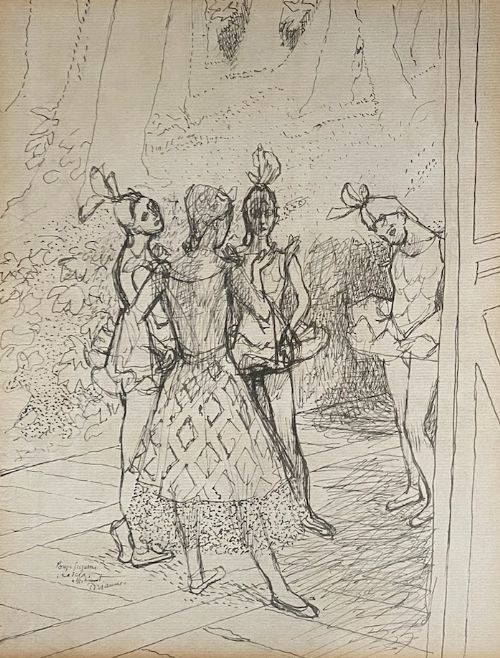
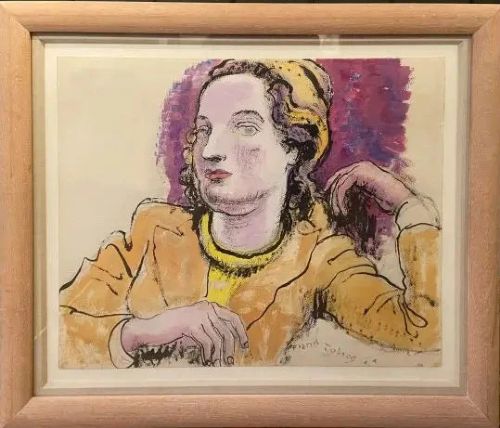
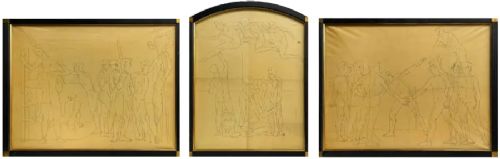
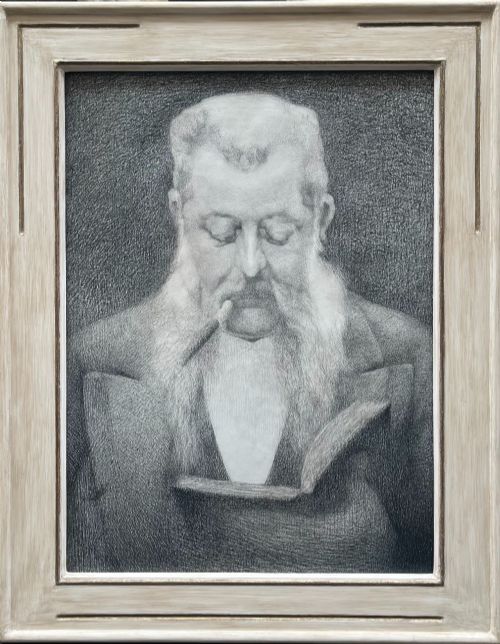
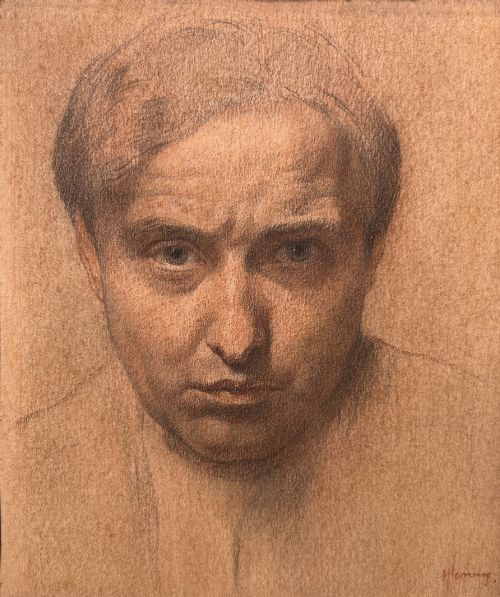
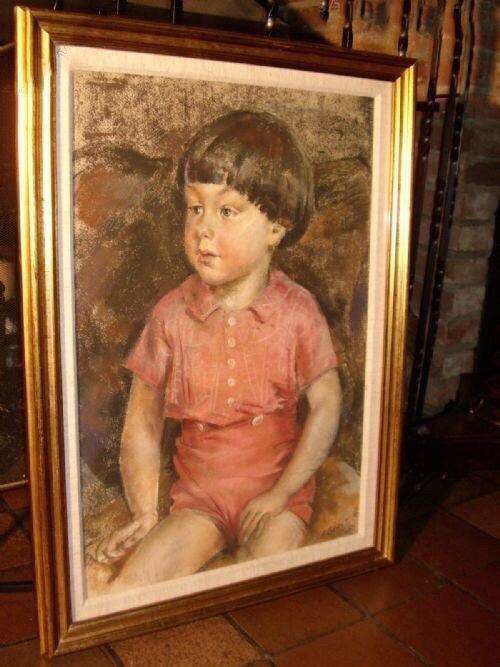
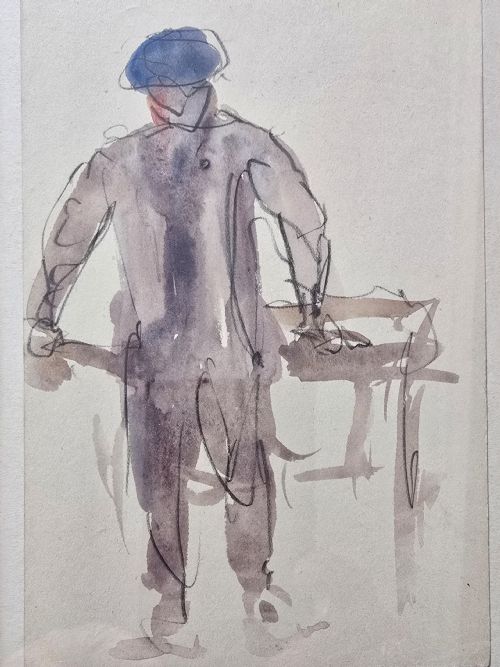
An antique figurative drawing encompasses original works on paper depicting people, ranging from rapid studio sketches to finished portraits and life studies. Buyers seeking an antique figurative drawing will encounter pieces spanning the nineteenth century through the mid-twentieth century, including Edwardian examples and modernist interpretations.
Materials and techniques
Artists utilised paper as the primary support, applying media such as graphite, charcoal, pastel, gouache, ink, and watercolour. Charcoal and pencil allowed for rapid gesture and precise line work, while pastels and watercolours introduced colour and tone.
Framing under glass frequently protected these delicate works on paper, preserving the friable nature of charcoal and pastel pigments over decades.
Subjects range from a Parisian ballerinato a bustling funfair helter-skelter.
Distinguishing quality
Quality rests upon the draughtsman's anatomical precision, expressive control, and ability to capture character or movement with economy of line. Master drawings demonstrate confident execution and psychological depth, distinguishing them from rigid academic exercises.
Condition also differentiates works, with well-preserved sheets retaining vibrant pigments and minimal paper degradation over time.
Herbert Johnson Harvey·J.A. Grant·Michael Healy·Demetrios Galanis·Robert Richard Scanlan·Denis William Reed·John Duncan Fergusson·Theobald Chartran·Gaston Bouy·Cecil CP Lawson
The Antique Figurative Drawing Glossary
- Charcoal
- A dry drawing medium made from slowly burned wood, yielding deep black lines easily smudged for shading. It is frequently employed for expressive life studies and portraits.
- Pastel
- A powdered pigment mixed with a binder and pressed into stick form, offering rich colour saturation. Pastel drawings require protection under glass to prevent surface disruption.
- Gouache
- An opaque watercolour paint containing an added white pigment to create a heavier, solid finish. Artists apply it to paper for heightened tonal contrast.
- Academic Realism
- A style of painting and drawing produced under the influence of European academies of art. It emphasises meticulous anatomical accuracy and traditional techniques.
Antique Figurative Drawing: Frequently Asked Questions
How do I care for drawings on paper?
Keep works away from direct sunlight to prevent fading of charcoal, pastel, and watercolour pigments. Maintain stable indoor humidity to protect the paper support from degradation.
Ensure pieces remain framed under glass with acid-free mounts to prevent environmental damage and direct contact with the glazing.
What is a life study?
A life study is an artwork created from direct observation of a live model, capturing posture, anatomy, and gesture. Artists produce these to hone technical skill or prepare for larger compositions.
These drawings often display rapid, exploratory lines that reveal the working process behind the final depiction.
How do I distinguish a sketch from a finished drawing?
Sketches are typically quick, preparatory notations focusing on specific details or compositions rather than complete forms. They often show visible correction lines and looser execution.
Finished drawings display considered composition, complete tonal range, and often a signature, intended as standalone works of art.
Why are some drawings executed in multiple media?
Artists combined media like charcoal and chalk, or pastel and gouache, to exploit the distinct qualities of each material. This combination allowed for simultaneous bold outlining and subtle tonal blending.
Such mixed techniques enhanced depth and texture within a single composition.