



Sepia Wash Paper Drawing
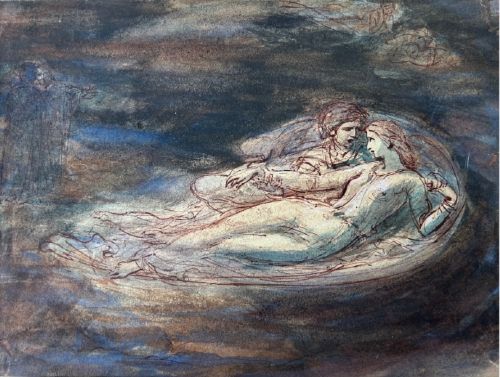
A sepia wash paper drawing brings tonal warmth and tonal depth to a wall, offering monochrome subtlety through ink and wash on paper.
Sepia Wash Paper Drawing
A sepia wash paper drawing is an original work on paper executed in brownish monochrome ink and liquid wash. These pieces range from Georgian landscape studies to Victorian academic scenes and early twentieth-century townscapes.
You are most likely to meet nineteenth-century and Georgian examples framed behind glass in wood surrounds. The selection includes figure studies, battle scenes, and architectural views.
Makers and draftsmen represented include named artists such as Thomas Rowlandson and William Marshall Craig alongside initialed nineteenth-century works. The subject matter spans British topographical views, French ink lines, and literary subjects.
How they were made
Artists built these images using pen and ink for the primary outlines and details. Sepia wash provided tonal depth and shadow, applied with a brush in varying dilutions.
The supports are sheets of paper, often framed under glass in wood mouldings. Some works combine pen line with two-coloured ink or watercolour highlights.
Sepia Wash Paper Drawing Retail Price Guide 2026
Typical asking prices for sepia wash paper drawing among the pieces listed under this phrase on Sellingantiques today, from the lower quarter to the upper quarter. They describe what is for sale here now, not the wider market.
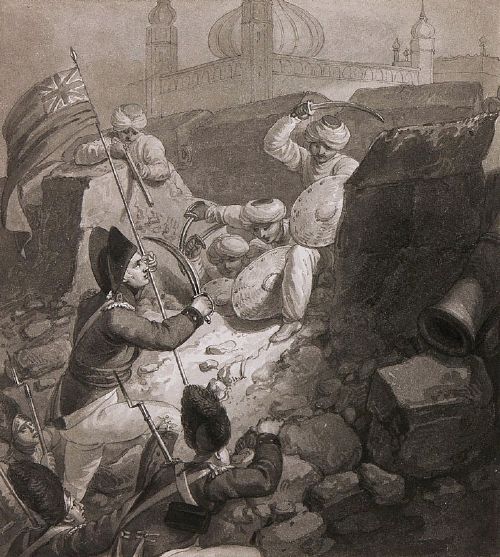
An eighteenth-century soldier caught the eye of an artist during the storming of Seringapatam.
What varies in quality
Quality rests in the sureness of the pen line and the control of the wash gradients. A stronger hand produces expressive depth in shadows and clear definition in figures.
Condition of the paper surface and the preservation of the sepia tone distinguish finer works. Evidence of a named hand or documented provenance adds distinction.
William Marshall Craig·Thomas Rowlandson·Theobald Chartran·Fred Lawson·Thomas Monro·Thomas Lound
The Sepia Wash Paper Drawing Glossary
- Wash
- A diluted layer of ink or watercolour applied with a brush to create monochrome tonal variation and shadow. It provides the characteristic soft depth found in these drawings.
- Sepia
- A brownish pigment traditionally derived from the ink sac of the cuttlefish. It creates the warm monochrome palette typical of these historical works.
- Topographical
- Depicting specific real places, buildings, or landscapes rather than imaginary scenes. Many period drawings record actual towns, trees, and country houses.
- Work on paper
- Any piece of art executed on a paper support, including drawings, watercolours, and ink sketches. This classification covers unframed sheets as well as glazed works.
Sepia Wash Paper Drawing: Frequently Asked Questions
How should I frame a sepia wash paper drawing?
Protect the paper behind conservation glass to filter harmful light and prevent fading of the sepia tones. Use acid-free mounts so the paper does not touch the glass directly.
Keep the drawing away from direct sunlight and damp environments. Stable indoor humidity preserves the paper support over time.
How do I date a sepia wash drawing?
Examine the paper watermark, the style of the script if signed, and the clothing or architecture depicted. Dated signatures or contemporary inscriptions on the reverse offer direct evidence.
Compare the handling of the pen work and wash technique with known examples from the same period. Stylistic conventions often shift noticeably between the Georgian era and the Victorian period.
What is the difference between a sketch and a finished drawing?
A sketch usually serves as a preliminary study with rapid pen lines and minimal wash. Finished drawings show greater tonal development and detailed execution intended as standalone works.
Both categories appear in historical portfolios, though finished drawings typically receive framing.
Are these drawings always monochromatic?
Most rely primarily on brown sepia ink and wash, but some incorporate subtle tinting or secondary ink colours. French works from the twentieth century occasionally use two-coloured ink lines.
Monochrome remains the defining characteristic, prioritizing tone and line over a full palette.