




Antique Female Figure Lamp
An antique female figure lamp brings sculptural presence and warm illumination into a room, blending human form with functional light.
Antique Female Figure Lamp
An antique female figure lamp combines sculptural representation with lighting functionality, taking the form of table lamps, floor lamps, torcheres, wall lights, and statues configured for illumination. When exploring this selection, buyers encounter distinct variations ranging from classical allegories to modernist depictions.
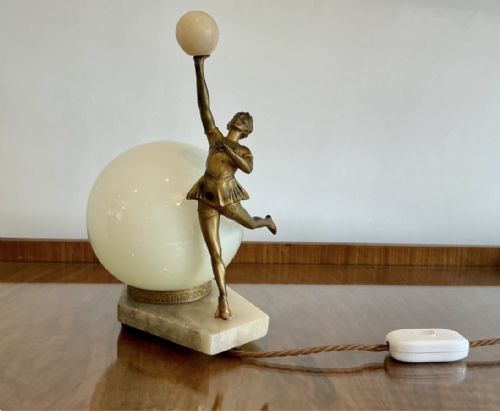
The aesthetic vocabulary spans multiple eras, prominently featuring Art Deco nudes, Victorian bronzes, and Neoclassical figures. Common structural configurations include single or twin ladies holding light sources, as well as monumental torcheres designed to stand upon the floor or mount to walls.
Origins and periods represented stretch from the Georgian and Regency eras through the Victorian period and deep into the twentieth century. Twentieth-century examples frequently adopt the streamlined geometry of Art Deco, while nineteenth-century pieces lean towards classical revivalism and French Neoclassical styling.
Materials and casting methods
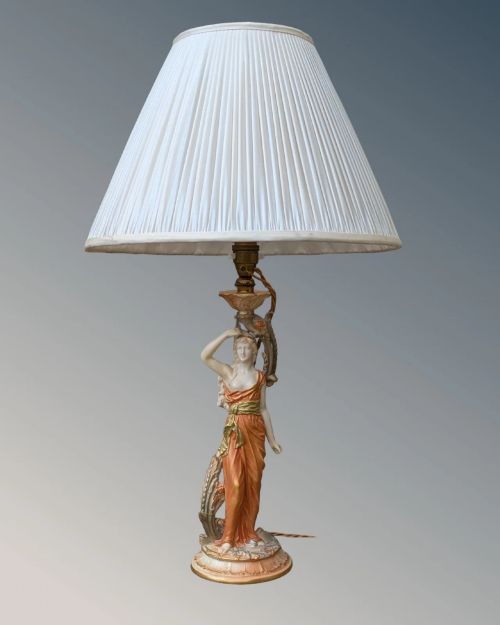
Construction relies heavily upon cast metals such as bronze, spelter, brass, and silver plate, often paired with bases of marble or alabaster to add structural stability. Artisans utilised traditional foundry methods to render drapery, hair, and facial expressions with high fidelity.
Illumination components integrate hand-blown glass, frosted glass, porcelain, and fabric shades. These diverse materials interact with metal and stone frameworks to diffuse light evenly across the sculpted surface.
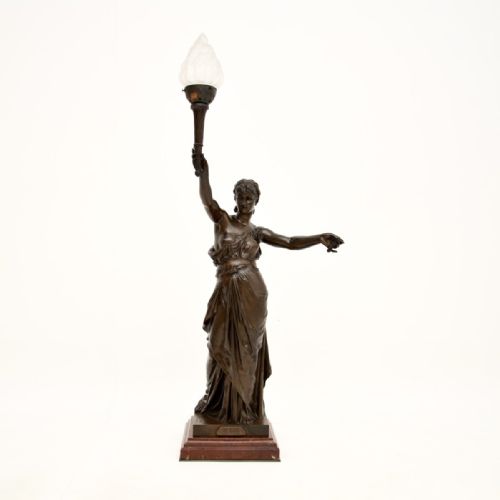
One towering seven-foot bronze figure stands ready to hold your room in perpetual illumination.
Assessing sculptural and material merit
Quality separates along the crispness of the casting and the finesse of the finishing work, particularly in how cleanly details are chased and patinated. Superior examples display subtle facial expressions and naturalistic drapery rather than soft or blurred contours.
The choice of base material and secondary elements elevates a piece, such as heavy genuine marble supporting a refined bronze figure compared to lighter metals carrying simple painted finishes. Intact original shades and signed metalwork further distinguish exceptional examples from standard production.
Humphrey Hopper·F. De Luca·Jean-Jules Cambos·Coutan·Auguste Moreau
The Antique Female Figure Lamp Glossary
- Torchere
- A tall stand or floor lamp designed to hold a light source upward. These fixtures often take architectural or figural forms.
- Spelter
- A zinc alloy commonly utilised as a less expensive alternative to bronze in nineteenth and twentieth-century figures. It accepts various painted or metallic finishes.
- Caryatid
- An sculpted female figure serving as an architectural support taking the place of a column or pilaster. They appear in antique woodwork and stonework.
- Cold painted
- A decoration technique where paint is applied to metal without high-temperature firing. This finish is frequently found on Victorian bronzes.
- Neoclassical
- A style inspired by the classical art and architecture of ancient Greece and Rome. It emphasises symmetry, proportion, and classical motifs.
Antique Female Figure Lamp: Frequently Asked Questions
What materials are these lamps made from?
These lamps incorporate a range of materials including cast bronze, spelter, brass, silver plate, and plaster, often mounted on marble or alabaster bases.
Lighting components commonly feature frosted glass, plain glass, porcelain, and fabric elements to diffuse the glow.
How do I identify an Art Deco lady lamp?
Art Deco examples typically date from the 1920s and 1930s, displaying stylised female figures, sleek chrome or silvered surfaces, and geometric lines.
They frequently incorporate alabaster or frosted glass shades held aloft by single or twin figures.
Where should I place a large torchere lamp?
Large torcheres and floor-standing figural lamps work best in corners of reception rooms or beside substantial pieces of furniture where their height commands space.
Wall-mounted versions provide architectural accent lighting in hallways or above specific interior focal points.
Are these lamps signed by artists?
Certain figural sculptures bear signatures or foundry marks from notable sculptors inscribed directly into the metal or stone base.
Signed works by artists add documented provenance to the piece.