



Antique Metal Figural Light
These antique metal figural lights combine sculpture and illumination, casting human and animal forms in bronze, spelter, and brass to anchor a room.
Antique Metal Figural Light
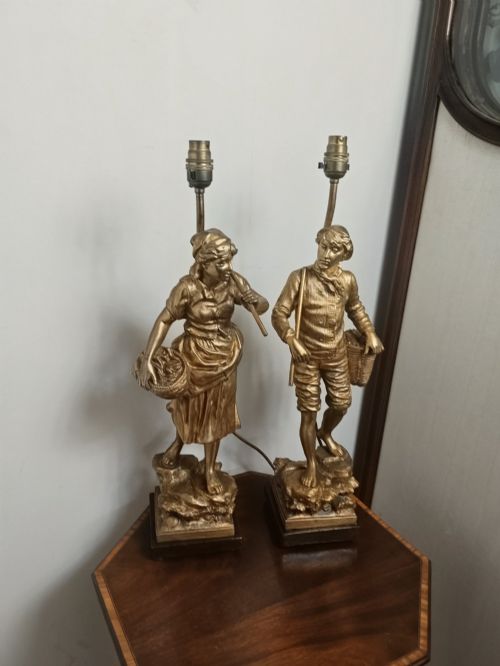
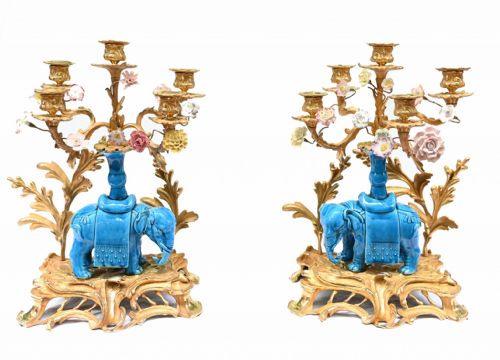
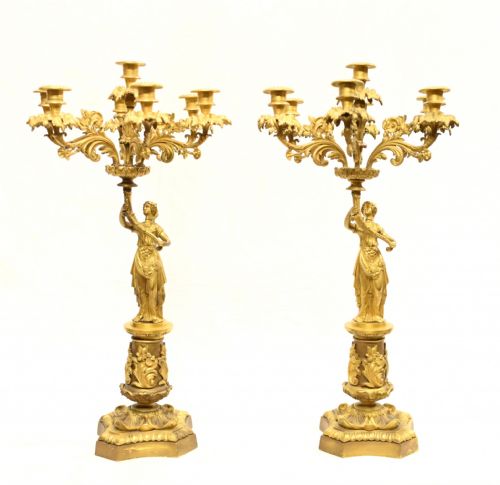
An antique metal figural light integrates human or animal sculpture directly into a functional lamp, torchère, sconce, or candelabrum. Buyers exploring this category encounter sculptural table lamps, figural candlesticks, and multi-light candelabra shaped as soldiers, maidens, cavaliers, and classical figures.
The pieces span periods from the Regency era through Victorian Renaissance revivals and Art Nouveau designs into Art Deco table lamps. French and continental workshops dominate the selection, frequently pairing cast metal figures with marble bases or glass shades.
Table lamps and paired candlesticks form the majority of the available items. Subjects range from cherubs and torch-bearing maidens to athletes and mythological figures like Amphitrite.
Materials and construction methods
Foundry workers utilised bronze, spelter, and brass, often applying patination, cold-painting, or gilt finishes to the metal surface. Spelter served as a cost-effective alternative to bronze for intricate figural castings during the late nineteenth and early twentieth centuries.
Common figural motifs across the inventory include cherubs, cavaliers, maidens, and animal studies in various lighting formats.
Distinctions in execution and finish
The choice of base material and secondary components alters the character of the piece, with solid bronze and heavy marble plinths marking the upper tier of production. Inferior pieces rely on hasty assembly and heavy paint layers to obscure softer casting details.
E Rousseau·L & F Moreau·Adrien Gaudez·P.Sega
The Antique Metal Figural Light Glossary
- Spelter
- A zinc-based alloy commonly used for sculptural castings in the nineteenth and twentieth centuries. It takes patination well but possesses a lower melting point and softer weight than bronze.
- Ormolu
- Gilt bronze produced by applying a mercury-gold amalgam to a bronze base. The technique creates a rich golden finish characteristic of French decorative arts.
- Torchère
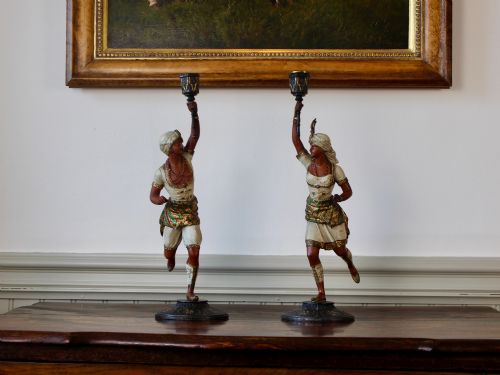
- A stand or lamp modelled to resemble a torch-bearer holding a light source aloft. These figures frequently appear in pairs flanking a mantelpiece or sideboard.
- Cold-painted
- A method where paint is applied to metal without subsequent firing. The finish remains susceptible to chipping if handled roughly over time.
- Patinated metal
- Metal treated with chemicals or heat to produce a specific surface colour and aged appearance. This treatment protects the underlying alloy while adding depth to the sculpture.
Antique Metal Figural Light: Frequently Asked Questions
How do I identify spelter from bronze?
Spelter is lighter in weight than bronze and tends to feel softer to the touch beneath any applied patination. A small discreet scratch underneath can sometimes reveal the brighter, silvery-grey metal beneath the surface.
Bronze develops a deep, stable patina and retains sharper details through the casting and chasing process. Figures cast in bronze also command greater weight and structural rigidity than their zinc-alloy counterparts.
Were these lights originally electrified?
Most pieces originating from the nineteenth century started life as candleholders, oil lamps, or gas fittings before receiving later conversion to electricity. Surviving candelabra and candlesticks often show evidence of drilled channels or added wiring paths inserted during the twentieth century.
Art Deco table lamps from the nineteen-thirties typically emerged from the workshop designed specifically for electric illumination. Buyers should inspect the internal wiring channels to understand the conversion history of earlier examples.
How do I date an art deco figural lamp?
Art Deco lighting from the interwar period relies on stylised geometric bases, streamlined forms, and popular culture subjects like athletes or Hollywood figures. Materials often include cast spelter paired with moulded glass torchère shades or stepped marble plinths.
Signatures or foundry marks stamped into the metal base can provide a more precise point of origin. Stylistic markers such as the depiction of the female form also help separate nineteen-thirties production from earlier Art Nouveau iterations.
Where should I place a figural torchère lamp?
These sculptural lamps function best as focal points on sideboards, heavy timber desks, or dedicated pedestals where the three-dimensional form is fully visible. Their height and narrative detail require space to be appreciated without visual competition from surrounding decor.
Paired candlesticks or candelabra suit mantelpieces or symmetrical console arrangements. Consideration should be given to the reach of the shade and the height of the figure relative to eye level in the room.