

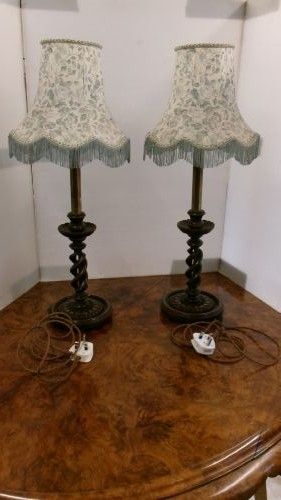


Cream Fringed Table Lamp
A cream fringed table lamp brings soft texture and warm illumination to a room, drawing on Edwardian and nineteenth-century domestic lighting forms.
Cream Fringed Table Lamp
A cream fringed table lamp combines period bases such as brass candlesticks, marble-effect alabaster, and ormolu with fabric and silk shades. These fixtures originate from periods spanning the Regency era through the Edwardian years and the early twentieth century.
Buyers encountering this selection will find candlesticks adapted for electricity alongside monumental French ormolu pieces, painted spelter figures, and classical revival lighting. The form bridges functional task lighting and decorative interior ornament.
Makers and manufacturers utilised diverse regional styles including neoclassical revival, orientalist, and English country designs. Each piece reflects the decorative priorities of its specific decade of production.
Materials and construction methods
The heavy bases of these lamps rely on cast brass, silver plate, carved alabaster, and patinated spelter. Metalwork often incorporates detailed chasing, eagle and serpent motifs, or classical figures.
Shades utilise fine fabric and silk elements finished with decorative fringing. Wooden elements and oak are also employed in specific tall lamp constructions.
Cream Fringed Table Lamp Retail Price Guide 2026
Typical asking prices for cream fringed table lamp among the pieces listed under this phrase on Sellingantiques today, from the lower quarter to the upper quarter. They describe what is for sale here now, not the wider market.
Minerva occasionally keeps watch over your parlour alongside cast bronze stags and serpents.
Judging quality in period lighting
Quality rests upon the weight and casting crispness of the metal base, whether brass, ormolu, or spelter. Heavier, finely chased mounts demonstrate superior craftsmanship compared to simpler cast forms.
The integrity of the original materials and the balance between the base proportions and the shade assembly determine the overall visual harmony of the piece.
The Cream Fringed Table Lamp Glossary
- Ormolu
- Gilded bronze ornamentation applied to nineteenth-century decorative objects. This technique creates a rich metallic finish often seen on French lighting.
- Spelter
- An alloy of zinc and lead used as a less expensive alternative to bronze. It is frequently painted to imitate heavier metals.
- Alabaster
- A fine-grained stone used for carved lamp bases. It yields a translucent marble-effect surface.
- Neoclassical Revival
- A decorative style drawing inspiration from classical antiquity. It appears frequently in Edwardian and nineteenth-century metalwork.
Cream Fringed Table Lamp: Frequently Asked Questions
What periods do these lamps come from?
The selection spans the nineteenth century, including Regency examples, through the Edwardian era and into the early twentieth century.
Designs reflect historical revivals such as Empire, Rococo, and classical motifs popular across these decades.
How were these lamps originally used?
Many began as heavy brass or silver-plated candlesticks before conversion to electrical lighting during later decades.
They stood in principal rooms to provide ambient illumination alongside functional task lighting.
How do I style a fringed lamp?
Place these lamps on side tables or mantelpieces where the textured fabric shade can soften directional light.
They complement traditional interior schemes, particularly English country and classical revival rooms.
What materials make up the bases?
Bases are constructed from cast brass, silver plate, ormolu, marble-effect alabaster, carved wood, and painted spelter.
Heavier metal mounts often feature figural elements like stags, eagles, or classical deities.