

Antique Faience Vase
When you search for an antique faience vase, you are looking at tin-glazed earthenware shaped into vessels spanning centuries of European pottery traditions.
Antique Faience Vase
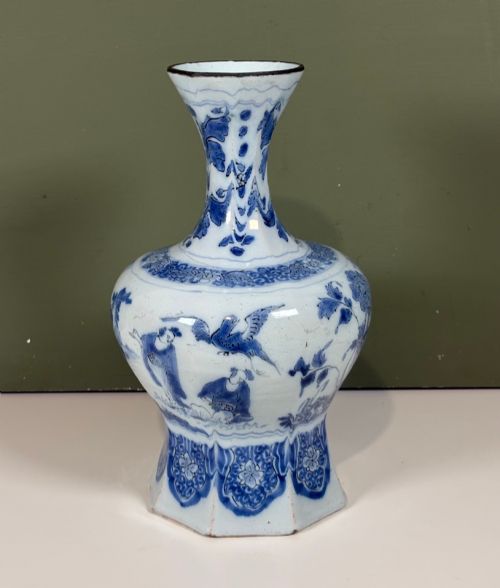
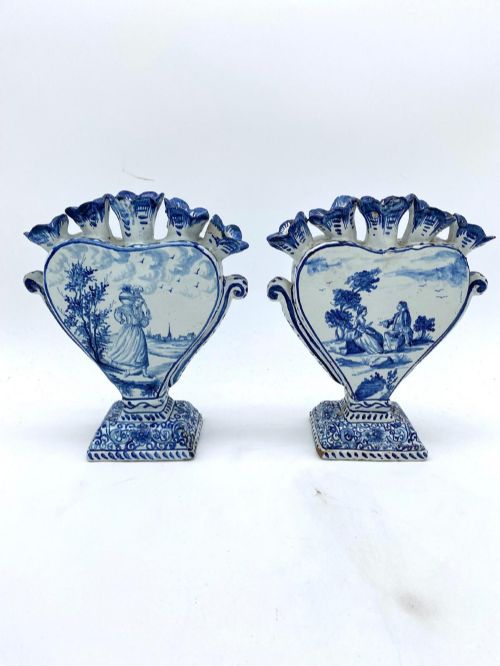
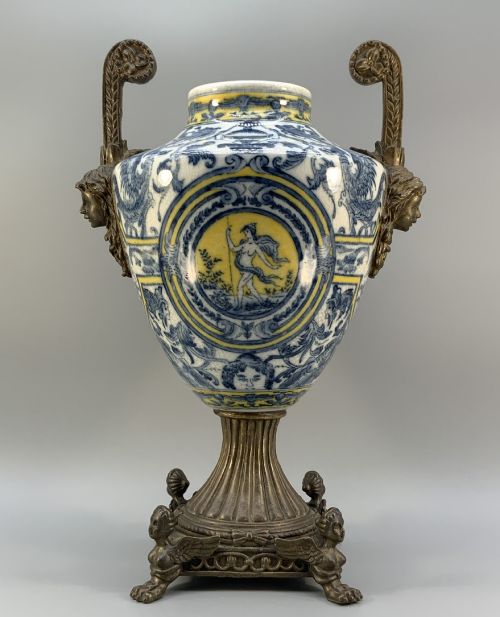
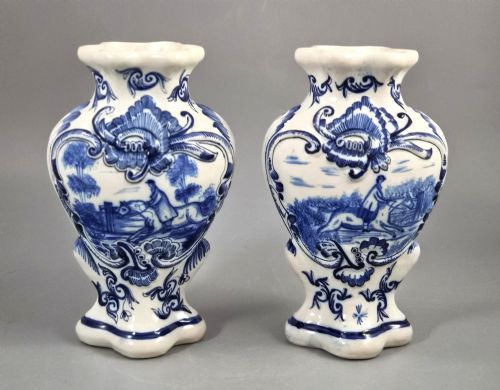
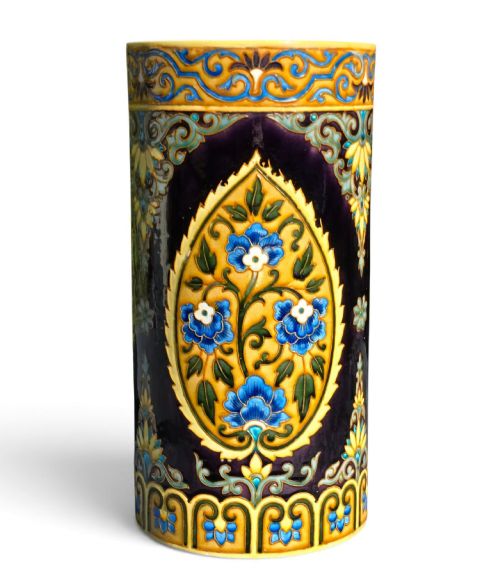
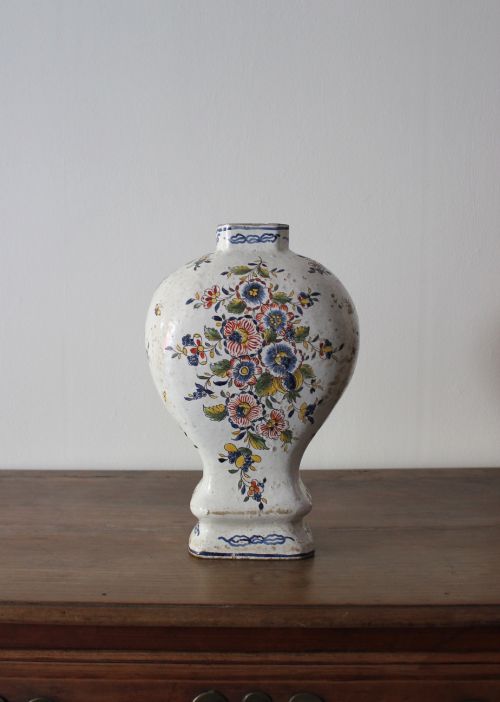
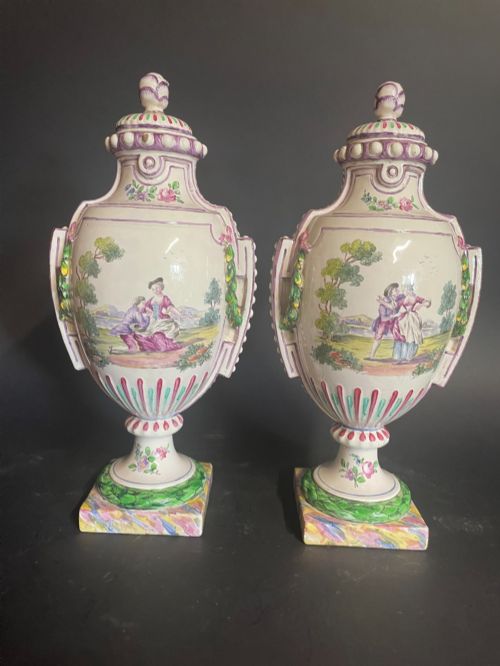
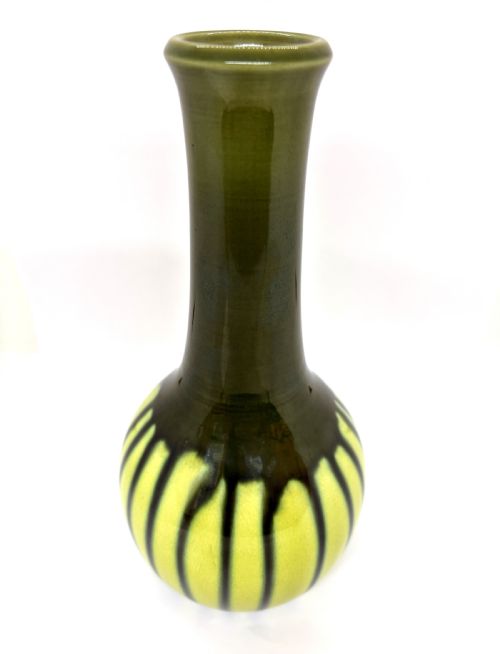
An antique faience vase encompasses tin-glazed earthenware vessels produced across Europe, appearing in forms ranging from tall garden urns and umbrella stands to table lamps and handled jars. The selection includes pieces shaped as pilgrim flasks, tulip holders, and covered vessels.
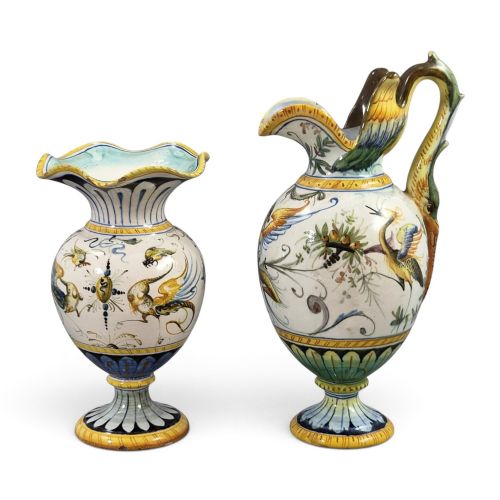
The objects span multiple centuries, with significant representation from the seventeenth and eighteenth centuries alongside nineteenth-century revivals. Buyers frequently encounter French Desvres pieces, English Doulton Lambeth examples, and Italian majolica works.
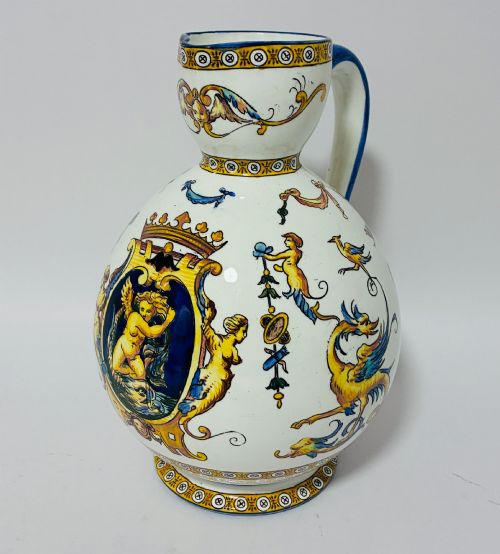
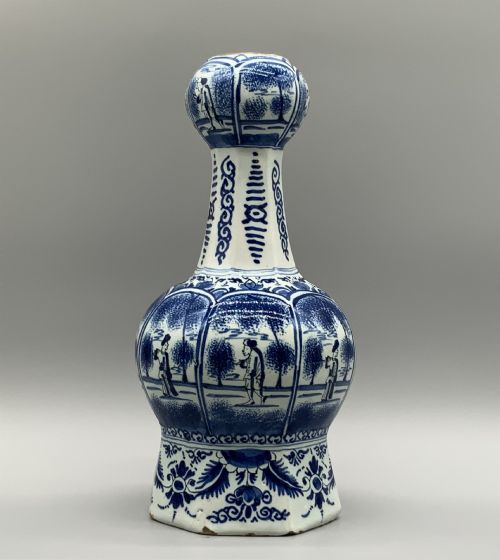
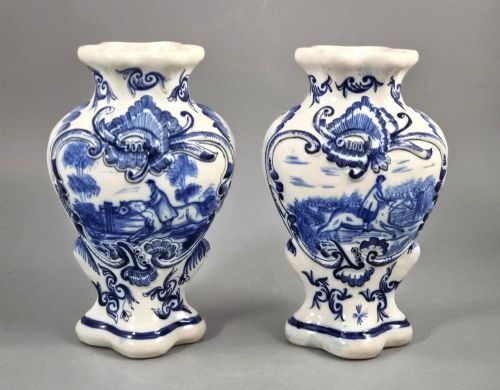
Makers and factories across France, England, and Italy utilised traditional tin-glaze techniques to produce both blue-and-white wares and polychrome designs. Many surviving examples reflect historical revivals, including Renaissance, Dutch, and Iznik styles.
How they were made
Potters formed these vessels from earthenware clay, applying a tin glaze that created an opaque white surface suitable for painting. Artisans decorated the raw glaze surface with mineral pigments before firing, allowing the colours to fuse into the coating.
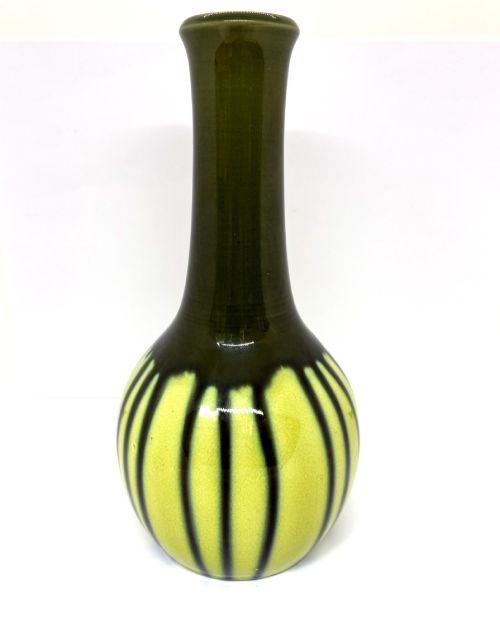
Decoration relied on cobalt blue for traditional blue-and-white pieces, alongside manganese and polychrome pigments for more complex floral and figurative scenes. Certain nineteenth-century works incorporated additional techniques such as bronze mounts or patent surface textures.
Antique Faience Vase Retail Price Guide 2026
Typical asking prices for faience vase among the pieces listed under this phrase on Sellingantiques today, from the lower quarter to the upper quarter. They describe what is for sale here now, not the wider market.
Several makers transformed functional vessels into domestic companions, offering ceramic cats with removable heads and wall pockets shaped as resting felines.
What varies in quality
The standard of painting defines the distinction between standard production and exceptional examples, with hand-painted brushwork showing varying degrees of precision in detail and composition. Finer pieces demonstrate control in complex polychrome or Chinoiserie motifs.
The crispness of the earthenware body and the uniformity of the tin glaze contribute to the overall execution of the vessel. Additional elements, such as fitted covers, bronze mounts, or distinct factory marks, separate standard utilitarian items from documented studio pieces.
Théodore Deck·Fourmaintraux-Courquin·Cantagalli·Doulton Lambeth·George Jones·Jules Vieillard
The Antique Faience Vase Glossary
- Faience
- Tin-glazed earthenware produced in Europe, typically featuring an opaque white glaze painted with metallic oxides. The term is widely applied to French, Dutch, and English wares.
- Delftware
- Tin-glazed earthenware associated with the Netherlands, renowned for blue-and-white or polychrome designs influenced by Chinese porcelain. Production dates back to the seventeenth century.
- Pilgrim Flask
- A flat-bodied vessel with handles for suspension, originally designed for travellers and later adapted as an ornamental ceramic form. Examples often feature decorative side bosses.
- Polychrome
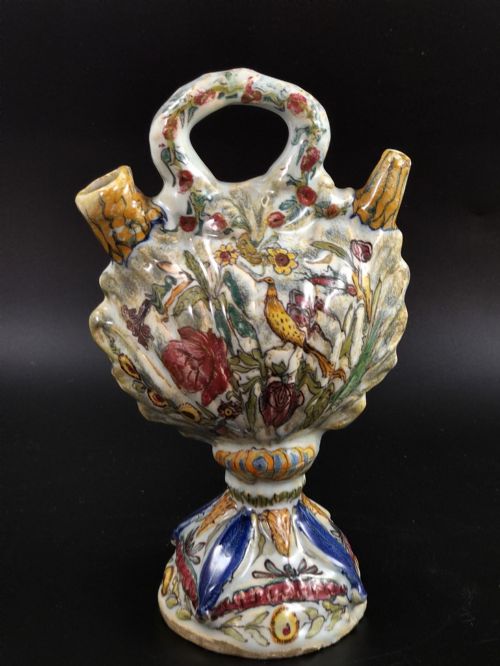
- Decoration employing multiple colours rather than a single hue like blue and white. It allows for complex pictorial scenes involving flowers, birds, and figures.
Antique Faience Vase: Frequently Asked Questions
What is an antique faience vase?
An antique faience vase is a ceramic vessel coated in an opaque tin glaze, usually painted with cobalt blue or polychrome pigments. These pieces range from seventeenth-century Dutch Delftware to nineteenth-century revival styles produced in France, England, and Italy.
Potters shaped these vessels into diverse forms, including garden urns, bottle vases, and pilgrim flasks. Each piece reflects the specific decorative tastes and ceramic techniques of its period of origin.
How do I date an antique faience vase?
Dating relies on stylistic clues, painting techniques, and factory marks recorded on the base of the vessel. Seventeenth and eighteenth-century examples often display traditional Delft or Italian majolica motifs, while nineteenth-century pieces frequently show revival styles or patent glazes.
Examining the wear on the earthenware foot and the characteristics of the tin glaze helps distinguish earlier production from later revival pieces. Documentation or maker signatures provide additional confirmation of the manufacturing era.
Where were these vases made?
Production centres for these vessels were spread across Europe, with major traditions established in the Netherlands, France, Italy, and England. Each region developed distinct painting styles, such as Dutch Chinoiserie and Italian Renaissance revivals.
French workshops in Desvres and factories in Burmantofts and Lambeth contributed significantly to nineteenth-century output. Master ceramicists in these locations reinterpreted historical designs using local earthenware bodies.
How should I display an antique faience vase?
These decorative vessels suit placement on stable surfaces where their painted glazes can be observed in natural light. Larger urns and umbrella stands function well on floor spaces, while smaller bottle vases and flasks fit on tables or shelves.
Care should be taken to place them away from areas of high traffic or vibration, as tin-glazed earthenware can be sensitive to impact. Using appropriate support prevents accidental tipping of heavier or top-heavy forms.