

Antique Equestrian Bronze
Antique equestrian bronze captures the power and movement of horses through enduring metalwork, offering collectors a tangible piece of sporting and artistic history.
Antique Equestrian Bronze
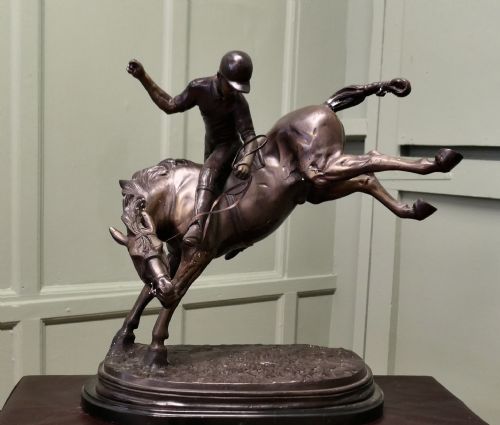
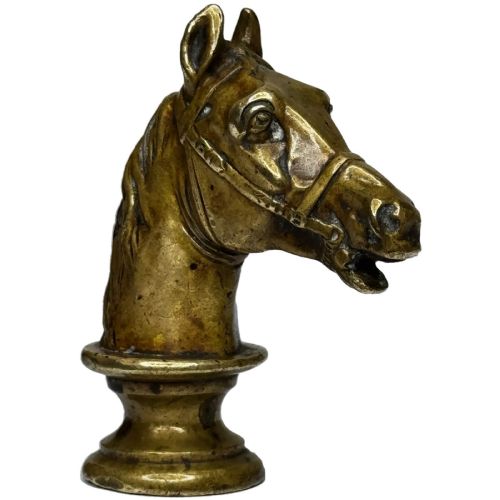
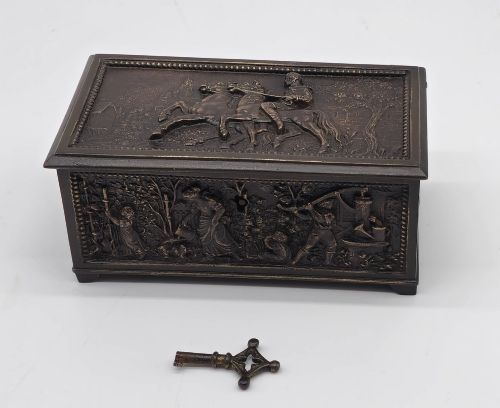
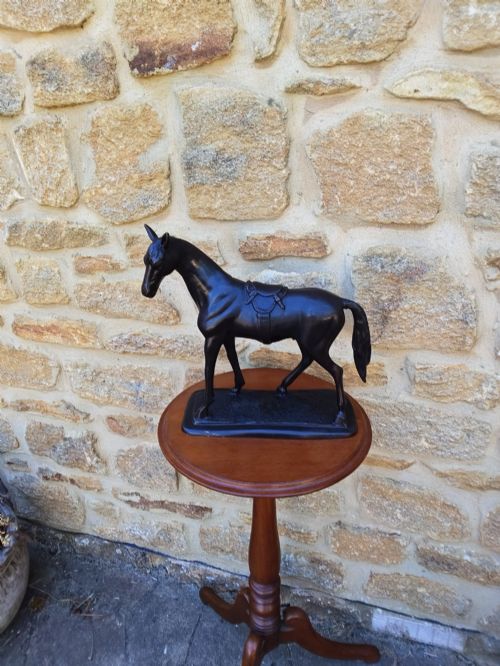
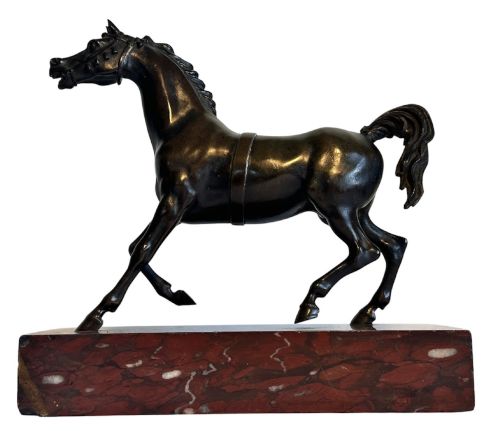
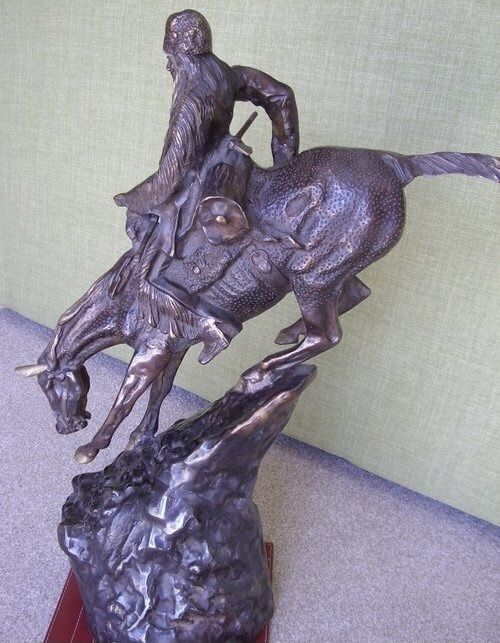
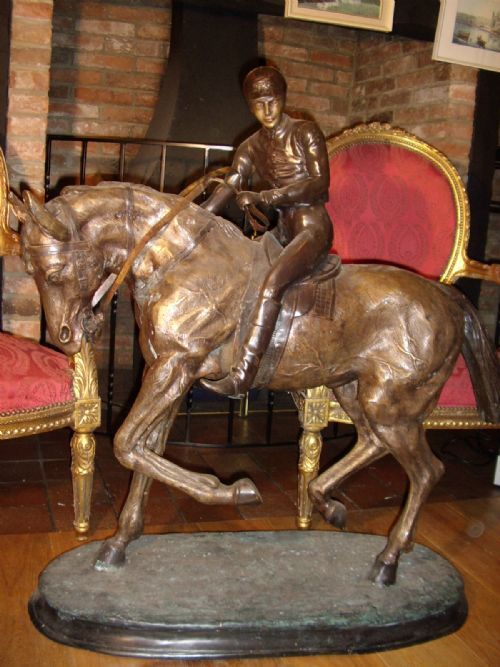
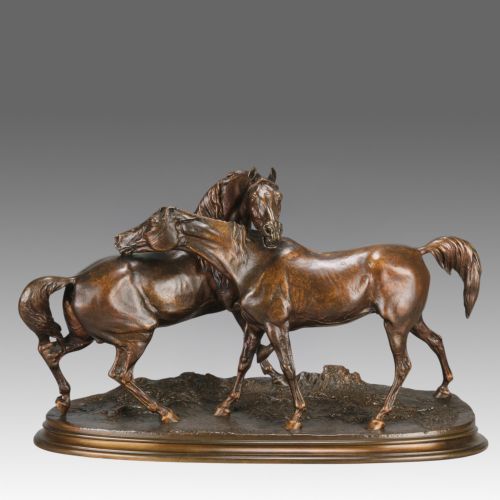
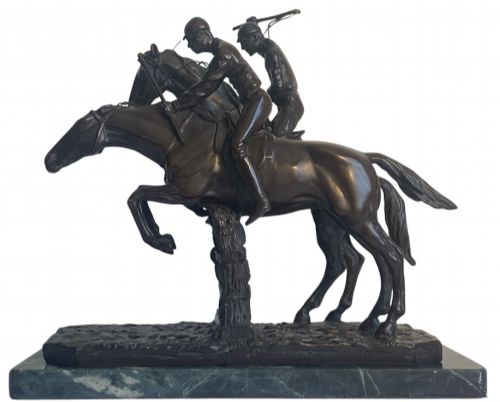
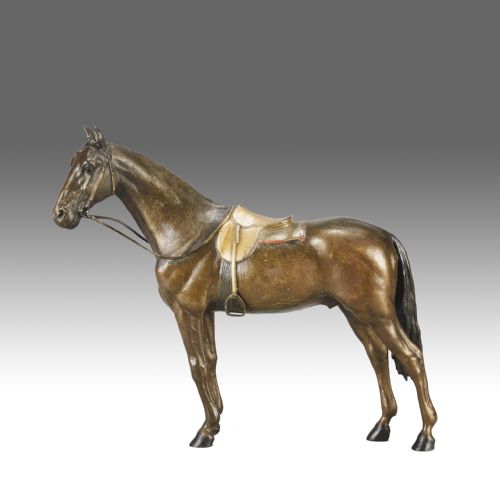
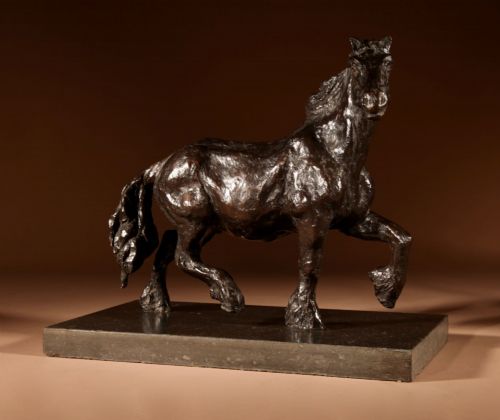
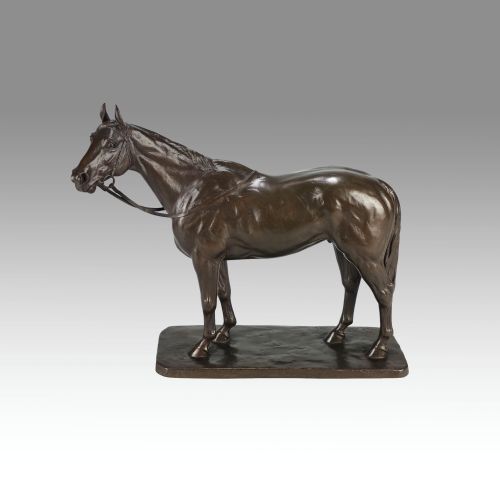
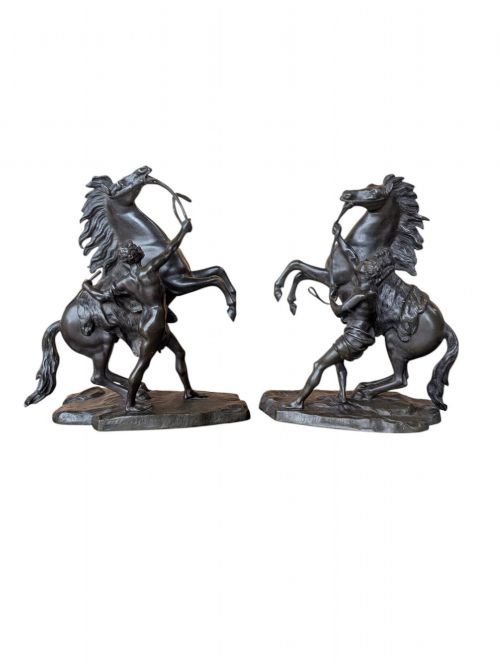
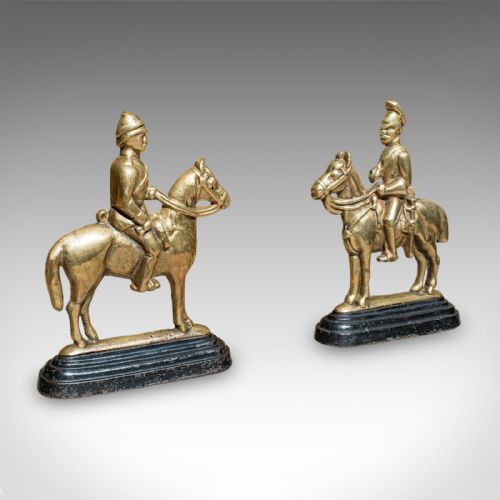
Antique equestrian bronze works encompass standalone sculptures, mantel clocks, inkwells, and bookends that depict horses, riders, and racing scenes. These objects emerge predominantly from nineteenth and early twentieth century European foundries, reflecting a widespread fascination with equine anatomy and sport.
The most common pieces on this page are French Animalier sculptures and Grand Tour souvenirs from Italy. Buyers frequently encounter detailed studies of thoroughbreds, racing scenes, and historical figures on horseback created during the Victorian era and the early twentieth century.
Materials and casting methods
Foundries utilised traditional lost-wax casting and sand-casting techniques to capture intricate muscle structures and tack. Molten bronze was poured into moulds and subsequently finished by hand with chisels and files.
Makers applied patinas ranging from deep brown to gilt finishes, frequently mounting the completed metal figures onto heavy bases made of marble, sienna marble, or olive wood.
Antique Equestrian Bronze Retail Price Guide 2026
Typical asking prices for equestrian bronze among the pieces listed under this phrase on Sellingantiques today, from the lower quarter to the upper quarter. They describe what is for sale here now, not the wider market.
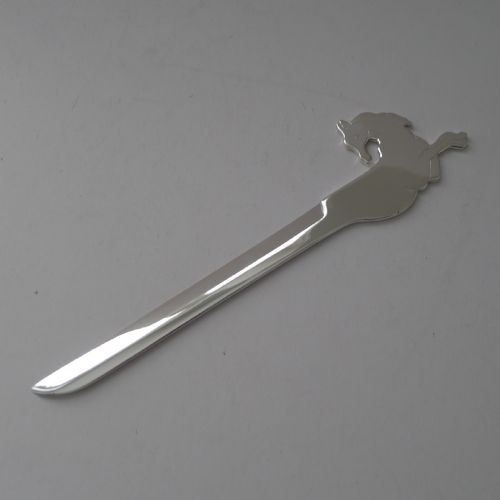
Several pieces double as practical desk accessories, letting a stern bronze racehorse guard your inkwell or clutch your matches.
Distinctions in quality
Quality rests in the crispness of the casting and the sensitivity of the hand-chasing applied after the metal cooled. Superior pieces retain sharp details in the horse's musculature, bridle, and mane without softening from worn production moulds.
The richness and depth of the original patination, alongside the quality of the supporting stone or wooden base, separate standard commercial castings from exceptional foundry works.
Pierre Jules Mène·Franz Bergman·John Willis Good·Kunio Itô
The Antique Equestrian Bronze Glossary
- Animalier
- A nineteenth-century artistic movement focused on the realistic portrayal of animals. Sculptors in this style studied live subjects to capture accurate movement.
- Cold-painted bronze
- A Vienna bronze technique where paint is applied directly to the cold metal surface rather than fired in a kiln. This finish is delicate and easily damaged by moisture.
- Patina
- The surface coloration and sheen developed naturally over time or applied chemically by the foundry. It protects the metal and adds visual depth.
- Grand Tour
- A traditional trip through Europe undertaken by upper-class scholars and collectors during the eighteenth and nineteenth centuries. Souvenirs included small bronze studies of famous classical monuments and statues.
- Lost-wax casting
- A historic method where a model is encased in wax, melted out, and replaced with molten bronze. This technique allows for extraordinary detail and undercuts.
Antique Equestrian Bronze: Frequently Asked Questions
What is an animalier bronze?
An animalier bronze is a nineteenth-century sculpture focused specifically on realistic depictions of animals, particularly horses and hounds in motion. These works were produced across Europe, most notably in France.
Collectors prize them for their anatomical precision and the lively way they capture the character of the animal.
How do I care for bronze?
Bronze requires minimal intervention to maintain its stable surface and historic patina. Dust the piece gently with a soft, dry brush and avoid chemical cleaning agents.
Keep the metal away from direct sunlight and damp environments to protect the original finish and any mounted stone bases.
What is a Grand Tour bronze?
A Grand Tour bronze is a small souvenir purchased by travellers exploring European cultural sites during the nineteenth century. These reductions often replicated famous public monuments and classical sculptures.
They serve as portable historical records of elite European travel and classical collecting habits.
How can I tell the age of a bronze?
Age is determined by examining the casting technique, the wear on the underside, the composition of the bronze alloy, and the depth of the patina. Foundry marks and signatures also provide clues to the period of production.
Earlier nineteenth-century castings often exhibit hand-chasing work that differs from twentieth-century mass production.