


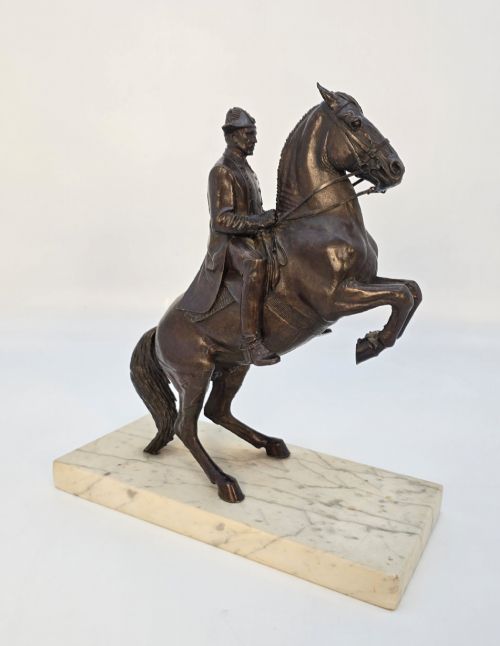

Dark Bronze Horse Figure
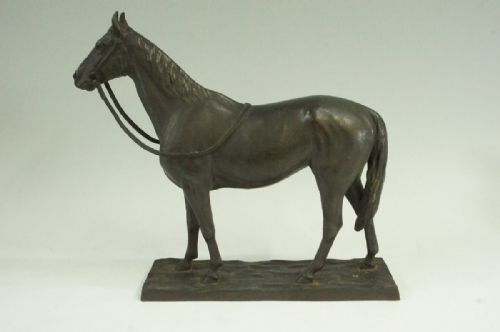
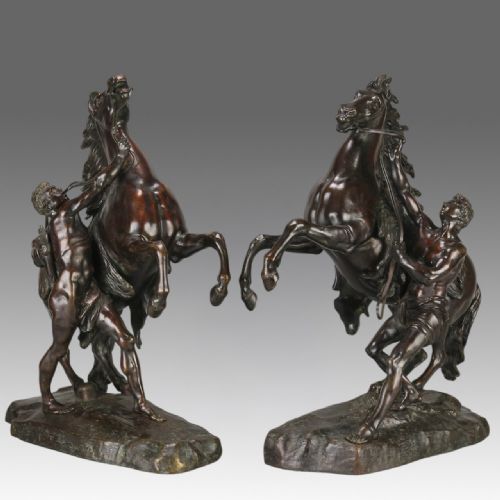
A dark bronze horse figure brings the dramatic energy of equestrian sculpture into a room, capturing muscle, motion, and form in metal.
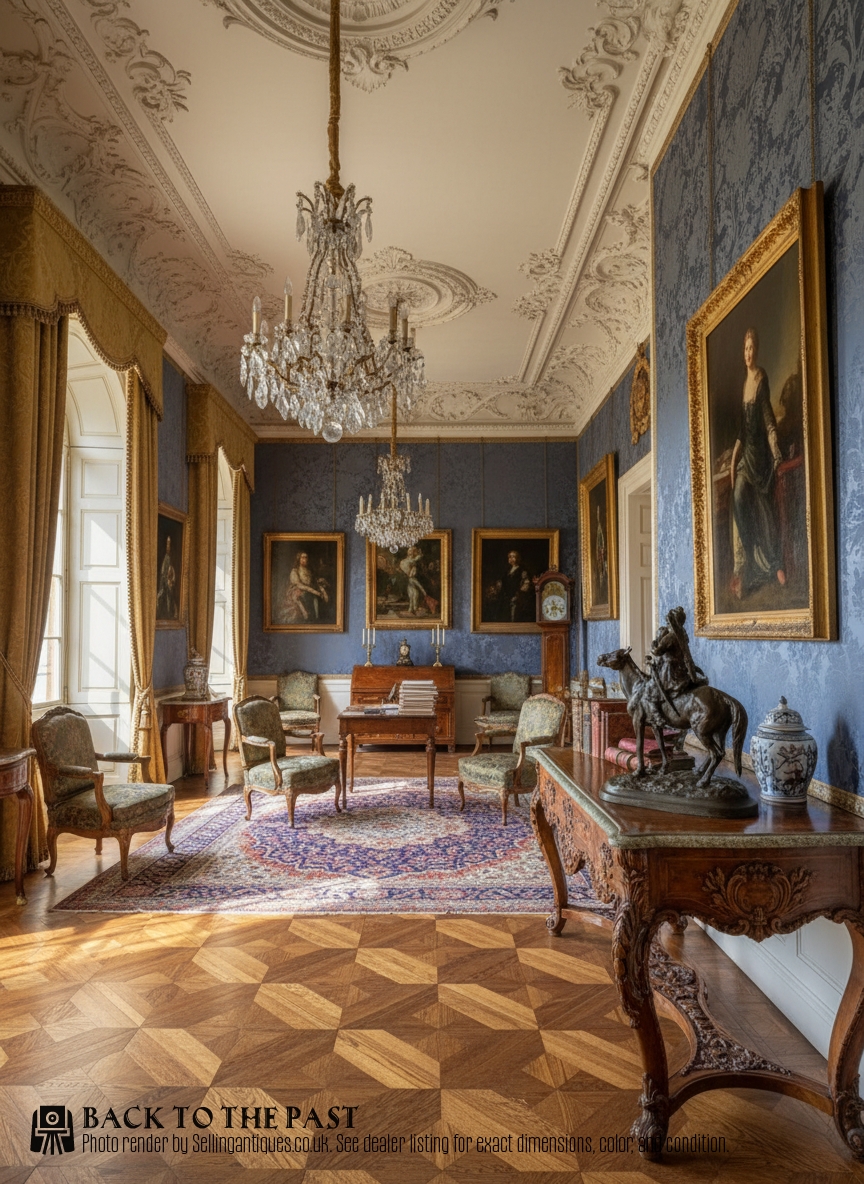
Dark Bronze Horse Figure
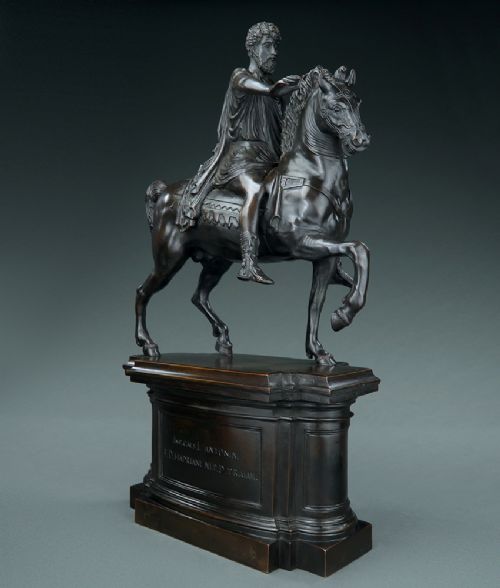
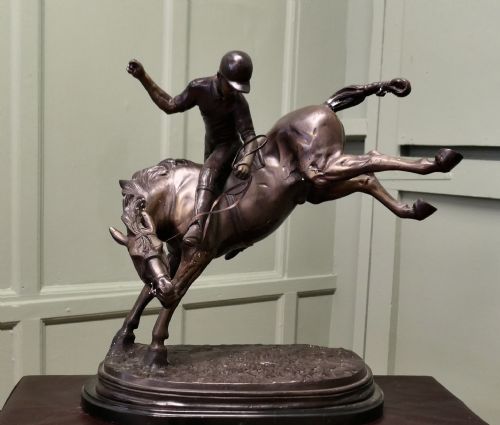
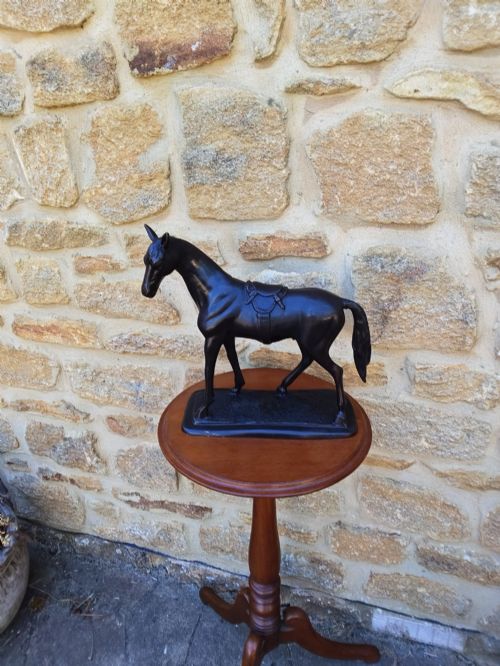
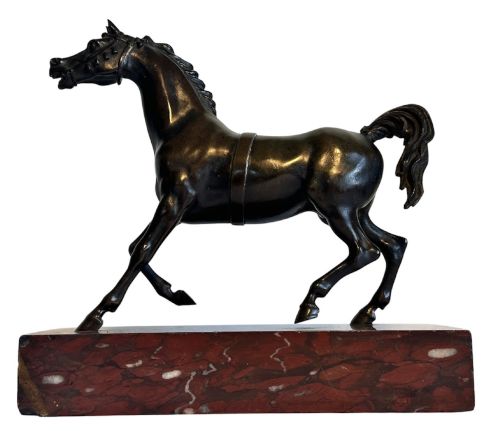
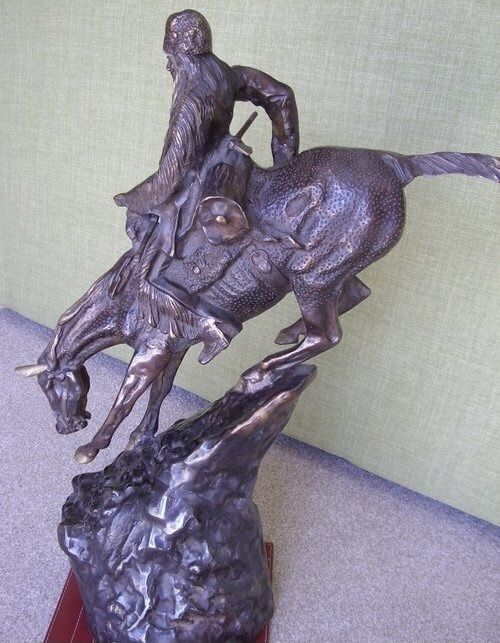
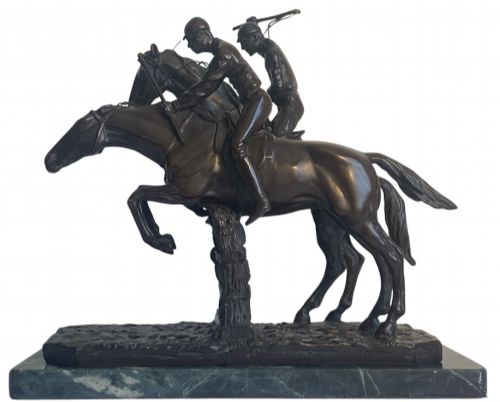
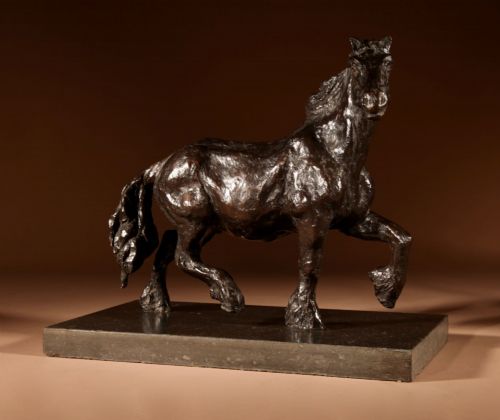
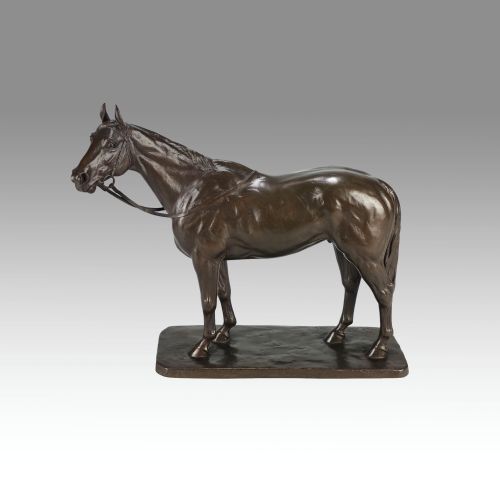
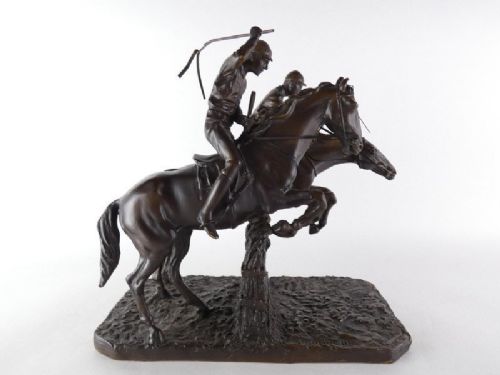
A dark bronze horse figure captures equine subjects through a range of historical periods, most commonly emerging from nineteenth-century workshops and early twentieth-century foundries. These sculptures take many forms, from spirited stallions and racing steeplechase scenes to grand equestrian monuments carrying historical figures or riders.
The aesthetic draws heavily on French Animalier traditions, Academic Realism, and Grand Tour souvenirs produced across Europe and Japan. Buyers encounter these works mounted upon marble or stone plinths, or standing as freestanding patinated bronzes that reflect classical and neoclassical influences.
Materials and construction methods
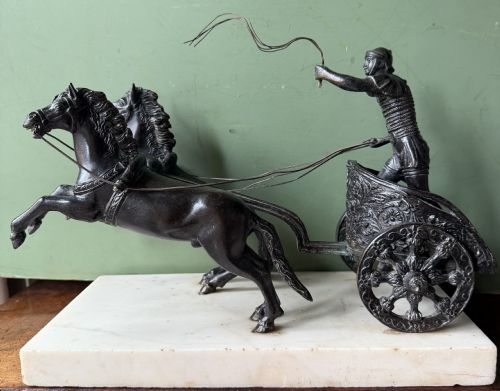
Foundries utilised cast bronze and patinated bronze to achieve deep, dark surface tones, often pairing the metal sculptures with contrasting bases of white or green marble and stone. Cold-painted techniques and surface treatments were occasionally applied to highlight specific details on the horse and rider.
Makers employed traditional casting methods to render complex anatomical details, musculature, and harnesses with precision. The resulting pieces rely on the weight and density of the metal and stone components to provide structural stability.
Listings feature materials including cast bronze, patinated bronze, marble, and stone across nineteenth and twentieth-century periods.
Factors influencing execution and finish
The strength of a dark bronze horse figure lies in the fidelity of its anatomical rendering and the subtlety of its patination. Superior examples display crisp definition in the musculature, mane, and tack, whereas lesser pieces lose fine detail in the casting process.
The quality of the mount also distinguishes the piece, particularly where bronze meets marble or stone plinths. Tighter joints, heavier gauge metal, and expressive movement in the subject separate standard production models from masterworks.
Kunio Itô·Franz Bergman·John Willis Good·Pierre Jules Mene·Nikolai Lieberich
The Dark Bronze Horse Figure Glossary
- Patinated bronze
- Bronze that has been treated with chemical solutions to produce a dark, aged surface colour. This finish protects the metal and accentuates sculptural depth.
- Animalier
- A nineteenth-century artistic movement dedicated to the realistic portrayal of animals. Sculptors in this style focused on motion and natural behaviour.
- Grand Tour
- A traditional trip through Europe undertaken by upper-class scholars and collectors. Souvenirs included small-scale bronze sculptures of classical monuments and horses.
- Plinth
- A heavy base of marble, stone, or wood supporting a sculpture. It provides elevation and visual balance to the bronze figure above it.
Dark Bronze Horse Figure: Frequently Asked Questions
What periods do these figures come from?
These sculptures span several centuries, with the majority originating in the nineteenth and early twentieth centuries during the height of European and Japanese foundry production.
Pieces from this era reflect distinct regional movements, including French Animalier schools and Meiji period Japanese metalwork.
How were marble bases used?
Many bronze horses are mounted on marble or stone plinths to provide physical stability and visual weight.
These bases range from simple rectangular blocks to elaborate pedestals that elevate the equestrian scene.
Where should I display a heavy bronze?
A substantial bronze horse requires a sturdy surface such as a heavy wooden sideboard, desk, or dedicated console table.
Due to the combined weight of the metal and stone base, placement should account for both structural support and optimal viewing angles for the sculpture's silhouette.
How do I identify a casting after a master?
Many nineteenth-century foundries produced authorised casts or later editions after famous sculptors like Coustou, Remington, or Mêne.
Examining the crispness of the chase work, the depth of the dark patination, and any foundry stamps helps determine the context of its creation.