
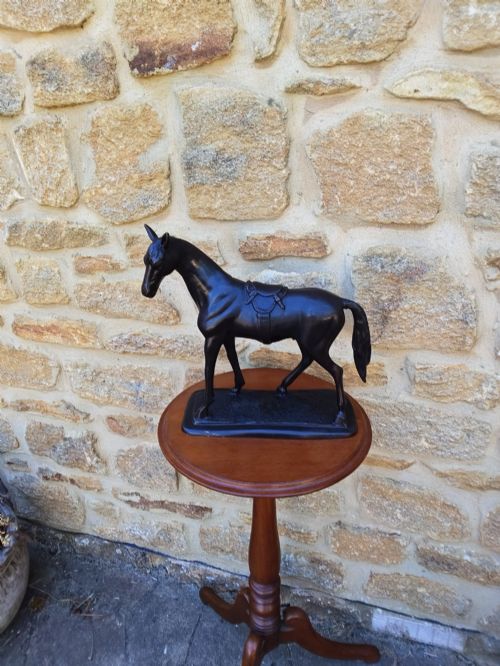
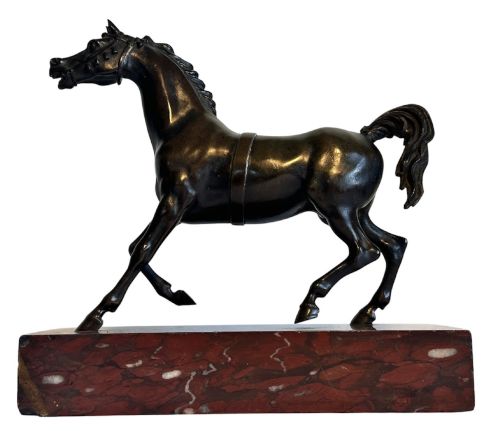
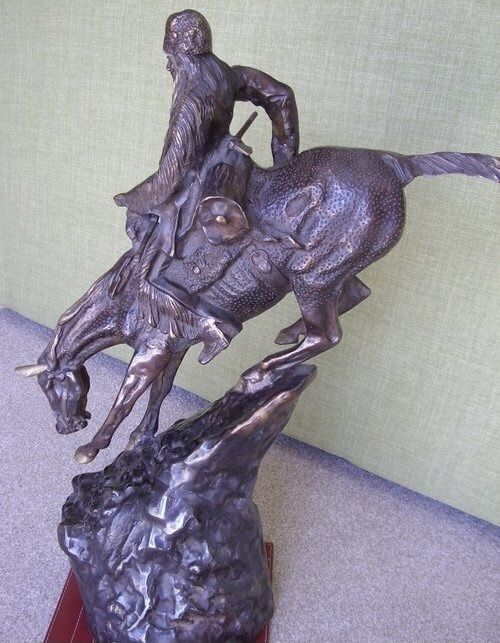


Cast Metal Horse Statue
A cast metal horse statue brings sculptural weight and classic equine form directly into your interior.
Cast Metal Horse Statue
When you search for a cast metal horse statue, you are looking at solid figures formed in bronze, brass, iron, and silver plated metal. These pieces range from substantial desktop accessories and doorstops to large freestanding garden and architectural elements.
The versions you are most likely to meet on this page span the Victorian era, the Edwardian period, and the early decades of the twentieth century. They adopt styles from classical French Neoclassicalism and Animalier realism to Art Deco and Western Americana.
Makers and foundries utilised various casting methods to capture the musculature and movement of stallions, racehorses, and working animals. Many are mounted on heavy bases of marble or onyx to give the sculpture proper stability and presence.
How they were made
Foundries produced these sculptures primarily through traditional casting techniques in bronze, brass, and iron. Molten metal poured into moulds captured fine anatomical details in the mane, flanks, and legs.
Surface finishes varied widely according to the intended function and aesthetic of the piece. Some sculptures received a careful cold painted polychrome finish, while others relied on natural patination or a bronzed coating over base metals.
Some horses caught the winning post at Epsom before sitting quietly on a Victorian desk.
What varies in quality
The distinction between ordinary and exceptional work lies in the fidelity of the casting and the crispness of the chase work. Finer sculptures display precise muscle definition and correct anatomical proportions rather than soft, muddy outlines.
The quality of the base material and mounting significantly affects the overall integrity of the piece. Heavy natural stones like marble or onyx provide a stable footing that cheaper wooden or substitute bases cannot match.
The Cast Metal Horse Statue Glossary
- Animalier
- A nineteenth-century artistic movement focused on the realistic portrayal of animals. Sculptors in this style studied live subjects closely to capture natural movement.
- Cold Painted Bronze
- A technique where bronze sculptures are painted with cold enamel rather than fired in a kiln. This method was particularly popular in Austrian workshops during the early twentieth century.
- Hitching Post
- A heavy post mounted outside buildings to secure horses by their reins. Cast iron examples often took the form of sculpted horse heads.
- Neoclassical
- A revival of classical Greek and Roman artistic styles that influenced European sculpture and decorative arts. It prioritises balance, proportion, and restrained dignity.
Cast Metal Horse Statue: Frequently Asked Questions
How do I clean a bronze horse statue?
Dust the surface regularly with a soft, dry cloth to prevent dirt accumulation. Avoid harsh chemical cleaners or abrasive pads that can strip the original patination.
Apply a very thin layer of microcrystalline wax occasionally if you wish to protect the metal surface. Buff gently with a clean cloth after application to maintain a soft sheen.
Were these statues meant for desks?
Many smaller metal horses served specific utilitarian purposes on executive desks and writing tables. Items such as desk tidies and inkstands incorporated miniature equine sculptures into their design.
Larger figures were produced purely for decorative display on mantelpieces, sideboards, or dedicated sculpture plinths. The physical scale of the piece usually indicates its original domestic function.
How can I tell Victorian pieces apart?
Victorian cast metal figures often lean towards heavy utilitarian forms like doorstops and hitching posts or distinct Animalier realism. The metalwork from this period tends to be robust and functional.
Later Edwardian and early twentieth-century examples frequently adopt more stylised approaches, including Art Deco influences or realistic portraits of specific famous racehorses.
What is cold painted bronze?
Cold painted bronze refers to figures finished with layers of unfired oil-based paint applied over the metal. Austrian workshops mastered this colourful technique to produce vivid decorative ornaments.
Because the paint was not kiln-fired, surviving examples often show natural wear and minor losses to the pigment. This ageing process is characteristic of genuine period pieces.