
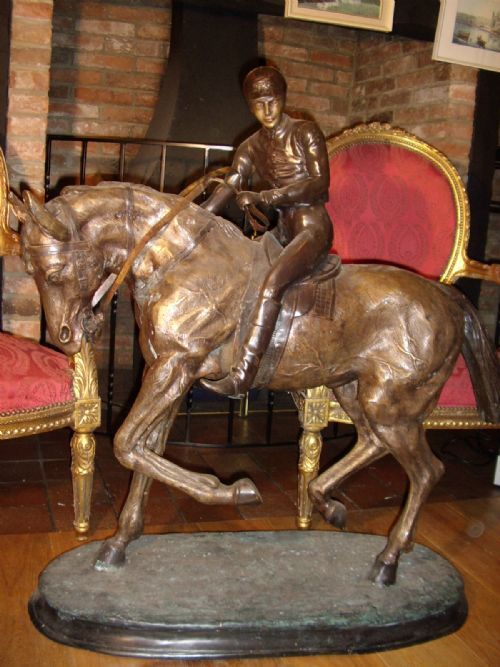
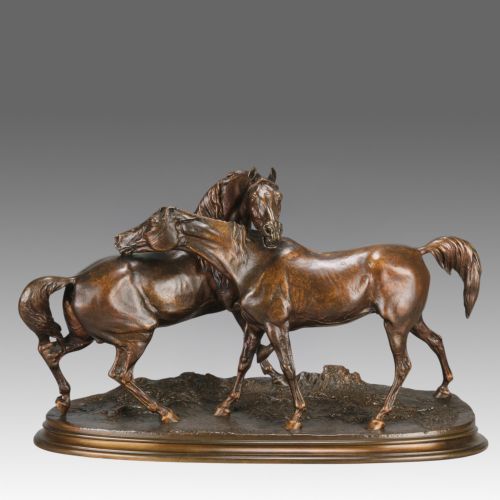
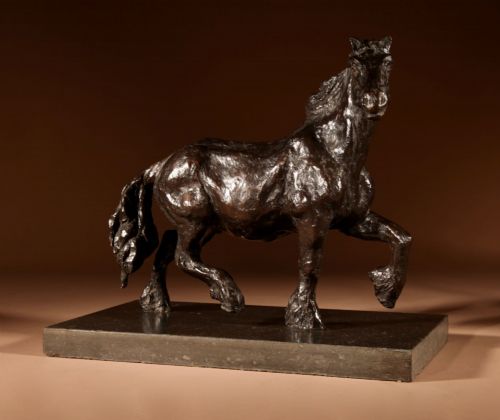
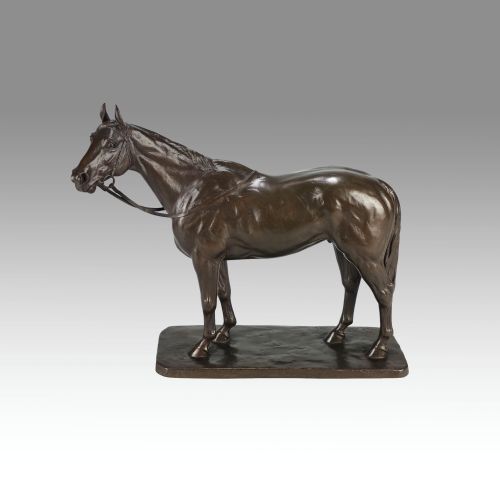
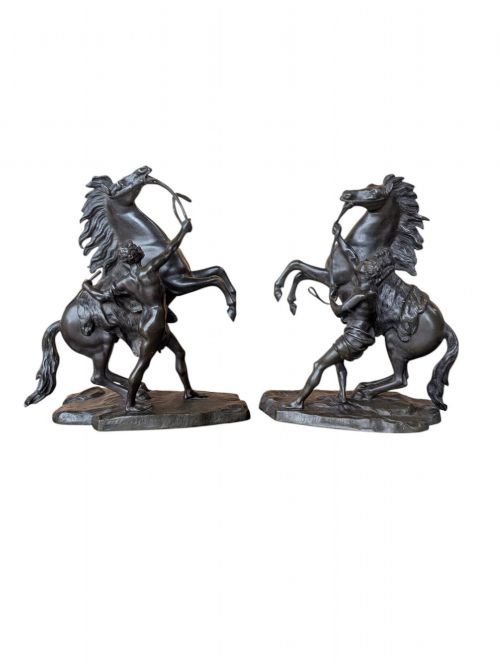
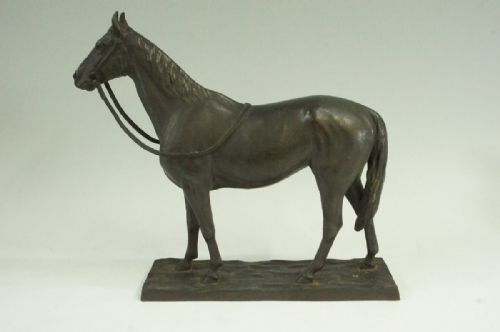
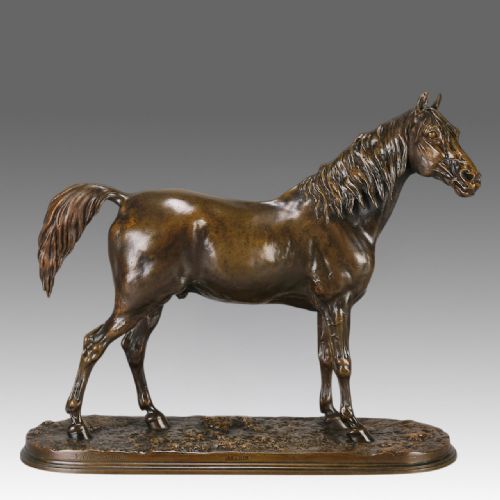


Patinated Bronze Equestrian Statue
A patinated bronze equestrian statue captures the tension of horse and rider, offering enduring movement in metal.
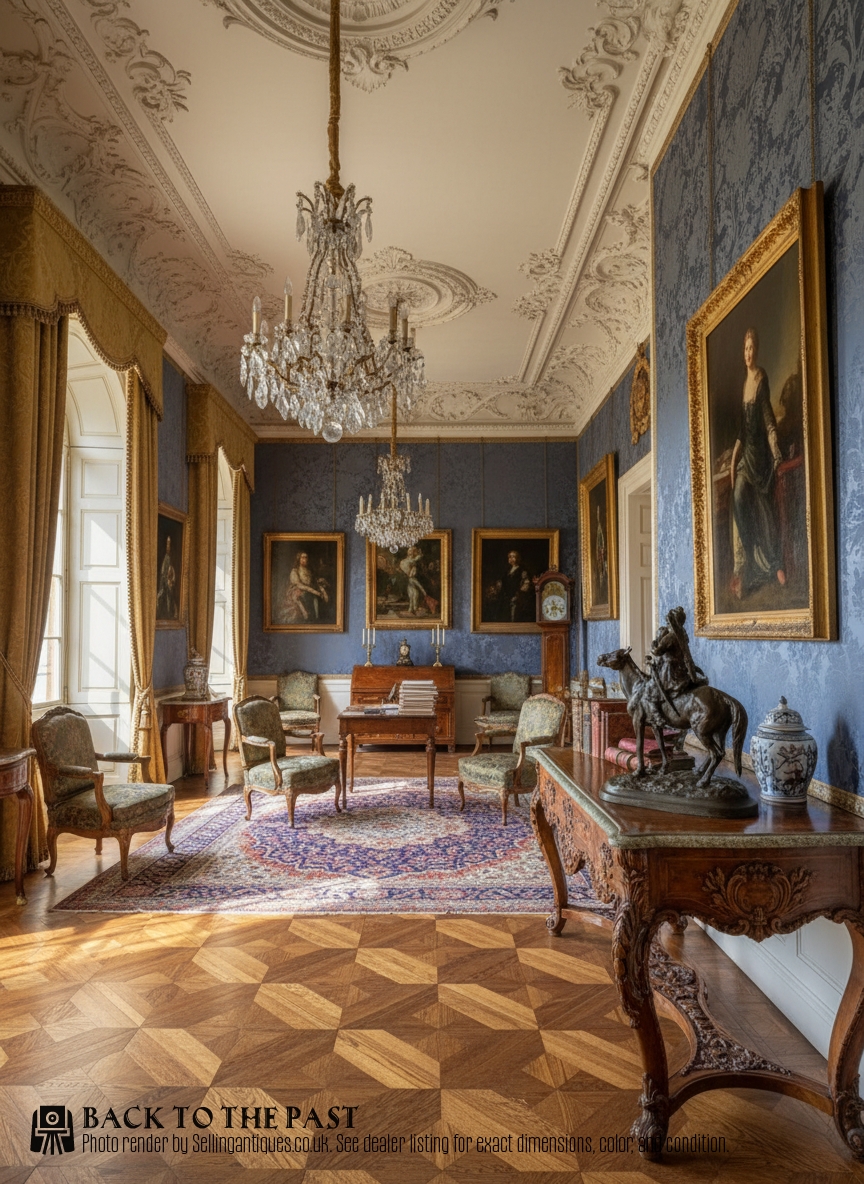
Patinated Bronze Equestrian Statue
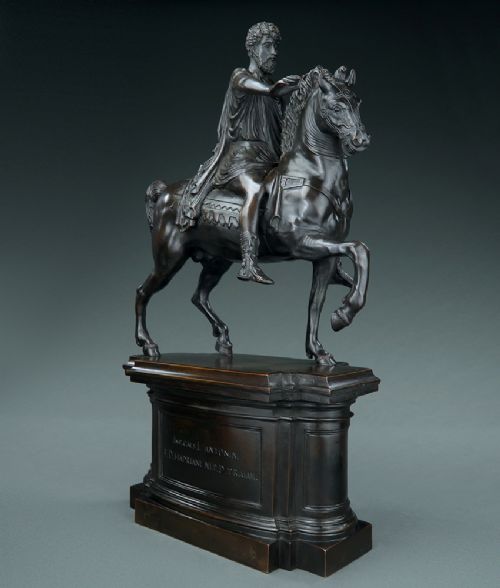
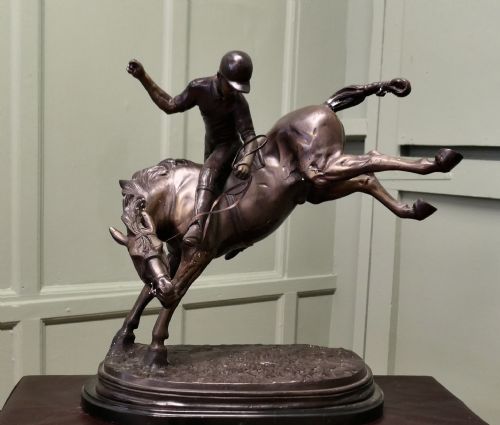
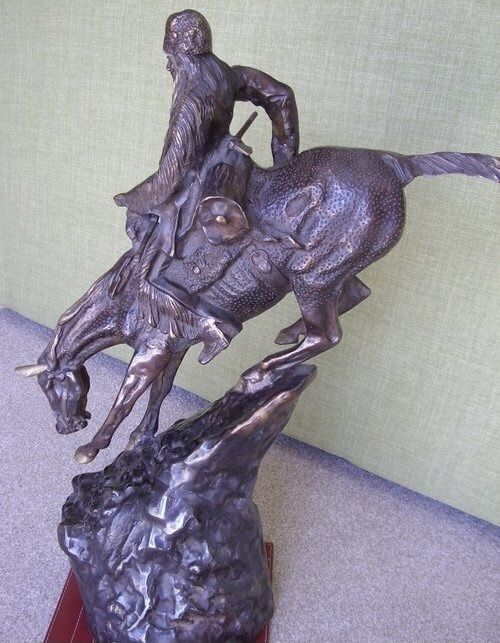
A patinated bronze equestrian statue brings together horses, riders, and historical figures cast in metal across the nineteenth and twentieth centuries. These sculptures range from French Animalier racing studies to classical figures and Western Americana subjects mounted on stone bases.
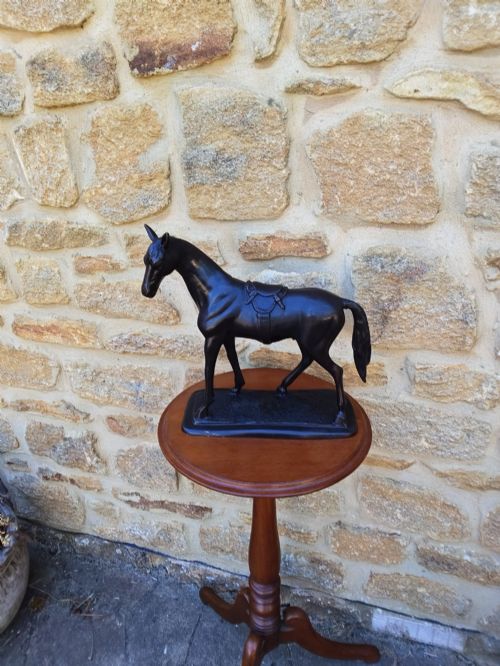
The versions most commonly met on this page span the Victorian period through the nineteen-thirties, reflecting both European foundry work and Japanese Meiji craftsmanship. Collectors encounter everything from grand mantel clocks incorporating bronze stallions to solitary standing horses and dramatic hunting groups.
Makers and foundries across France, Italy, and Japan produced these works in varied sizes, utilising marbleplinths and gilt highlights to enrich the dark patination. Each piece captures a specific moment of motion, whether a rearing mount or a steady draft horse.
Materials and Technique
These sculptures rely primarily on bronze cast through traditional methods, then treated with chemical patination to achieve deep brown, black, or green surfaces. Gilt bronze highlights and painted details occasionally accent manes, tack, or garments.
Many figures are mounted upon heavy bases of marble, sienna marble, wood, or stone to anchor the composition and provide stability. Foundries utilised these dense natural materials to contrast with the warm metallic tones of the horse and rider.
Among the chargers and cavalry mounts sits a solitary bronze nostril, reminding us that horse sculpture can occasionally be taken in very small parts.
Separating the Range
Quality rests in the crispness of the chasing and the fidelity of the musculature, where sharper muscle definition and cleanly rendered tack distinguish finer castings from softer secondary versions. The depth and subtlety of the patination layer also dictate visual richness.
The distinction between a standard production piece and a superior model often lies in the signature of a recognised sculptor or the reputation of the foundry that poured the metal. Well-defined bases and integrated architectural elements further elevate the character of the work.
Pierre Jules Meme·Kunio Ito·Luigi Secchi·Alfred Dubucand·Charles Crozatier·Bruno Zach·John Willis Good
The Patinated Bronze Equestrian Statue Glossary
- Animalier
- A nineteenth-century artistic movement focused on the realistic depiction of animals, particularly horses and big cats. Sculptors in this tradition studied anatomy closely in veterinary dissecting rooms.
- Patination
- The chemical or natural process that alters the surface colour of bronze. It protects the metal while giving the sculpture its characteristic dark tone.
- Grand Tour
- A cultural journey undertaken by wealthy young Europeans to study classical art and architecture. Many smaller bronzes were purchased as souvenirs during these travels.
- Lost-wax casting
- A historic method where a model is encased in wax, melted out, and replaced by molten bronze. This technique allows for intricate detail in mane and muscle.
- Chasing
- The manual finishing work done on a raw bronze casting using small chisels and hammers. Artisans use this process to sharpen details and remove casting seams.
Patinated Bronze Equestrian Statue: Frequently Asked Questions
What is an animalier bronze?
An animalier bronze is a nineteenth-century sculpture focused specifically on realistic animal forms, most often horses in motion. These pieces capture naturalistic behaviour and precise anatomical detail.
Makers observed living animals in stables and fields to translate sinew, muscle, and dynamic movement into metal castings.
How do I care for patinated bronze?
Patinated bronze requires gentle dusting with a soft, dry cloth to prevent dust accumulation on the surface. Avoid liquid cleaners or polishes that can strip the chemical patination.
Keeping the sculpture away from direct sunlight and damp environments helps preserve the original finish and the integrity of any attached marble base.
Why are some horses mounted on marble?
Marble bases provide necessary weight and stability for heavy bronze figures that might otherwise tip due to their dynamic stances. Sienna marble and plain black stone were frequently chosen to complement dark metal.
These plinths also elevate the sculpture visually, framing the composition much like a painting within a gallery setting.
How do I tell nineteenth-century bronzes apart?
Nineteenth-century pieces often display foundry stamps, artist signatures, or registration marks cast directly into the bronze base. The depth of the chasing and the complexity of the patination also offer clues to the period.
Comparing the casting quality to known works by documented sculptors helps clarify the origin and approximate decade of manufacture.