

Antique Entry Hall Furniture
Antique entry hall furniture brings character to a threshold, offering the practical presence of Victorian hall stands in mahogany, oak, and walnut.
What antique entry hall furniture is
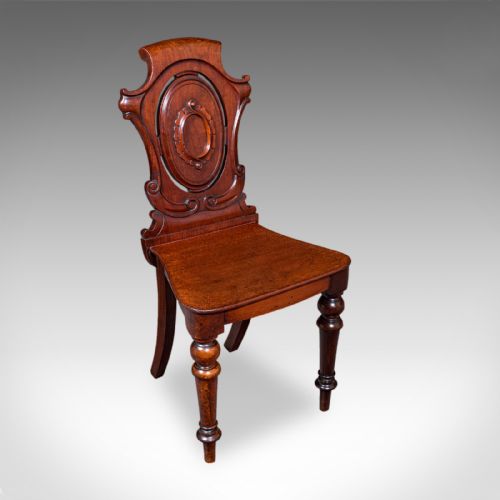
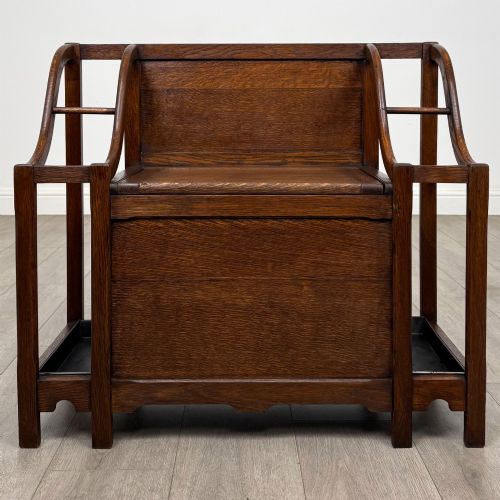
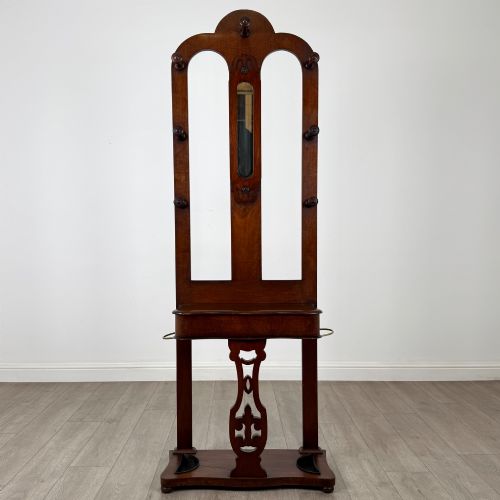
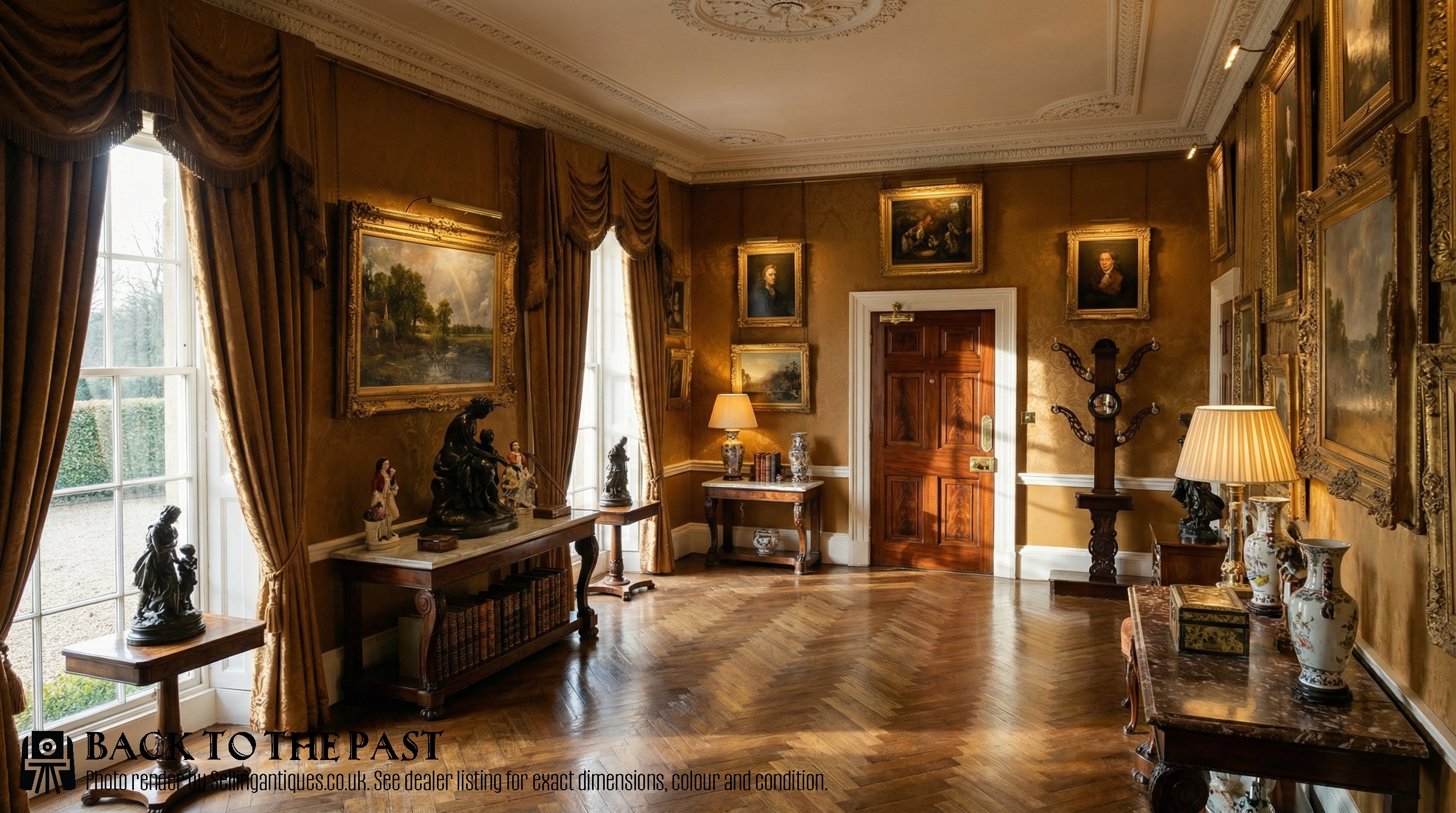
Antique entry hall furniture comprises functional pieces designed for the entrance of a house, most frequently seen here as Victorian hall stands. These items combine hat hooks, umbrella wells, and sometimes a central mirror or marble surface into a single fitted unit. The form addresses the practical needs of Victorian arrivals, providing a designated spot for outerwear and walking sticks.
The listings focus entirely on Victorian examples, spanning the nineteenth century with dates such as eighteen seventy. Forms range from domestic oak and mahogany designs to elaborate Flemish Renaissance Revival pieces and heavy cast iron country house furniture. Buyers encounter substantial architectural proportions suited to large hallways alongside standard domestic versions.
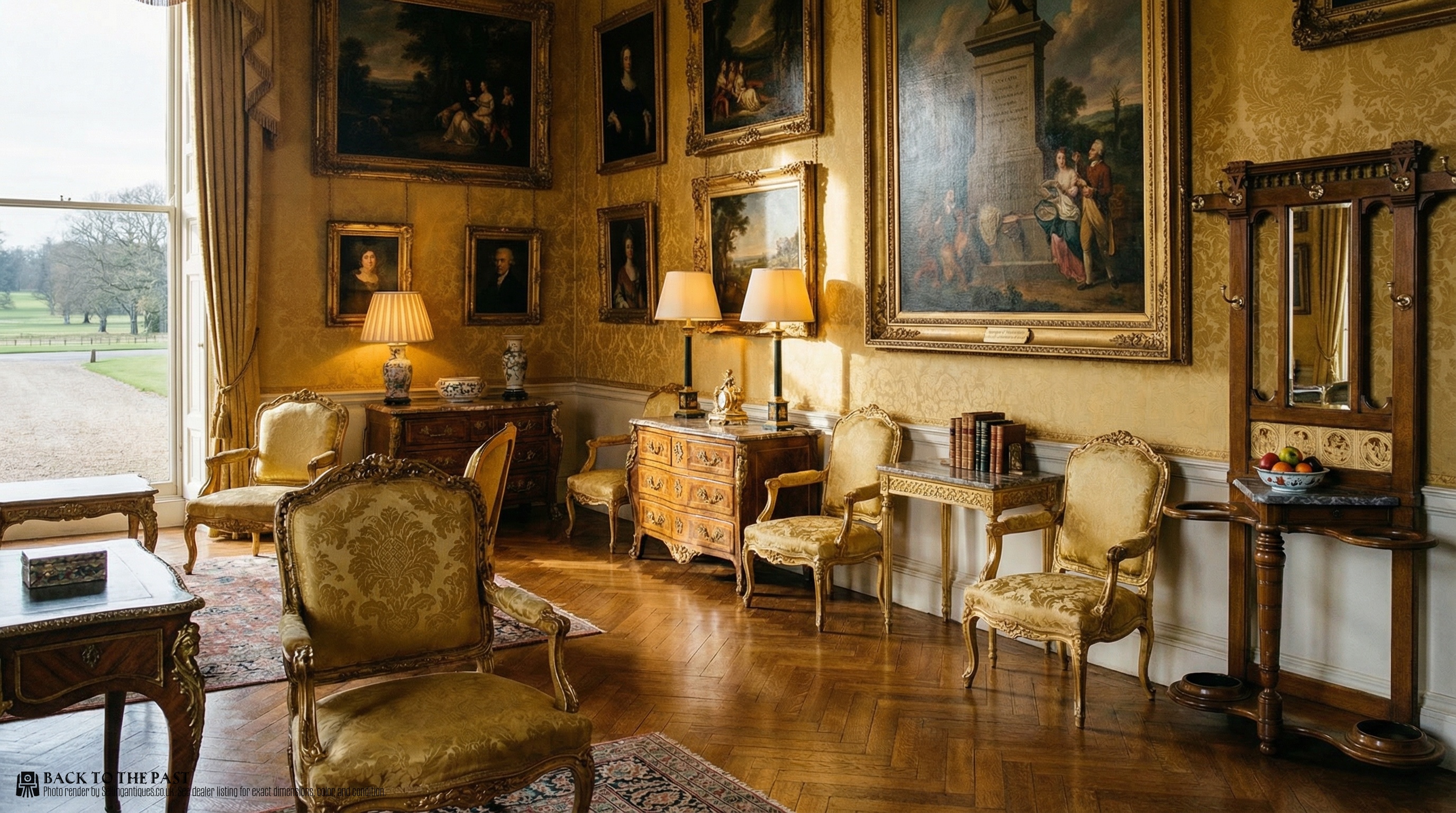
How they were made
Cabinetmakers utilised solid timbers including oak, mahogany, and walnut, often applying carved enrichment to the crests and panels. Metal components such as brass hooks and cast iron frames provide structural support and utilitarian durability for heavy garments and damp umbrellas. Marble inserts frequently serve as surfaces for card trays or incidental items.
Specialised manufacturing methods appear in heavy foundry work for cast iron hallstands, alongside traditional joinery and wood carving for timber examples. Glass mirrors are integrated into the upright backboards, secured with wooden mouldings to reflect light within narrow corridors.
Retail Price Guide 2026
Typical UK retail prices for entry hall furniture, calculated from the Sellingantiques database of over a million retail prices indexed since 2003. This retail price guide relies exclusively on Sellingantiques data; no external sources or auction records are used, so the figures do not describe the wider market.
Cast iron hallstands brought industrial foundry strength directly into the Victorian hallway to cope with dripping country house umbrellas.
What varies in quality
Quality separates standard domestic pieces from monumental works through the ambition of the carving and the scale of the timber. Large proportions and dense architectural detailing elevate certain oak stands, whereas simpler designs rely on clean mahogany or walnut surfaces. The inclusion of decorative cast iron by named foundries marks a distinct tier of production.
Material selection dictates the visual weight of the piece, with figured walnut and richly grained mahogany sitting above plain secondary woods. The integration of fitted elements, such as original brass drip pans and heavy marble slabs, defines the integrity of the construction.
Coalbrookdale
The Antique Entry Hall Furniture Glossary
- Hall stand
- An upright piece of hall furniture combining hat and coat hooks, a mirror, glove drawers, and umbrella stands with metal drip trays. This form dominates nineteenth-century entranceway furnishings.
- Flemish Renaissance Revival
- A nineteenth-century decorative style marked by heavy strapwork, deep relief carving, and Flemish architectural motifs applied to oak furniture. It produces imposing visual impact in large hallways.
- Victorian Gothic Revival
- An architectural and decorative style drawing on medieval ecclesiastical forms, featuring pointed arches and geometric tracery carved into timber frames. This style appears on mid-century hall stands.
- Cast iron
- An alloy poured into moulds to create rigid structural frameworks and decorative pierced panels. Foundries utilised this material for robust country house furniture capable of withstanding wet weather gear.
Frequently Asked Questions
What is antique entry hall furniture?
Antique entry hall furniture primarily consists of nineteenth-century hall stands designed to organise coats, hats, and walking sticks in domestic entrances.
These pieces combine wooden framework, brass hooks, and mirror glass into a unified architectural item.
What materials were used?
Maker workshops utilised hardwoods including oak, mahogany, and walnut for the structural bodies and decorative carved panels.
Additional elements incorporate cast iron frames, glass mirrors, marble surfaces, and brass fittings for hooks and drip pans.
How do I identify a Victorian hall stand?
Victorian hall stands display characteristic nineteenth-century stylistic traits such as Gothic Revival carving or Flemish Renaissance Revival strapwork.
They rely on period timber selection and heavy proportions suited to Victorian entrance halls.
Where were hall stands placed?
Hall stands stood directly against the wall in the entrance hall or vestibule of a nineteenth-century home.
Their placement provided immediate access for visitors and residents to deposit outdoor garments upon entry.