



Oak Hall Tree Mirror
An oak hall tree mirror anchors a hallway with sturdy timber and practical glass, offering an instant spot to check your coat and collar as you step through the door.
Oak Hall Tree Mirror
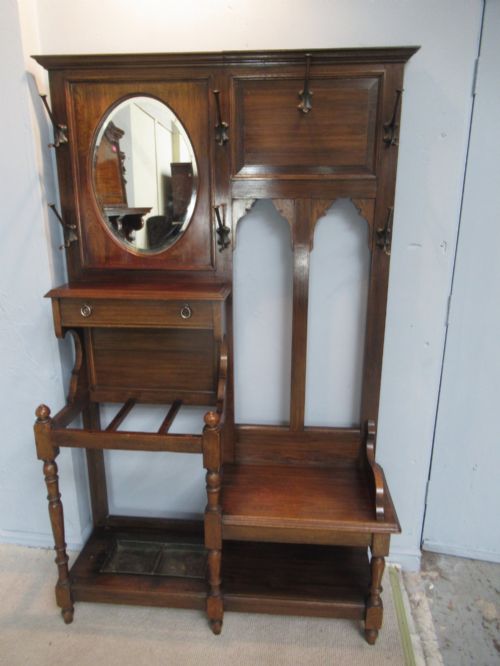
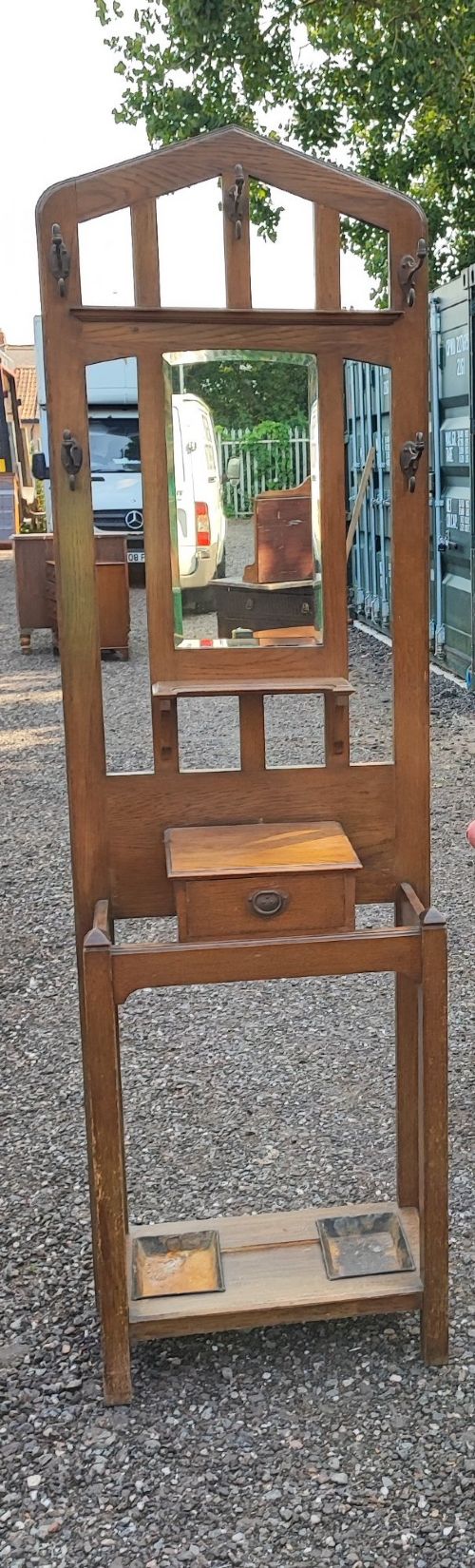
An oak hall tree mirror combines a central looking glass with hooks for hats and coats, designed to sit in the entrance hall of a home. The pieces appearing here predominantly date from the Victorian and Edwardian eras, spanning the late nineteenth and early twentieth centuries.
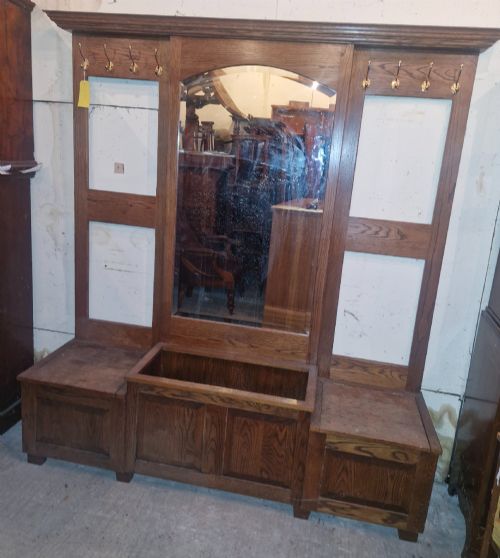
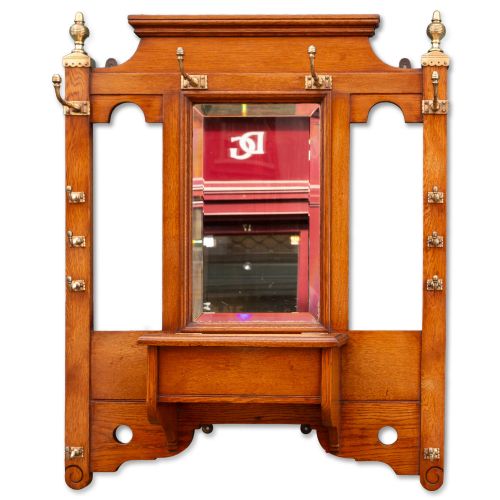
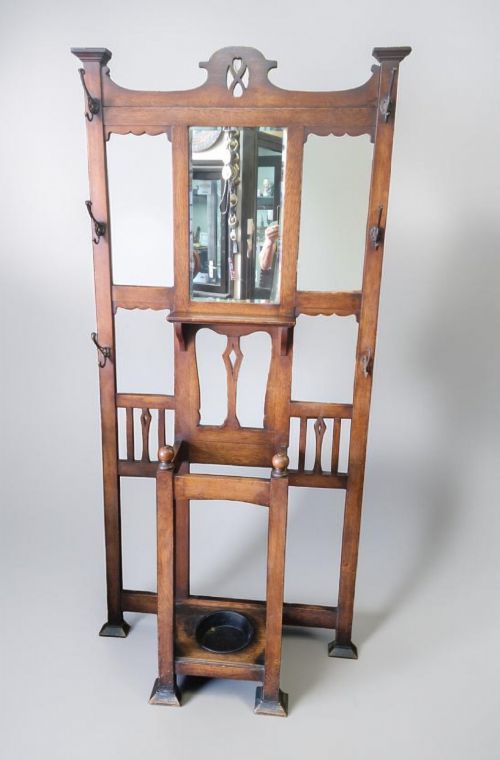
Most examples function as substantial freestanding furniture incorporating umbrella wells and sometimes bench seating. You will also encounter wall-mounted versions that serve the same purpose in more compact corridors.
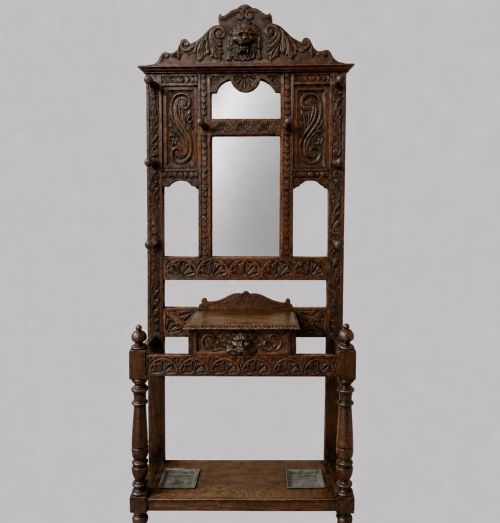
Stylistic variations range from plain golden oak utilitarian forms to heavily carved pieces influenced by the Arts and Crafts, Art Nouveau, and Flemish Renaissance Revival movements. Each design reflects the Victorian and Edwardian preoccupation with an orderly, welcoming threshold.
How they were made
Joiners built these stands using solid oak timbers, frequently selected for its quarter-sawn figure or golden tone. They combined traditional mortise and tenon joinery with applied mouldings and turned wooden spindles.
Metalwork played a vital role in their construction, featuring brass or cast iron coat hooks and drip trays for wet umbrellas. Bevelled mirror plates were set securely into wooden frames, often accompanied by ceramic tiles or marble inserts.
Periods represented span from the 1870s through the Victorian and Edwardian eras into the early 20th century.
What varies in quality
The ambition of the carving sets the standard, moving from simple linear mouldings to deep relief work depicting natural foliage or mythological motifs like the Green Man. The choice of timber grain, particularly striking golden oak figures, elevates the presence of the piece.
Hardware integrity distinguishes superior pieces, where original heavy brass hooks and robust cast iron drip trays remain intact. The quality of the mirror plate, the weight of the frame, and the clever integration of a bench seat or storage compartments also mark out the finer examples.
The Oak Hall Tree Mirror Glossary
- Hall stand
- A piece of hallway furniture combining hooks, a mirror, and umbrella storage, often with a bench. It provides a single station for outdoor garments upon entering the house.
- Green Man
- A sculptural motif showing a human face emerging from or entwined with foliage. It appears frequently as a carved detail on nineteenth-century oak furniture.
- Arts and Crafts
- A design movement prioritising honest construction and simple, functional forms. Pieces from this tradition avoid excessive ornamentation in favour of visible craftsmanship.
- Flemish Renaissance Revival
- A nineteenth-century style drawing on sixteenth-century continental architecture and carving. It uses dramatic, high-relief ornamentation and architectural elements.
- Golden oak
- A warm, honey-toned finish applied to oak timber, popular during the late Victorian and Edwardian periods. It highlights the natural grain of the wood.
Oak Hall Tree Mirror: Frequently Asked Questions
What is an oak hall tree mirror used for?
These pieces served as the primary storage station in entrance hallways for outdoor garments, walking sticks, and hats. The integrated mirror allowed people to check their appearance before stepping out.
Today, they perform the exact same practical function in modern homes while establishing a strong historical focal point in the entryway.
How do I date an oak hall tree mirror?
Dating relies on stylistic clues, construction methods, and the specific aesthetic movements of the time. Victorian examples often feature dark finishes and heavy relief carvings, whereas Edwardian and later pieces tend to show lighter oak and simpler Arts and Crafts lines.
Examining the fixings, mirror bevelling, and secondary woods helps narrow down the decade of manufacture.
Are these pieces freestanding or wall mounted?
The majority of hall stands are large freestanding items that rest firmly on the floor, often incorporating umbrella wells and sometimes a lift-lid bench seat. Wall-mounted variations also exist, designed to save floor space in narrower corridors.
Freestanding versions usually require securing to the wall for stability due to their height and weight.
How do I care for antique oak furniture?
Maintain the timber by keeping it away from direct heat sources and sudden humidity changes that can dry out the wood. Regular dusting with a soft cloth and occasional treatment with appropriate wax preserves the lustre of the oak.
Avoid commercial silicone polishes, which can build up on the surface and attract dust over time.