


Dark Wood Hallway Storage
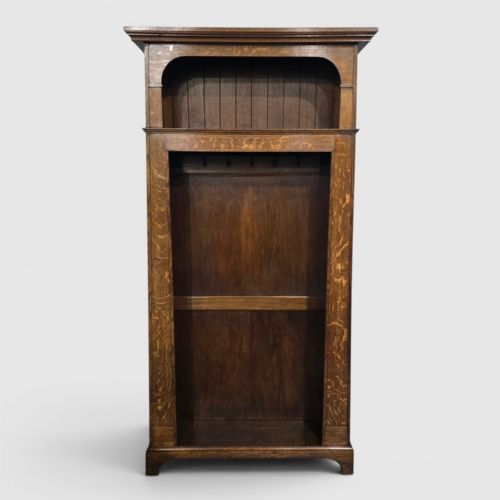
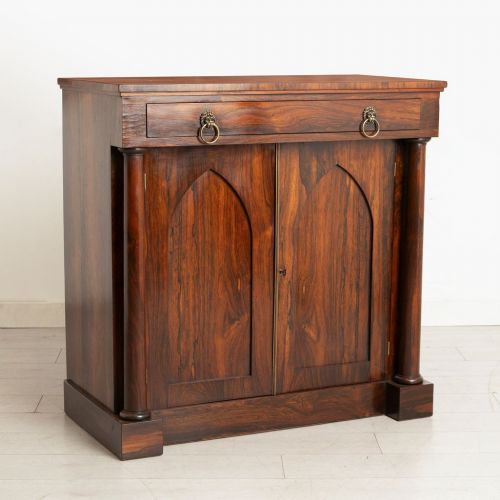
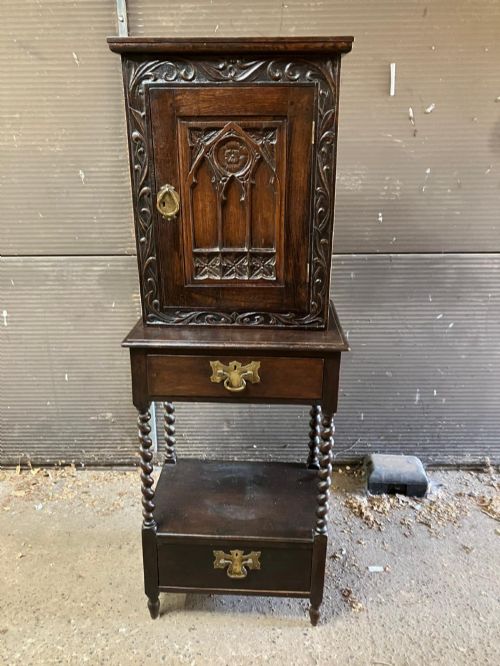
Dark wood hallway storage brings together period oak, mahogany and rosewood pieces designed to keep entrance spaces orderly.
Dark Wood Hallway Storage
Dark wood hallway storage encompasses a practical array of entrance furniture, including umbrella stands, hall stands, benches, cabinets and settles. These pieces span from the 18th century through the Victorian, Edwardian and Arts and Crafts periods, showing how different eras approached the problem of organising coats, boots and sticks.
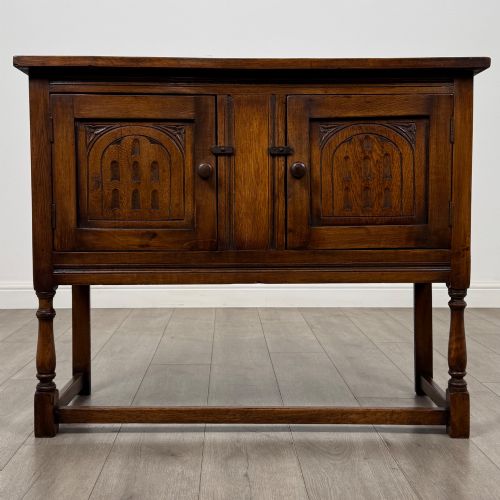
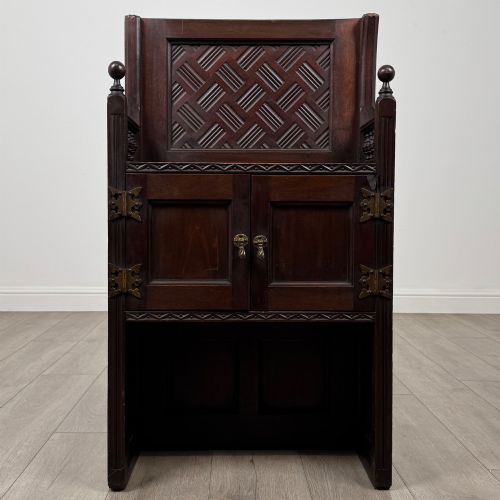
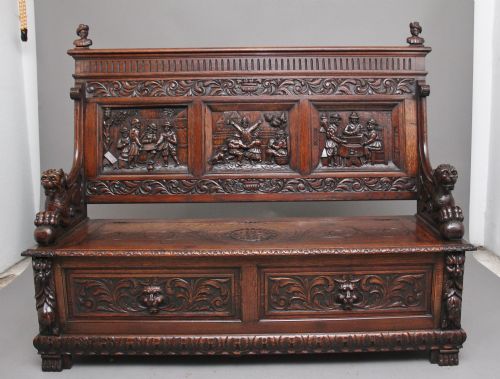
The selections here are dominated by substantial oak and mahogany items from the 19th and early 20th centuries. Buyers frequently encounter carved oak hall stands, umbrella stands with brass mounts, and multi-functional settles or monk benches that double as seating and storage.
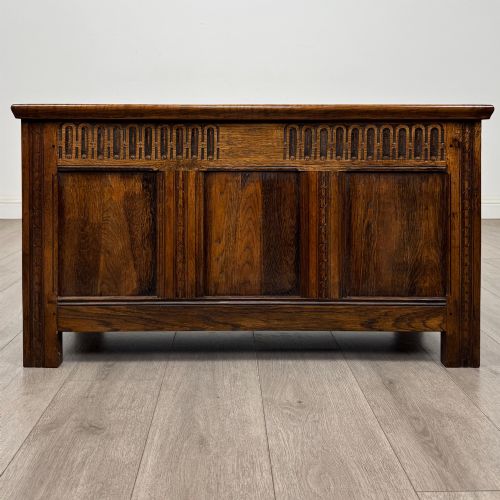
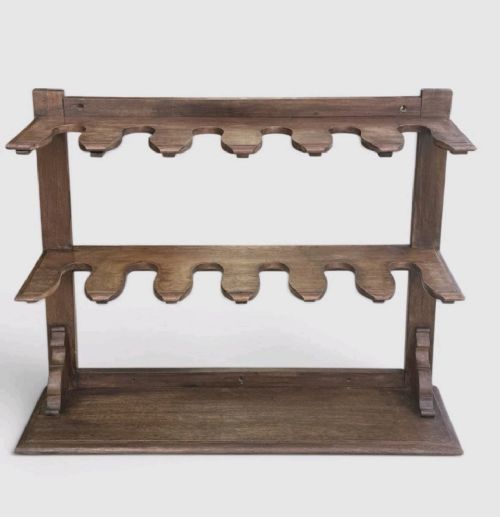
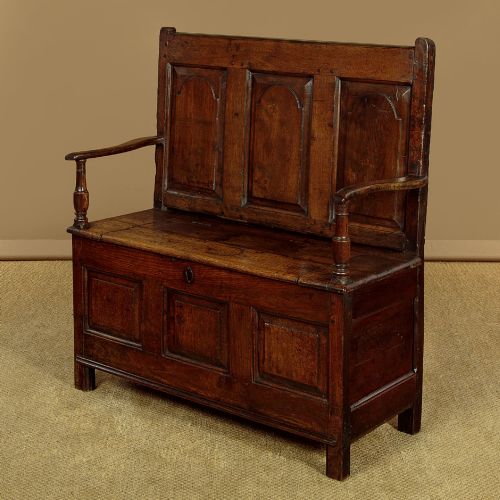
Earlier examples, such as 18th century settles, offer deep wooden boxes beneath hinged seats, while later Victorian and Edwardian pieces integrate mirrors, marble shelves and specialised racks for boots and hats.
Materials and construction
The pieces rely primarily on dense hardwoods like oak, mahogany and rosewood, chosen for structural stability and rich natural grain. Cabinetmakers combined solid timber construction with hand-carved details, particularly in Jacobean Revival and Arts and Crafts designs.
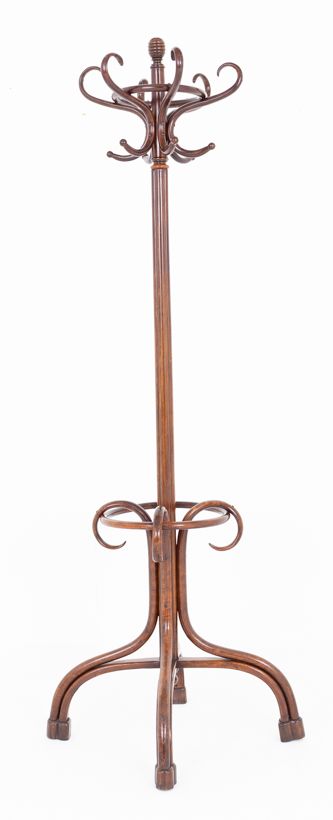
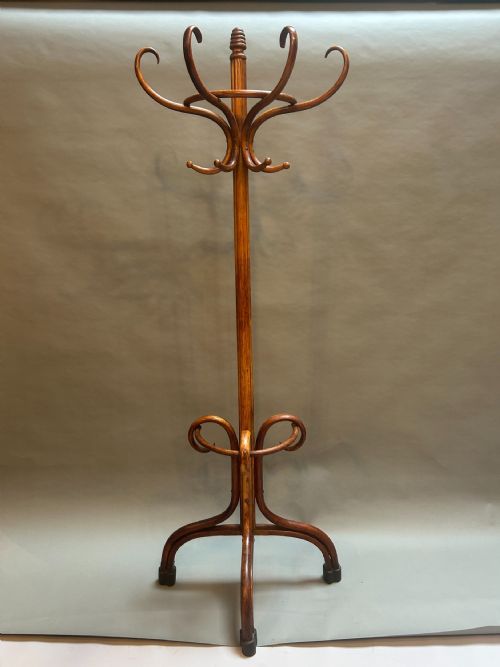
Metal components such as brass, cast iron and standard metal are integrated as hooks, drip pans, mounts and rails to withstand the dampness of wet umbrellas and heavy outdoor wear. Bentwood techniques also appear in later hatstands and stick stands, utilising steam-bent timber for curved frameworks.
Glass mirrors and marble shelves are frequently fitted into the backboards of larger Victorian and Edwardian hall stands, adding reflective light and durable surfaces to high-use entrance furniture.
Object types range from compact umbrella stands and revolving bootstands to large hall wardrobes, settles and multi-functional monk benches.
Assessing the pieces
Quality reveals itself in the depth of hand-carving, the selection of figured timber veneers, and the integrity of the joinery across heavy-use frames. Pieces featuring crisply carved panels, substantial brass fittings and intact original drip pans represent the upper tier of craftsmanship.
The complexity of the form also dictates the tier, ranging from simple turned wooden stick stands to elaborately fitted hall wardrobes and multi-functional monk benches with integrated storage boxes. Examples retaining original surfaces and structural hardware demonstrate superior preservation.
Shoolbred
The Dark Wood Hallway Storage Glossary
- Settle
- A wooden bench with a high back, solid arms, and a box seat that lifts for storage. These items date back to the 18th century and earlier.
- Monk bench
- A convertible piece of hallway furniture featuring a hinged back that folds down to transform the seat into a table. They are commonly found in dark oak.
- Hall stand
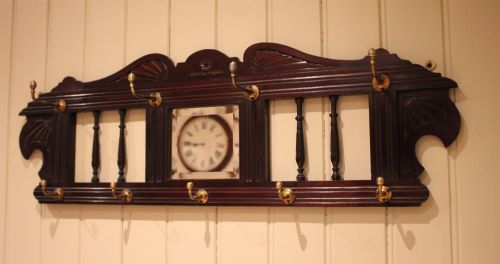
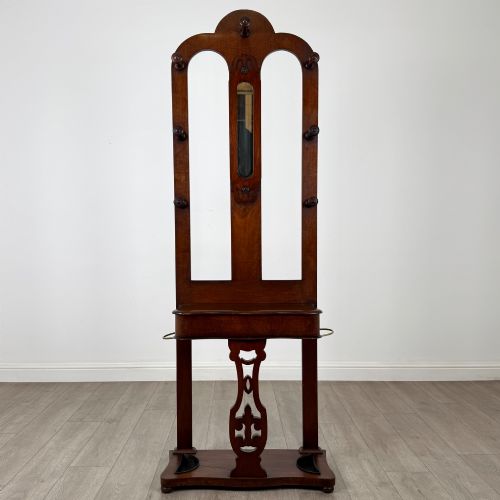
- A tall piece of entrance furniture combining coat hooks, a mirror, glove drawers, and a lower umbrella or stick stand. Many feature marble shelves.
- Bentwood
- Wood that is heated by steam and bent into curved shapes. This technique defines several 20th century hatstands and stick stands.
- Pier cabinet
- A narrow cabinet designed to fit against the wall space between windows. These pieces appear in mahogany and rosewood.
Dark Wood Hallway Storage: Frequently Asked Questions
What is a monk bench used for?
A monk bench serves as both a seating bench and a storage chest, with a hinged seat that lifts to reveal a compartment beneath. Many versions also feature a backrest that tilts forward to create a small table surface.
In a hallway, this dual functionality provided a place to sit while removing boots and a concealed space to store hats, gloves or heavy textiles out of sight.
How do I identify an Edwardian hall stand?
Edwardian hall stands typically date from the late 19th to the early 20th century and are frequently constructed from oak. They often incorporate central mirrors, brass coat hooks, and metal drip trays for wet umbrellas.
Compared to heavier Victorian examples, Edwardian pieces often display lighter proportions while retaining carved panels or simple geometric lines influenced by the Arts and Crafts movement.
Where were umbrella stands placed?
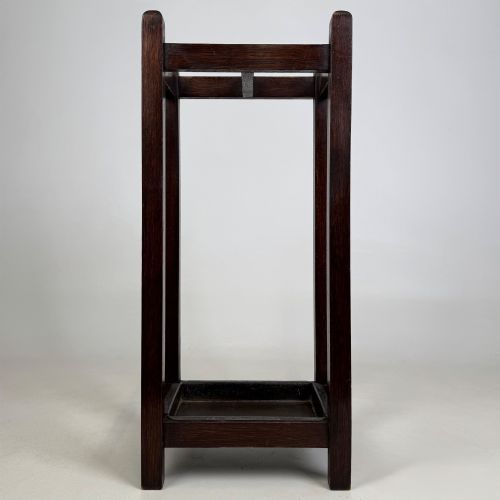
Umbrella and stick stands were positioned near the main entrance door to catch dripping water from wet weather gear. They were designed with open wooden frames or metalwork rings to allow air circulation around damp walking sticks and umbrellas.
Many period stands include removable metal drip pans at the base to protect wooden floorboards from moisture damage.
How do I care for dark wood hallway furniture?
Dark wood furniture benefits from regular dusting with a soft, dry cloth and occasional treatment with appropriate wood waxes or polishes to nourish the grain. Avoiding direct sunlight and placement near heat sources prevents the timber from drying out or splitting.
Metal components like brass mounts and iron drip pans should be kept dry to prevent tarnishing or corrosion from lingering moisture.