


Antique Carved Umbrella Stand
An antique carved umbrella stand holds coats and walking gear while setting the tone of a grand entrance hall.
Antique Carved Umbrella Stand
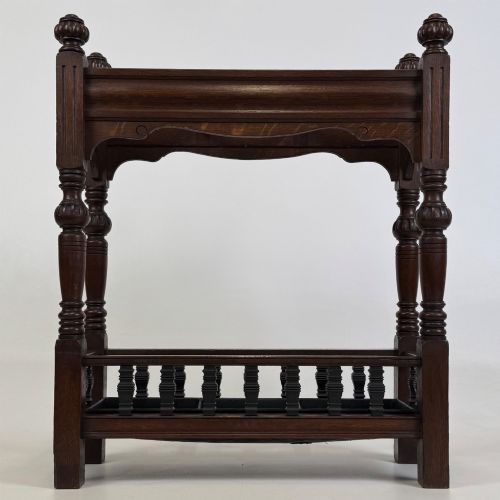
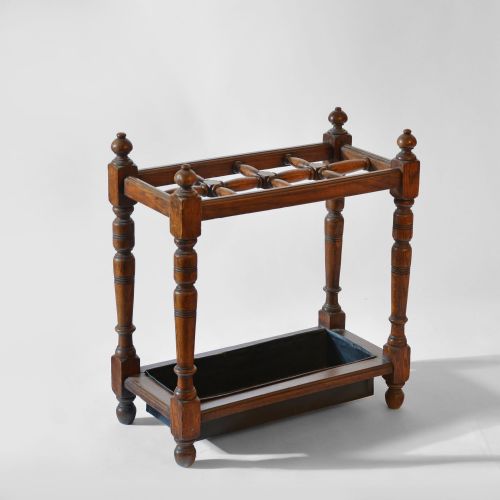
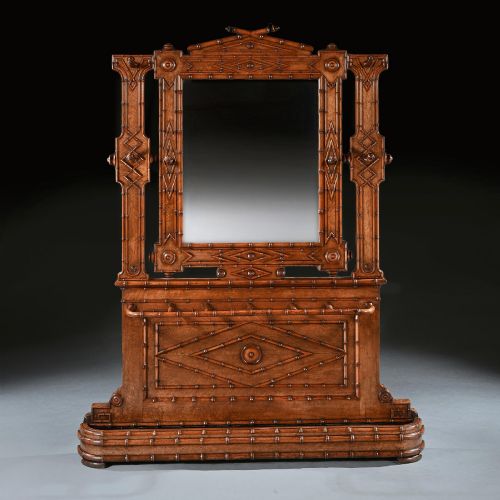
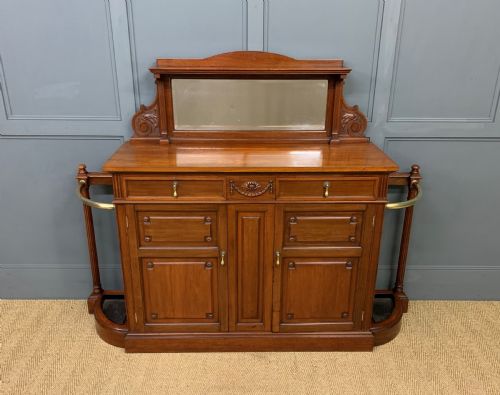
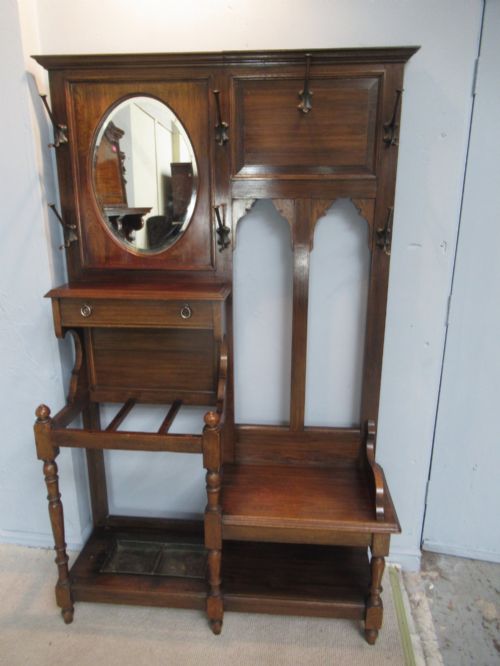
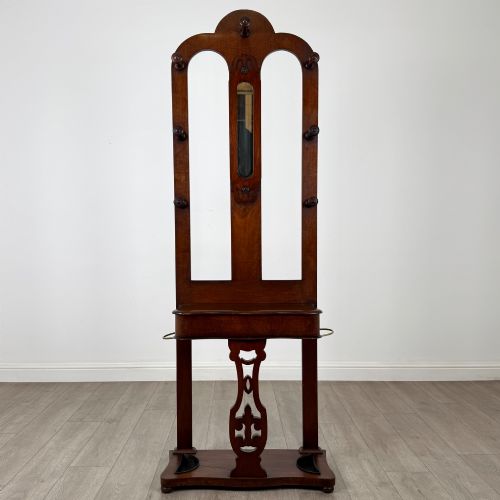
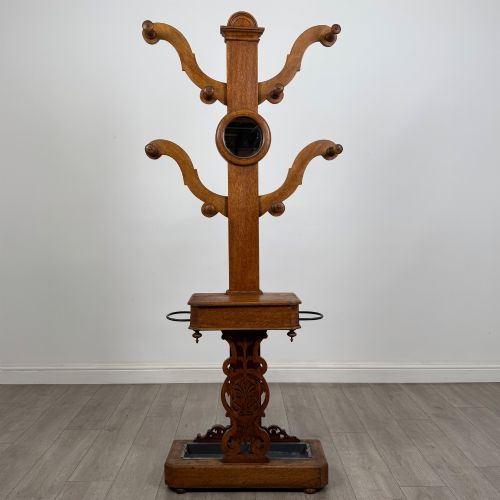
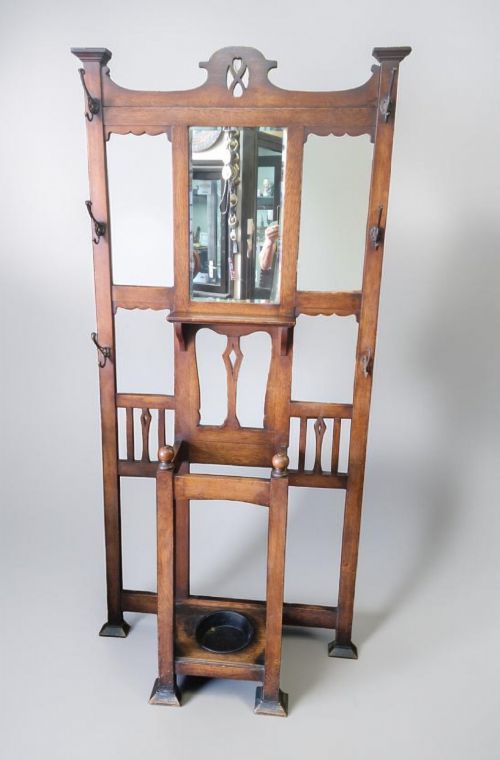
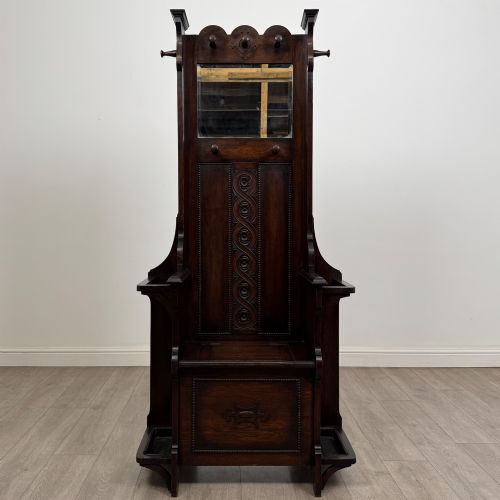
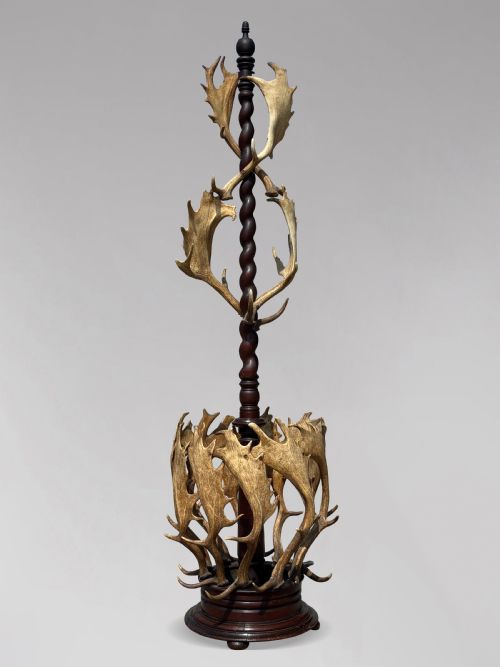
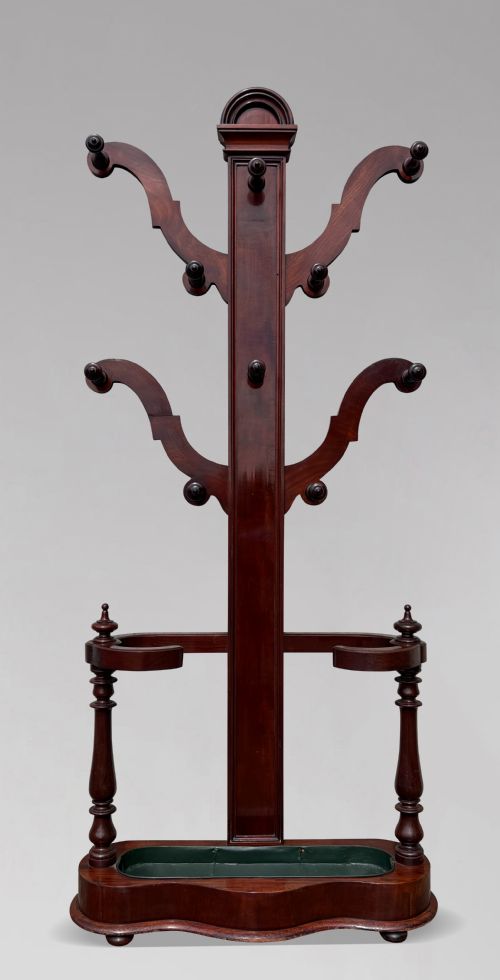
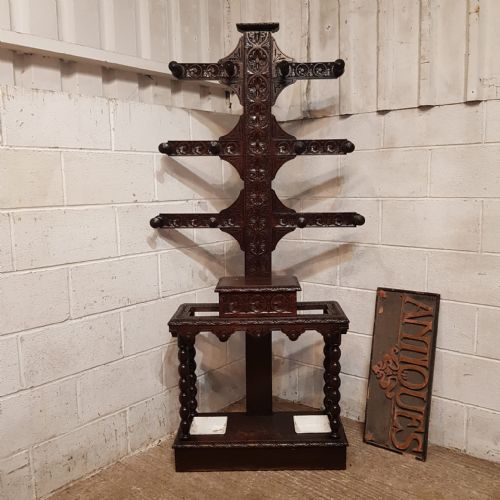
An antique carved umbrella stand is a functional piece of entrance furniture designed to hold walking sticks, canes and wet umbrellas in the hallway. These pieces appear primarily as dedicated stick stands or integrated parts of larger hall stands featuring mirrors, hooks and seats.
The versions most common on this page date from the Victorian and Edwardian eras, spanning the late nineteenth and early twentieth centuries. Oak and mahogany dominate the inventory, accompanied by distinctive regional styles such as Black Forest carvings and Gothic Revival designs.
Judging the range
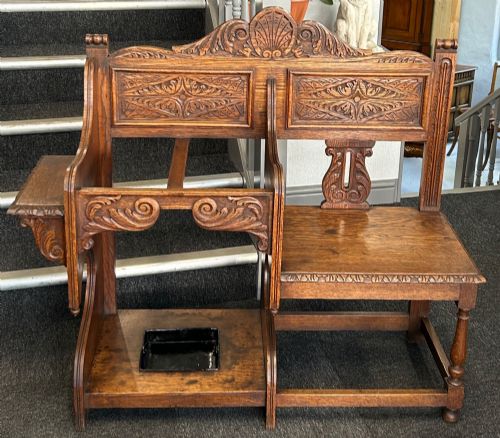
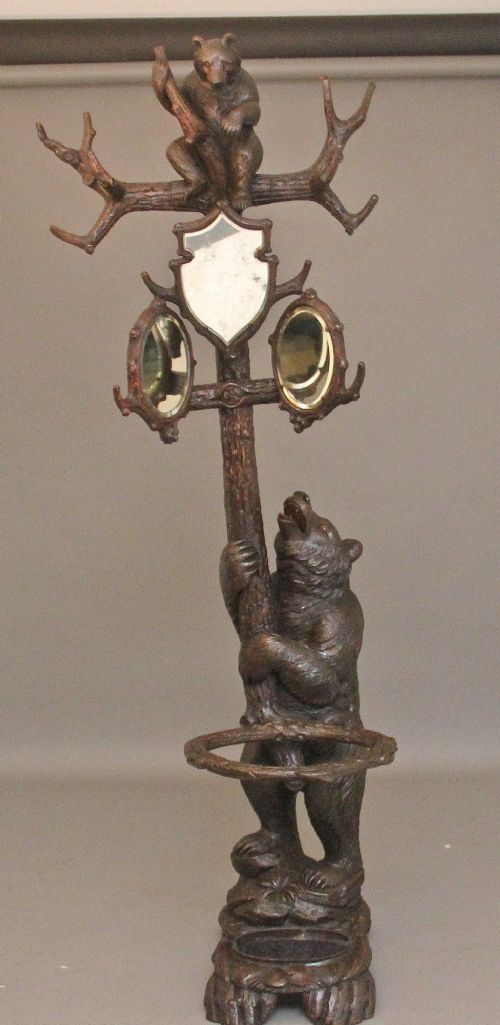
Quality in these items rests on the ambition of the carver and the integrity of the timber used throughout the construction. Pieces displaying deep relief carving, such as Green Man faces or fully rendered Black Forest bears, sit far above plain, utilitarian examples.
Several carved bears keep watch over stray walking sticks.
Shoolbred & Co.
The Antique Carved Umbrella Stand Glossary
- Hall stand
- A large multi-functional entrance piece combining a mirror, coat hooks, glove box, seat and umbrella storage. It dominated the Victorian hallway.
- Black Forest
- A style of wood carving originating in Switzerland, known for realistic animal figures such as bears holding sticks. These pieces often doubled as umbrella stands.
- Green Man
- A decorative architectural motif depicting a human face emerging from or entwined with foliage. It appears frequently in carved oak furniture from the Victorian period.
- Drip tray
- A metal or ceramic basin placed at the base of a stand to catch water from wet umbrellas. Original trays add authenticity to the piece.
Antique Carved Umbrella Stand: Frequently Asked Questions
What is an antique carved umbrella stand?
An antique carved umbrella stand is a piece of hallway furniture built to store walking sticks, canes and wet umbrellas. They range from compact wooden cylinders to large architectural hall stands.
These items were essential furnishings in period homes, keeping muddy gear organised near the front door while displaying the aesthetic tastes of the household.
How do I care for my umbrella stand?
Protect the timber from excessive moisture by ensuring metal drip trays are empty and dry before placing wet items back into the stand. Treat the wood periodically with appropriate wax to maintain the finish.
Place the stand away from direct heat sources to prevent the carved wooden elements from drying out and splitting over time.
How do I date an umbrella stand?
Dating relies on identifying the prevailing styles, timber choices and construction techniques visible in the piece. Victorian examples often feature heavy oak with Gothic or Green Man carvings, while Edwardian pieces lean towards lighter woods.
Examining the hardware, such as brass hooks and cast iron trays, also helps narrow down the manufacturing period to the nineteenth or early twentieth century.
Where were these stands placed?
These umbrella stands stood immediately inside the front entrance of Victorian and Edwardian townhouses and country houses. They welcomed visitors and provided an immediate drop-off point for outdoor apparel.
Larger hall stands with built-in seats offered a convenient spot for guests to sit while removing boots and shoes.