



Antique English Sewing Box
An antique english sewing box brings the meticulous needlework traditions of past centuries directly into a modern home.

Antique English Sewing Box
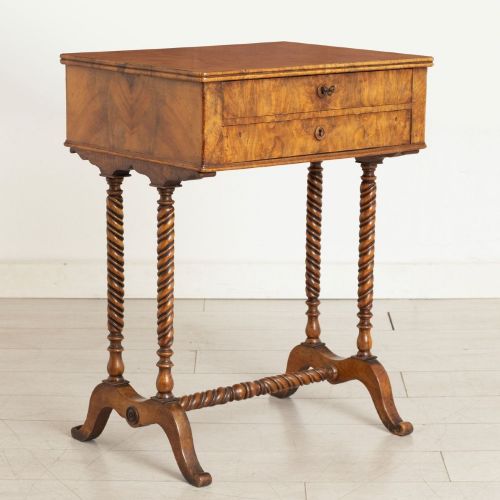
An antique english sewing box encompasses both compact tabletop containers and substantial freestanding work tables designed for domestic needlework and haberdashery. These pieces date across multiple periods including the Georgian, Regency, William IV, and Victorian eras.
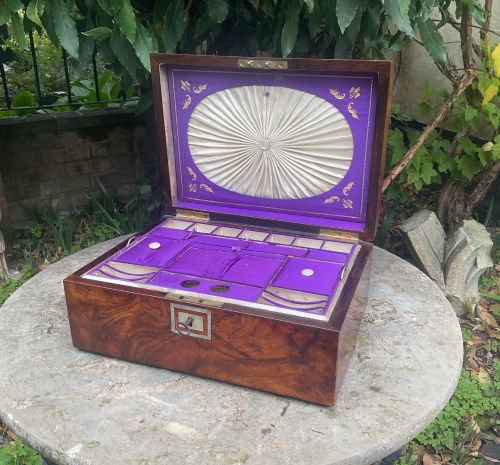
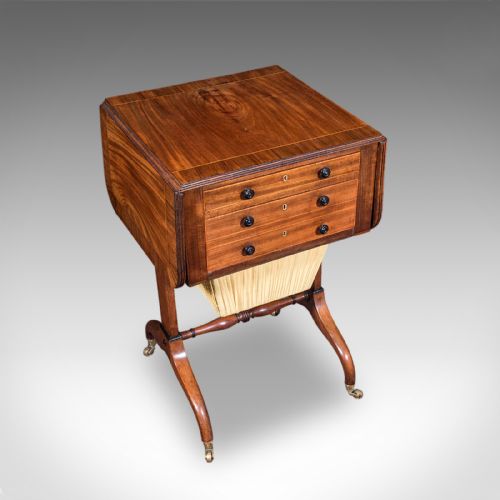
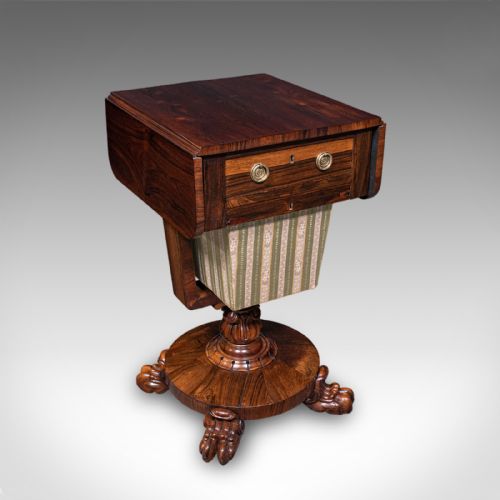
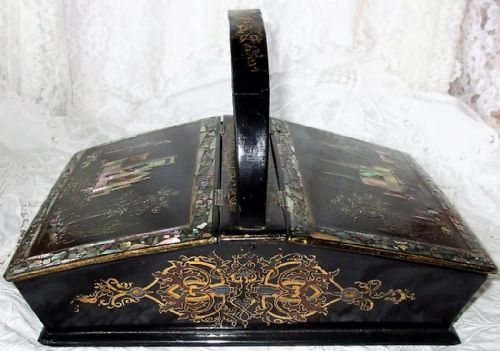
Tabletop examples range from simple leather or wood cases to intricate papier-mâché caskets and Tunbridge Ware boxes fitted for threads, needles, and tools. Freestanding sewing tables provide drop leaves, side compartments, and silk catch bags for larger crafting projects.
Buyers most frequently encounter rosewood and mahogany tabletop boxes alongside Regency and Victorian work tables incorporating burr walnut, flame mahogany, and mother-of-pearl inlay. Specialised forms such as Trinity House boxes and tartan ware pieces also appear among these furnishings.
How They Were Made
Cabinetmakers constructed the wooden bodies of these boxes and tables using dense hardwoods like mahogany, rosewood, satinwood, and walnut, often selecting veneers with striking flame or burr figures. Decorative surfaces utilised specialised techniques such as Tunbridge Ware mosaic inlay, penwork, brass mounts, and mother-of-pearl detailing.
Papier-mâché caskets offered a smooth foundation for painted and lacquered ornament, while smaller items employed embossed leather over rigid cores. Interiors typically featured fitted compartments lined in fabric to organise delicate spools, thimbles, and bone or silver tools.
Antique English Sewing Box Retail Price Guide 2026
Typical asking prices for english sewing box among the pieces listed under this phrase on Sellingantiques today, from the lower quarter to the upper quarter. They describe what is for sale here now, not the wider market.
Some nineteenth-century boxes doubled as chess tables, hiding game boards beneath the needlework trays for impromptu parlour matches.
What Varies In Quality
The standard of a piece rests upon the crispness of its exterior parquetry, the selection of timber veneers, and the integrity of internal fittings. Superior examples maintain intact silk compartments, original brass hardware, and precise joints without structural movement.
Maker attribution and specialised craftsmanship elevate certain boxes, particularly signed works from known workshops or detailed Tunbridge Ware and Trinity House constructions. Lesser pieces display simpler secondary timbers, missing interior trays, or heavy wear to the fabric linings.
William Hutton·Pearce London·Waring and Gillow·Faudels of London
The Antique English Sewing Box Glossary
- Tunbridge Ware
- A type of woodwork featuring mosaic decoration made from tiny wood blocks arranged to form pictorial or geometric motifs. This technique flourished in Kent during the nineteenth century on small trinket and needlework boxes.
- Trinity House
- Maritime-associated woodworking characterised by intricate parquetry and geometric straw or wood veneer patterns. These decorative boxes originated around the English coast.
- Work Table
- A freestanding piece of furniture incorporating drawers, drop leaves, and a fabric bag for storing sewing materials. They served ladies in the parlour for needlework and correspondence.
- Etui
- A small ornamental case used to hold needles, scissors, and other tiny implements. Georgian and Victorian examples utilised silver, gold, or leather.
- Teapoy
- A small stand or box originally designed for holding tea caddies, occasionally adapted as a work box. Regency and William IV versions frequently utilised rosewood.
Antique English Sewing Box: Frequently Asked Questions
What is an antique english sewing box?
These items are decorative containers and tables built to hold needles, threads, and textile tools for domestic handwork. They range from portable tabletop caskets to large freestanding parlour furniture.
Craftsmen utilised fine timbers, brass mounts, and specialised inlays to make objects that were both functional tools and elegant parlour ornaments during the Georgian and Victorian eras.
How were sewing tables used?
Sewing tables functioned as mobile workstations for ladies undertaking needlework, mending, and lacemaking in the drawing room. Drop leaves provided extra surface area while lower silk bags collected loose textiles.
Many designs incorporated writing slopes or compartments for gaming counters, allowing the furniture to serve multiple domestic purposes throughout the day.
How do I date an antique sewing box?
Dating relies upon timber choice, decorative styles, and construction methods characteristic of specific periods like the Regency or Victorian era. Rosewood and brass inlay commonly suggest early nineteenth-century manufacture.
Interior fittings, paper linings, and maker labels or stamps further clarify the specific decade in which a box or table was produced.
How should I care for wood and lacquer?
Wooden surfaces benefit from occasional gentle polishing with appropriate traditional waxes to preserve the grain and finish. Avoiding direct sunlight and stable humidity levels prevents veneer cracking.
Papier-mâché and lacquer require dry dusting with soft cloths to protect delicate painted details and mother-of-pearl inlays from moisture damage.