

Vintage Inlaid Wooden Box
These vintage inlaid wooden box pieces span centuries of meticulous craftsmanship, offering both functional storage and striking geometric or floral surface patterns.

Vintage Inlaid Wooden Box
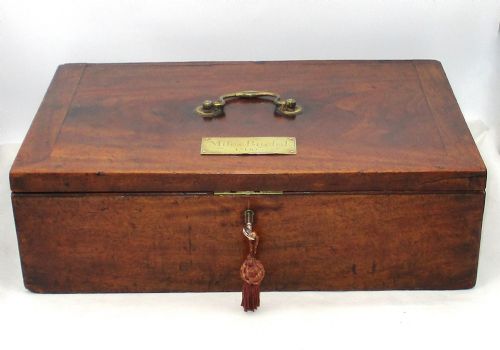
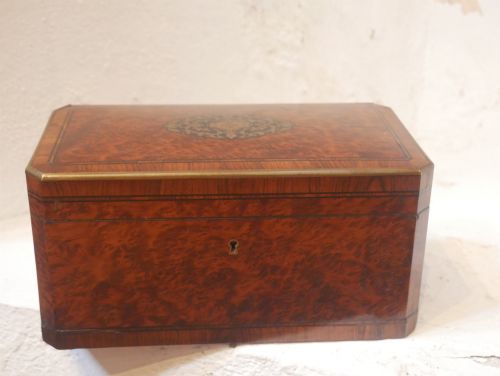
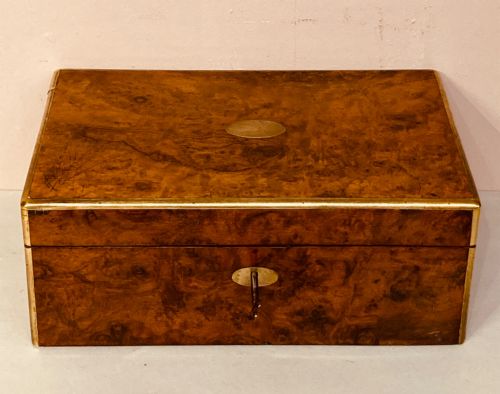
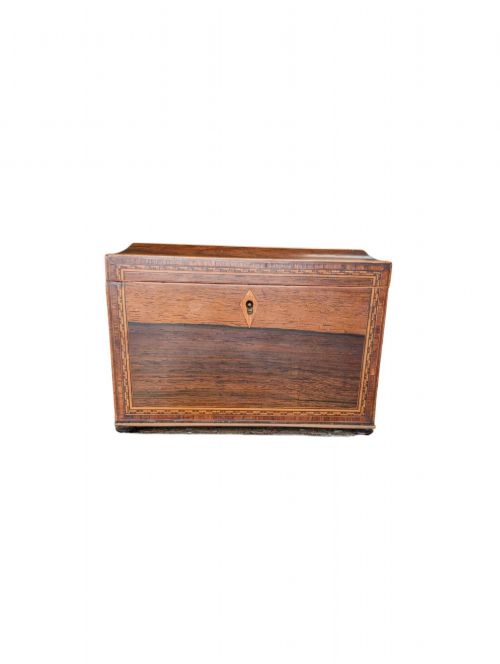
A vintage inlaid wooden box brings together centuries of utilitarian and decorative storage solutions, ranging from compact tea caddies to larger writing slopes and jewellery cases. When exploring these items, the examples most commonly encountered date from the Georgian, Victorian, and Edwardian periods, constructed in forms designed for specific household tasks.
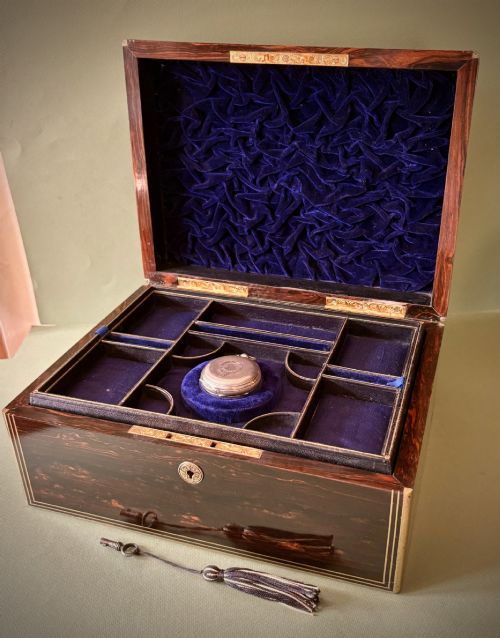
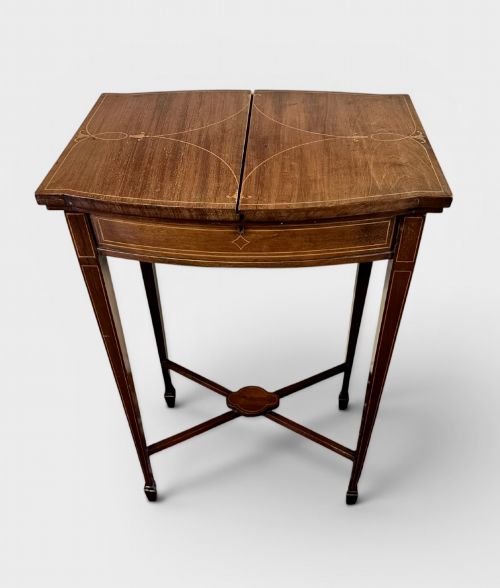
The material vocabulary of these pieces relies heavily on dense timbers such as mahogany, rosewood, walnut, and satinwood, frequently enhanced with contrasting stringing, Tunbridge ware, or brass details. Many pieces retain fitted internal compartments, trays, or glass elements, serving domestic roles that once included holding correspondence, tea leaves, or personal ornaments.
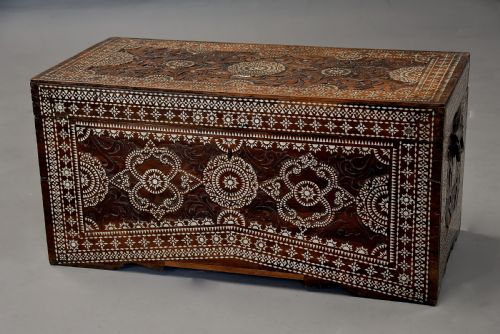
Origins stretch from English workshops to French, Swiss, Ottoman, and Anglo-Indian makers, introducing diverse regional motifs like mother-of-pearl, bone, and intricate wood inlay. Whether handling a small snuff box or a substantial campaign slope, buyers encounter items shaped by specific 18th-, 19th-, and early 20th-century demands.
How they were made
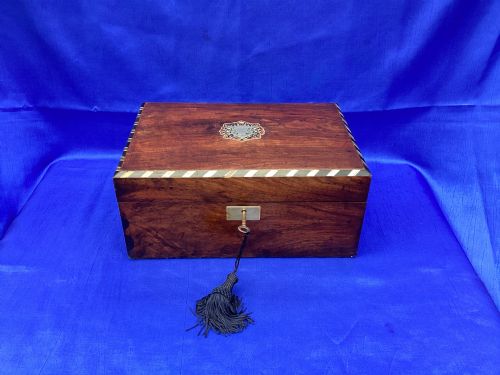
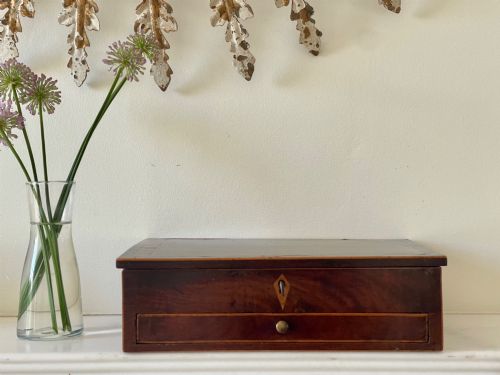
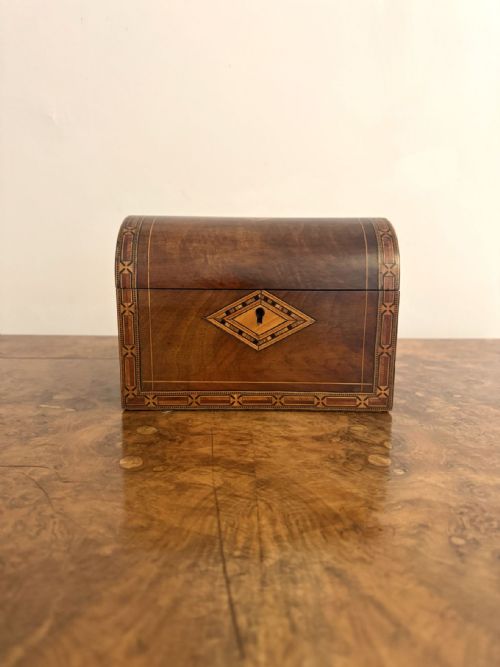
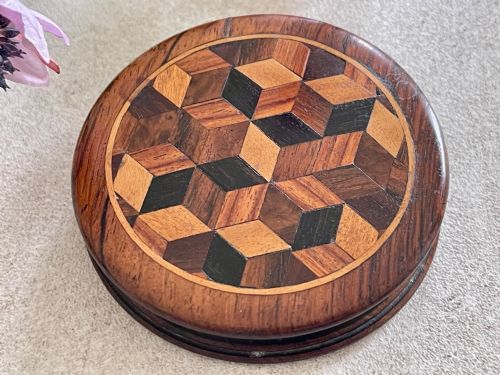
Cabinetmakers utilised hardwoods like mahogany, walnut, and rosewood as foundational carcasses, shaping them into tea caddies, stationery cabinets, and jewellery chests. Surfaces received decorative enrichment through contrasting veneers, wood inlay, and Tunbridge ware, embedding geometric or floral patterns directly into the timber.
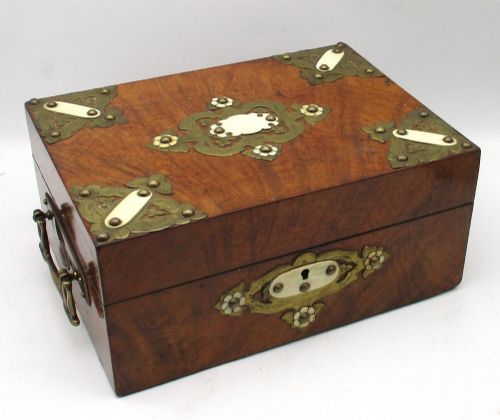
Metalwork played a structural and decorative role, integrating brass for hinges, escutcheons, handles, and intricate campaign inlays. Organic materials such as bone and mother-of-pearl were carved and set into the wood surfaces, while glass elements added utility to decanter tantalus sets and fitted interiors.
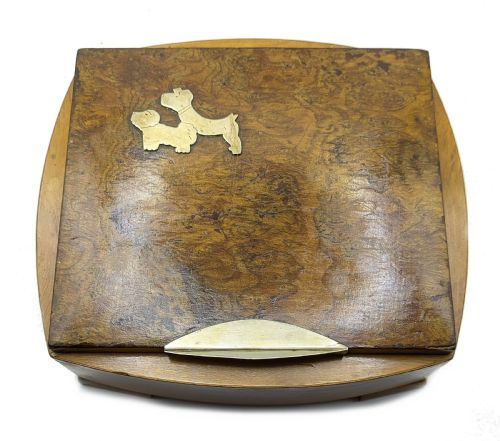
Among the storage solutions sits a dedicated novelty Scottie dog cigarette box from 1930, proving that even household habits once required a specialised canine wooden enclosure.
What varies in quality
The standard of a piece rests on the precision of its joinery and the complexity of its surface decoration, distinguishing master cabinetwork from basic production. Finely executed Tunbridge inlay, crisp brass stringing, and well-preserved internal trays elevate an object above standard utilitarian examples.
The integrity of the timber and the survival of original fitted compartments dictate the overall standard. Pieces retaining their operational locks, clean paper or fabric linings, and stable hinges demonstrate superior original manufacture and careful subsequent preservation.
Tahan Paris·Holtzapffel and Co·Langdorff and Fils·Erhard and Sohne
The Vintage Inlaid Wooden Box Glossary
- Tunbridge ware
- A form of woodworking originating in Kent, characterised by small mosaic patterns assembled from thousands of tiny coloured wood blocks to depict landscapes or geometric designs. This technique frequently decorates Victorian tea caddies and small boxes.
- Writing slope
- A portable desk featuring a hinged, slanted writing surface that often folds down to reveal compartments for inkwells, pens, and stationery. These pieces date predominantly from the Georgian and Victorian eras.
- Tea caddy
- A container designed to store loose tea leaves securely, often featuring internal lidded compartments and lockable lids. Georgian and Regency examples frequently utilise flame mahogany or satinwood.
- Tantalus
- A locked wooden stand holding decanters of spirits visible to the eye but inaccessible without a key. Napoleon III and 19th-century versions often combine brass inlay with cut crystal glass.
- Escutcheon
- A flat plate of brass or bone surrounding a keyhole, serving both to protect the surrounding wood from wear and to enhance the visual composition of the box front.
Vintage Inlaid Wooden Box: Frequently Asked Questions
What were tea caddies used for?
Tea caddies served as secure containers for storing expensive loose tea leaves in the home, protecting them from dampness and theft. They often included internal lidded canisters and a small lockable key.
During the 18th and 19th centuries, tea was a valuable commodity, making the caddy a prominent decorative object on the dining or drawing room table.
How do I identify a Victorian jewellery box?
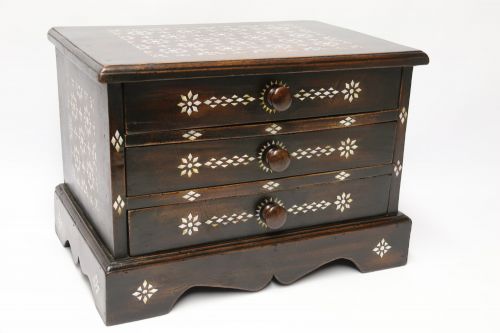
Victorian jewellery boxes typically feature robust hardwoods like rosewood or mahogany, often enhanced with brass inlay, mother-of-pearl, or fitted velvet-lined trays. They date from the mid to late 19th century.
Many of these boxes include removable internal trays and working locks designed to protect personal trinkets and accessories.
What is a writing slope?
A writing slope is a portable box that opens to form an inclined surface for writing letters and maintaining correspondence. Interiors usually house compartments for inkwells, pens, and paper.
These pieces were essential for travellers and households before the widespread use of fitted fixed desks.
How do I care for antique wood boxes?
Keep wooden boxes away from direct sunlight and extreme temperature fluctuations to prevent the timber from splitting and veneers from lifting. Maintaining stable indoor humidity preserves both the wood and the delicate inlays.
Apply a minimal amount of appropriate furniture wax occasionally to nourish the surface without building up excessive residue.