

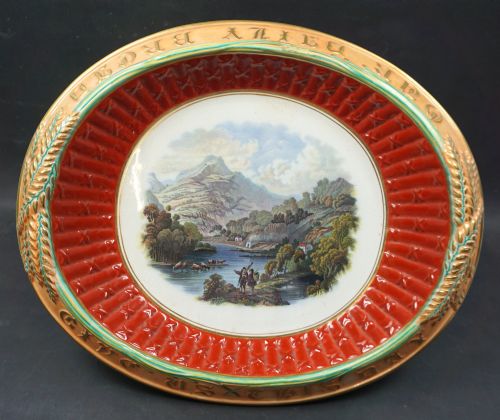
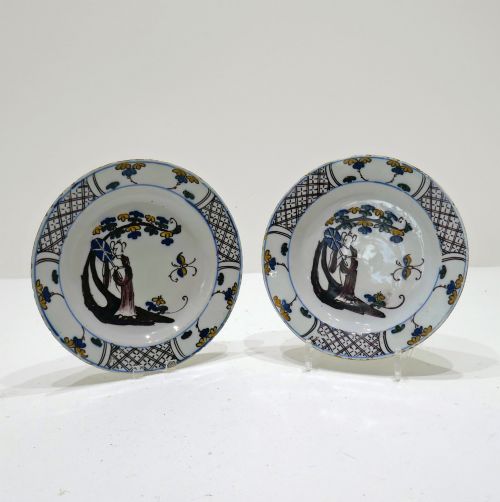
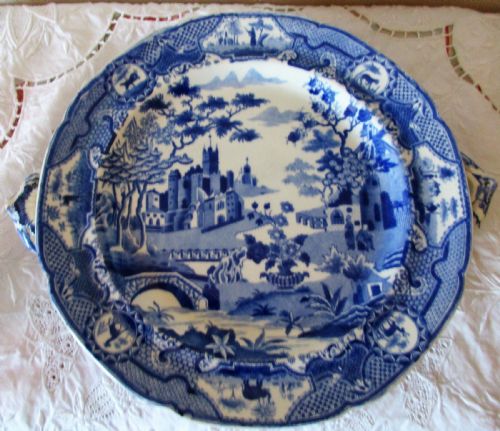
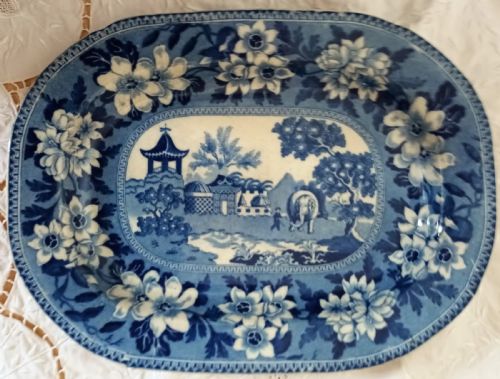



Antique English Pottery Plates
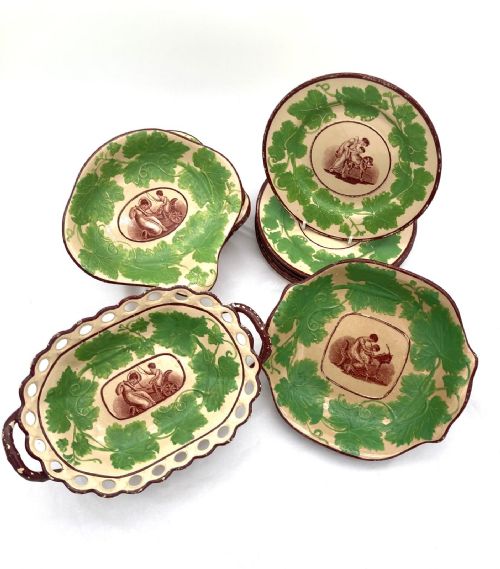
These antique english pottery plates carry the weight of centuries through tin glaze, creamware and blue transfer prints.
Antique English Pottery Plates
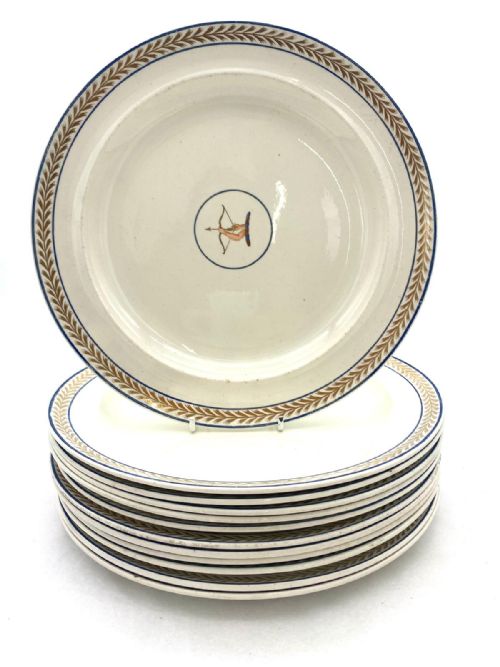
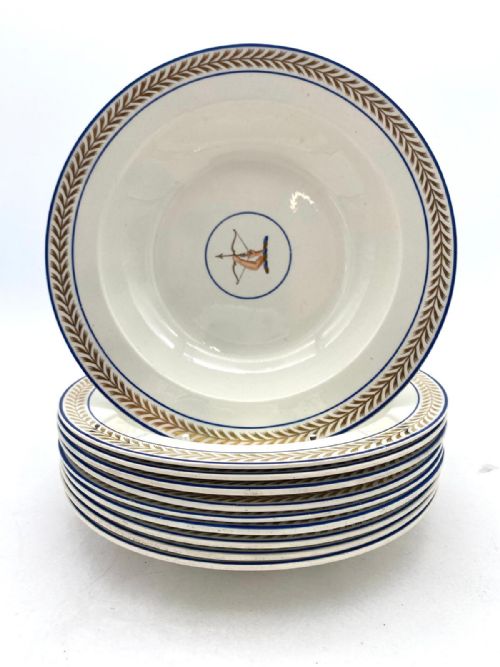
When searching for antique english pottery plates, buyers encounter a diverse range of forms spanning charger plates, shallow bowls, and decorative plaques. The selection frequently includes eighteenth-century delftware and nineteenth-century transfer-printed earthenware.
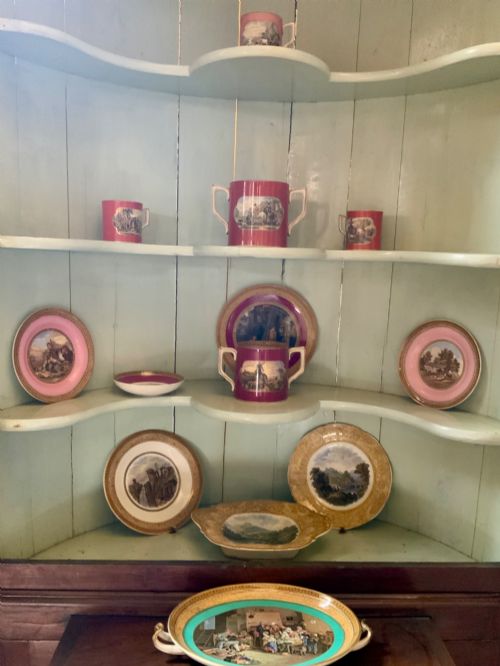
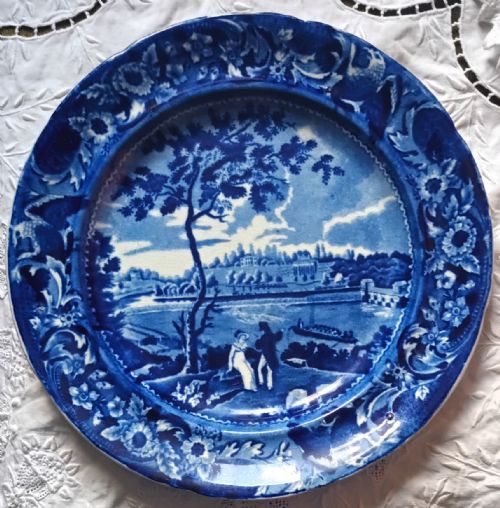
Early examples often feature tin glaze and hand-painted polychrome or cobalt pigments, while later pieces showcase transfer printing with topographical or scenic patterns. These items range from utilitarian dinner services to large decorative chargers intended for display.
The periods represented stretch from the early eighteenth century through the Victorian era and into the early twentieth century. Forms include specialised items such as hot-water plates and advertising scale plates alongside standard dining services.
How they were made
Potters shaped these wares using earthenware, creamware, ironstone, and stoneware bodies, finished with glazes that provided smooth surfaces for decoration. Pigments like cobalt were applied directly to tin-glazed surfaces or transferred via printed tissue onto the ceramic body.
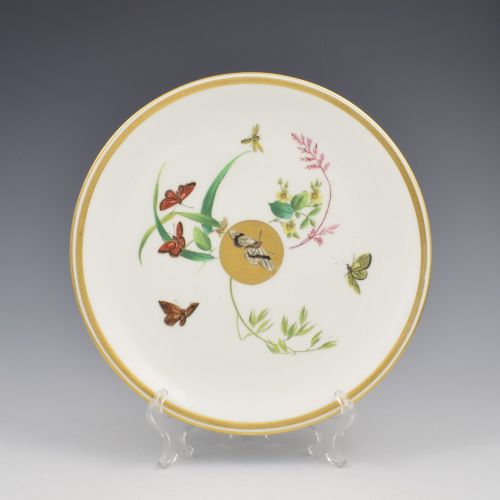
Transfer printing allowed workshops to apply intricate patterns such as Gothic castles, oriental landscapes, and armorial designs consistently across entire dinner services. Hand-painting supplemented these techniques on delftware and polychrome wares, utilising mineral enamels fired at lower temperatures.
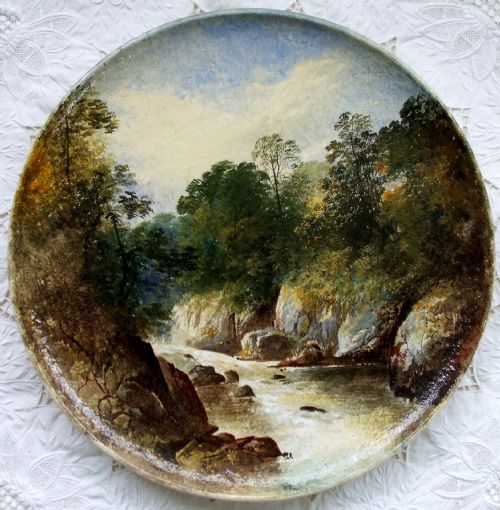
Some nineteenth-century plates recorded local landmarks like powder mills and mountain streams, bringing rural industry directly to the dinner table.
What varies in quality
Quality rests upon the crispness of the transfer print, the depth and stability of the glaze, and the precision of the hand-painted details. Early delftware pieces demonstrate variation in the purity of the tin glaze and the control of the polychrome pigments during firing.
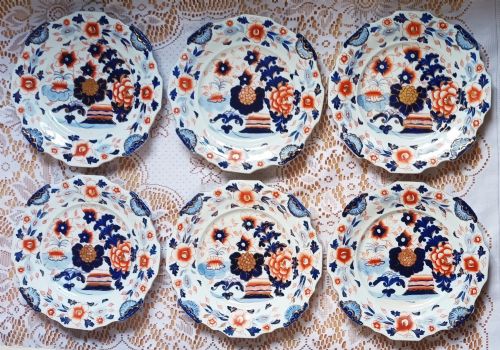
Maker attribution and the complexity of patterns, such as armorial motifs or multi-coloured Japanese styles, elevate certain pieces above standard utilitarian wares. The condition of the ceramic body and the preservation of the painted or printed surface dictate the standing of individual items.
Wedgwood·Minton·Spode·John Rogers and Son·Stubbs·William Yale·John Ridgway·Mason·Caughley·Davenport
The Antique English Pottery Plates Glossary
- Creamware
- A refined earthenware developed in the eighteenth century with a pale yellowish straw-coloured lead glaze. It became a staple of English dinner services.
- Transfer printing
- A decoration technique where an engraved metal plate transfers a design onto paper, which is then stamped onto the ceramic body before glazing and firing.
- Ironstone
- A dense, durable type of earthenware patented in the nineteenth century. It resists chipping and served as a strong substitute for porcelain.
- Charger
- A large decorative or ceremonial plate. These pieces often hung on walls or served grand dishes at table.
Antique English Pottery Plates: Frequently Asked Questions
How do I date antique pottery plates?
Dating relies on identifying the material, such as creamware versus ironstone, alongside the style of decoration and maker marks where present. Transfer-printed subjects often reference historical events or specific topographical locations that help narrow the production period.
Examinations of the underside, foot rim, and glaze characteristics further assist in distinguishing eighteenth-century delftware from nineteenth-century transferware.
Can I use these plates for dining?
Most antique plates from these eras are intended for display or collection rather than daily modern dining use. Older glazes and ceramic bodies can be fragile and vulnerable to thermal shock or modern dishwashers.
Delftware and early earthenware benefit from gentle hand washing if used occasionally, avoiding soaking or abrasive cleaners.
How should I display pottery chargers?
Large chargers and platters require sturdy wall mounts or dedicated plate stands designed to support their weight securely. Placement should avoid direct sunlight and areas with fluctuating humidity to protect the glaze and body.
Ensuring proper weight distribution prevents stress fractures in the ceramic fabric over time.