


Antique English Mahogany Shelves
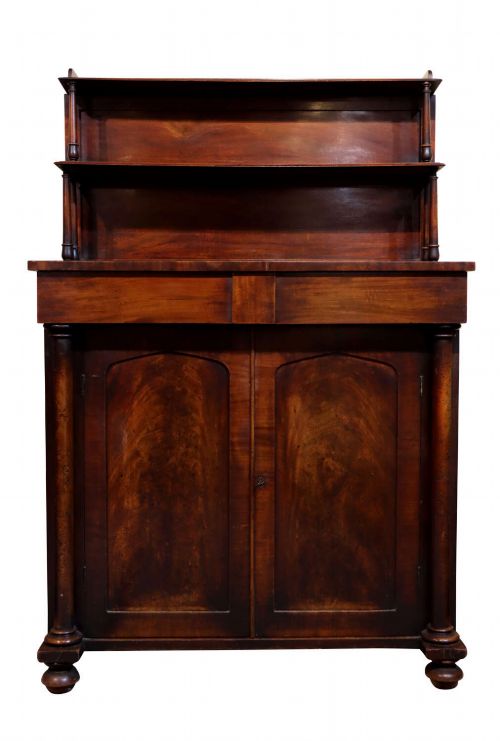
These antique English mahogany shelves bring warm timber tones and structured display space to a room, offering both practical storage and period character.
Antique English Mahogany Shelves
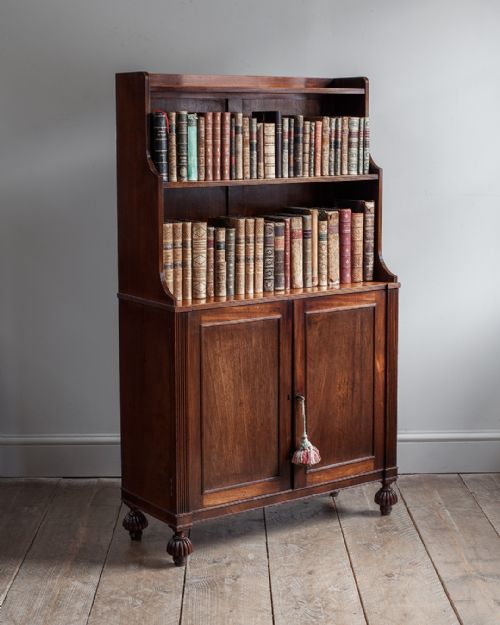
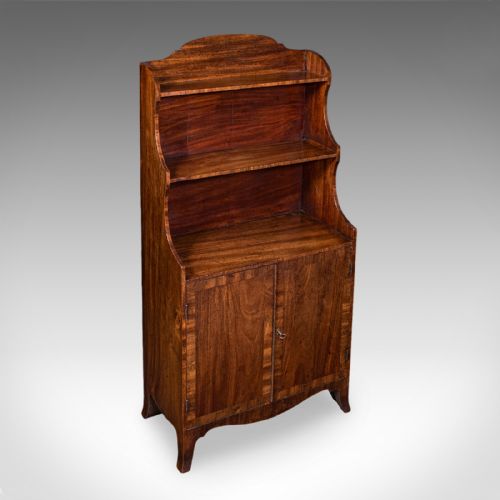
When searching for antique English mahogany shelves, buyers encounter several distinct open storage forms designed for domestic use. These pieces range from multi-tiered whatnots and étagères to hanging wall shelves and graduated waterfall bookcases originating across the Georgian, Regency, and Victorian periods.
The version most commonly met on this page is the multi-tiered whatnot or open display stand, often featuring three levels supported by turned uprights. Wall-mounted shelves and dwarf bookcases also appear regularly, utilising dense timber grains to provide sturdy platforms for books and decorative objects.
How they were made
Cabinet makers constructed these pieces primarily from solid mahogany and flame mahogany veneers, frequently incorporating secondary timbers for internal framing. Surfaces were often enriched with satinwood inlay and boxwood stringing to create subtle contrasts along the borders and panels.
Structural joints relied on traditional joinery methods such as dovetails and mortise and tenon connections. Brass fittings, including gallery rails, casters, and hanging brackets, were integrated to add functional support and decorative detail to the timber structures.
Early cabinet makers occasionally concealed secret compartments inside small writing drawers fitted beneath shelf tiers.
What varies in quality
Quality in these pieces is dictated by the selection of the timber and the depth of its figuring. Well-chosen flame mahogany displays rich grain patterns that catch the light, whereas lesser examples rely on plain, uniform boards with little visual movement.
Construction refinement marks the difference between standard and superior workshops. Crisp turning on the uprights, precise inlay work, and robust joinery that maintains rigidity across multiple tiers demonstrate superior cabinet making.
Charles Pratt London·Piggin Norwich·Barrett London·J Kingerley Manchester·Gillows·McCabe London
The Antique English Mahogany Shelves Glossary
- Mahogany
- A durable tropical hardwood prized for its reddish-brown colour and stability. It became the dominant timber for fine English cabinet making from the eighteenth century onwards.
- Whatnot
- An open piece of furniture consisting of multiple shelves for displaying ornaments or books. These freestanding stands typically feature three or more tiers supported by vertical posts.
- Étagère
- A French term adopted in England for a set of open shelves used for display. These pieces mirror the function of the traditional whatnot with tiered platforms.
- Waterfall bookcase
- A set of graduated open shelves where each tier steps back from the one below it. This design creates a cascading profile popular during the Regency and Georgian eras.
- Inlay
- A decorative technique where contrasting materials such as satinwood or boxwood are inserted into recesses cut into the mahogany surface. This method creates geometric borders and fine linear details.
Antique English Mahogany Shelves: Frequently Asked Questions
How do I date antique mahogany shelves?
Dating relies on observing construction methods, timber choice, and stylistic cues unique to specific design periods. Georgian and Regency pieces often exhibit lighter proportions and refined inlay, while Victorian examples tend to be heavier with bolder turning.
Examining secondary woods and fastening types also helps establish the era of manufacture. Cabinet makers adapted their techniques across the decades, leaving physical clues within the joinery.
Are these shelves suitable for heavy books?
Freestanding whatnots and étagères were primarily designed for display and lighter volumes rather than heavy reference libraries. Their tiered structures distribute weight across vertical supports, but excessive loads can stress older joints.
Wall-mounted shelves require secure fixings into solid masonry or stud work to support significant weight safely. Checking the integrity of the wall brackets and vertical uprights ensures stable daily use.
What is the difference between a whatnot and a bookcase?
A whatnot is an open, tiered display stand featuring multiple accessible platforms supported by posts on all sides. It served as a versatile piece for holding ornaments, small collections, and miscellaneous items around the room.
Bookcases are specifically proportioned for storing bound volumes, often featuring enclosed cupboards below or solid upright sides. While some open bookcase forms overlap with display shelving, traditional bookcases prioritize book storage capacity.
How should I care for antique mahogany timber?
Maintaining antique mahogany involves keeping the wood away from direct heat sources and strong sunlight to prevent fading and splitting. Regular dusting with a soft, dry cloth preserves the polished finish without building up heavy wax residues.
Applying a quality microcrystalline wax occasionally helps nourish the wood and protect the surface from moisture. Avoiding synthetic cleaning sprays ensures the historic finish remains undamaged over time.